




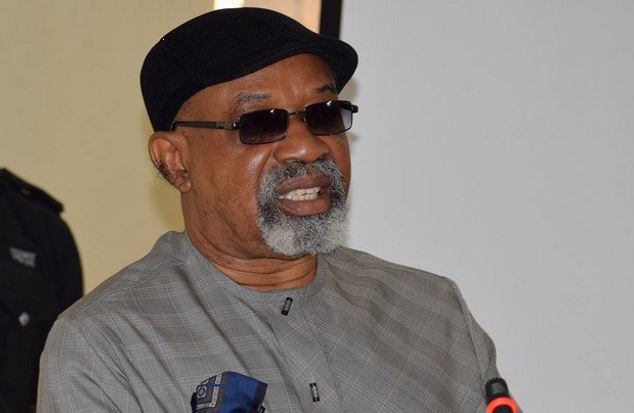
In 2003, a deal was struck to kidnap a Nigerian governor, and the real story behind this audacious plot is now coming to light.
The public saw a relationship that had simply imploded. Dr. Chris Ngige, a medical doctor, had won the governorship under the banner of the Peoples Democratic Party (PDP). His victory was heavily backed by Chris Uba, a wealthy and feared political financier with deep connections.
The official story: A governor’s chaotic removal
The story was that after the election, Ngige tried to assert his independence, and Uba, feeling betrayed, lashed out in a brazen show of force.
The accepted narrative was one of a political partnership gone sour. In the turbulent world of early Fourth Republic politics, clashes between governors and their godfathers were not unheard of. But the events in Anambra in 2003 seemed to set a new, alarming precedent.
A resignation letter, supposedly from Ngige, was produced and hastily accepted by the state House of Assembly. His deputy was poised to be sworn in.
It looked like a messy, desperate power grab. Ngige, however, did not stay silent. He managed to get a message out, declaring he had been kidnapped and forced to sign the letter at gunpoint.
The story transformed from a state-level crisis into a national scandal, testing the limits of Nigeria’s young democracy and exposing the intense pressures inside its political system. To the outside world, it was a spectacular and ugly falling out between two powerful men.
The complication that pointed to a plan
But the speed and coordination of the event hinted at something more than a spontaneous fight. The immediate appearance of a signed resignation letter, and the swiftness with which the legislature acted, suggested a pre-planned operation. This was not just a disagreement that boiled over; it was an execution of a plan.
The dispute between Ngige and Uba was not simply about loyalty, but about the very ownership of the governor’s office.
This episode exposed the shadowy system of political godfatherism, where powerful individuals finance candidates in exchange for control over appointments, contracts, and state resources. Uba had, by his own account, sponsored nearly every politician in the state.
He did not view his support for Ngige as a simple donation to a campaign; he saw it as an investment that was meant to yield substantial returns and influence. The a brazen attempt to expose Nigeria’s corruption at the state level was just beginning.
The real story: A contract to own a state
The most shocking part of the saga was not the abduction itself, but the revelation that the so-called “unwritten deal” was, in fact, extensively written down. Years later, research by Human Rights Watch unearthed documents that laid bare the true nature of the agreement.
It was less a political alliance and more a corporate-style takeover of a state government. One document, a “Memorandum of Irrevocable Undertaking,” had Ngige pledging to serve only a single four-year term.
Another agreement was even more explicit. It designated Ngige as the “Administrator” of Anambra State, while Chris Uba was named the “Leader/Financier.” Ngige had effectively signed away his constitutional authority, pledging loyalty to his sponsor and giving Uba influence over key government appointments and contracts. The governorship was being treated as a private asset, and Ngige was its manager on behalf of the owner, Uba.
As an insurance policy, Uba had reportedly secured Ngige’s signed, undated resignation letter even before the election, along with a video of him signing it. The abduction on July 10, 2003, was not a random act of violence; it was Uba attempting to enforce the terms of his contract.
When Ngige began to govern as an independent executive, Uba simply pulled the trigger on the contingency plan he had prepared from the very beginning.
From paper to violence: The aftermath of the failed coup
Though the attempt to remove Ngige failed—he was restored to office after federal intervention—the war for Anambra had just begun. The state descended into a period of sustained political violence. In 2004, the conflict escalated dramatically as thugs attacked and burned government buildings in Awka, including parts of Government House itself.
The state’s institutions became battlegrounds in the struggle between the governor and his former patron.
The dispute also had a staggering financial dimension. Ngige alleged that before his inauguration, he was forced at gunpoint to sign a pledge promising to pay Uba an astonishing ₦3 billion. At the time, this sum was about three times the entire monthly federal allocation to Anambra State.
While Uba denied demanding cash payments, the allegation itself revealed the immense financial stakes involved. This was not just about power; it was about access to the state treasury on a massive scale, a theme seen in other cases like the one involving Abdulrasheed Maina’s pension fraud.
The crisis even drew in darker elements, with the infamous Okija shrine becoming part of the story. Politicians were allegedly taken to the shrine to swear binding oaths of loyalty, a practice that blended modern politics with traditional ritual to enforce obedience.
Though Ngige denied taking an oath inside the shrine, the affair highlighted the terrifying lengths to which political networks would go to maintain control, a fate many powerful figures feared, including the visionary governor who was executed decades earlier under different circumstances.
A lesson written in Anambra’s history
In a final, ironic twist, it was not Chris Uba who ultimately removed Chris Ngige from office. While their war raged on, a legal challenge to the 2003 election result filed by Peter Obi of the All Progressives Grand Alliance (APGA) was making its way through the courts.
On March 15, 2006, the Court of Appeal ruled that Obi, not Ngige, was the true winner of the election. After nearly three years of fighting to control the governorship, Ngige lost it in a courtroom.
The saga of Ngige and Uba remains one of the most defining and instructive political stories of Nigeria’s Fourth Republic. It was a raw, unfiltered look at the mechanics of godfatherism, where constitutional power is challenged by private agreements and financial leverage.
The alliance collapsed over a fundamental question: does a governor’s authority come from the constitution and the voters, or from the patron who financed his election?
What the crisis revealed is how Nigeria’s political system can be vulnerable to capture by powerful individuals who see public office not as a trust, but as a prize.
The battle for Anambra was not just a falling out between two men; it was a struggle for the soul of a state, showing what happens when the machinery used to win power demands to own the power it created.
