




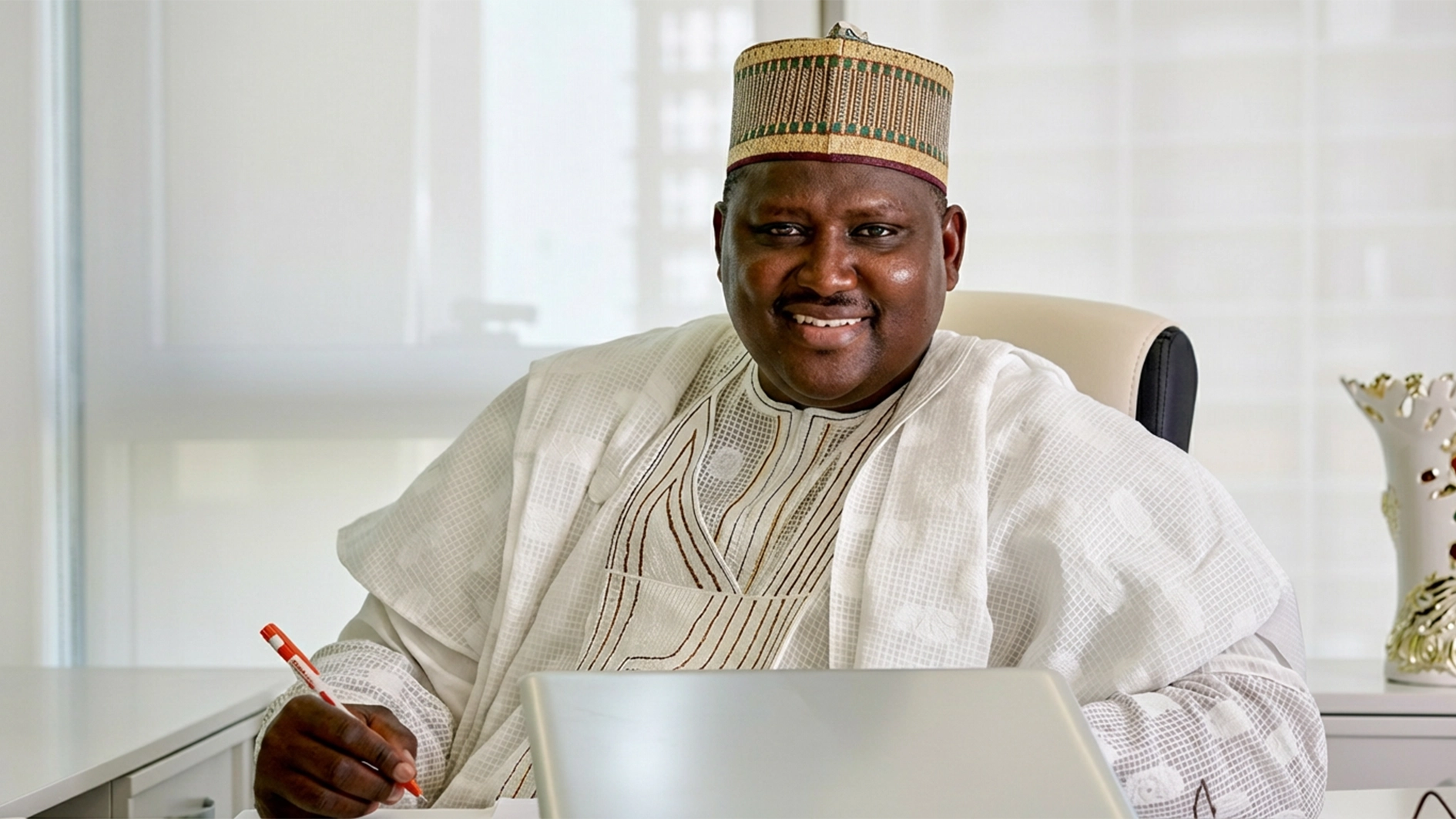
Abdulrasheed Maina, the man who once spearheaded Nigeria’s fight against pension fraud, walked free from prison on February 25, 2025. This early release came less than four years into an eight-year sentence for money laundering, marking a stunning twist in a saga that began with him as an anti-corruption crusader.
Most Nigerians initially knew Maina as a determined public servant, the face of the Pension Reform Task Team (PRTT). This government body, established in 2010, was set up to cleanse the nation’s notoriously corrupt pension system, bringing hope that the chronic diversion of retirees’ funds might finally end.
The Abdulrasheed Maina Pension Fraud Case and the Senate’s Unanswered Summons
His work involved vigorous verification exercises, meticulously sifting through pension records to identify genuine beneficiaries and root out widespread irregularities. Maina’s public profile surged, with his name becoming synonymous with the government’s declared war on financial malfeasance in a sector that had long plagued the country’s elderly.
The tide began to turn dramatically in 2012. The Nigerian Senate launched its own investigation into pension administration, forming a Joint Committee to probe the very issues Maina’s team was tackling. As a central figure, Maina was repeatedly summoned to appear before this committee.
He simply did not show up. Repeated invitations from the legislative body went unanswered, escalating what began as a routine parliamentary inquiry into a tense standoff. This refusal to engage with the National Assembly, the institution meant to provide oversight, quickly became a national political flashpoint.
By December 2012, the Senate had exhausted its patience. It issued a direct warrant for Abdulrasheed Maina’s arrest, instructing the Inspector General of Police to apprehend him and bring him before the committee. The man who had been chasing alleged pension fraudsters was now himself a target of legislative enforcement.
From Wanted Man to Controversial Comeback
The legal pressure mounted further in February 2013 when Nigerian police officially declared Maina a wanted man. This action was a direct consequence of his continued defiance of the Senate committee, transforming him from a public official into a fugitive sought by law enforcement for a legislative probe.
The controversy soon enveloped the executive branch. President Goodluck Jonathan intervened, directing the Head of the Civil Service of the Federation to initiate disciplinary proceedings against Maina, which eventually led to the dissolution of the Pension Reform Task Team. Maina, however, refused to accept his dismissal, challenging its legality in the National Industrial Court, thereby adding a judicial dimension to his ongoing dispute.
For several years, Abdulrasheed Maina largely vanished from public view, reportedly spending much of that time outside Nigeria. He remained a wanted man, his name consistently surfacing in public discourse and ongoing investigations by the Economic and Financial Crimes Commission (EFCC) concerning alleged financial improprieties. This period of absence fueled speculation and deepened the mystery surrounding his fate until a truly shocking development years later.
In October 2017, Maina suddenly reappeared within the Nigerian civil service. He was posted to the Ministry of Interior, reportedly at an acting director level. His return ignited an immediate firestorm, given his previous status as a wanted man tied to an unresolved pension investigation. Questions swirled about who authorized this stunning reinstatement.
The Office of the Head of the Civil Service publicly disavowed authorizing his return, suggesting a powerful, behind-the-scenes maneuver. Documents circulating at the time indicated that correspondence from the Attorney General of the Federation played a pivotal role in the process that saw Maina back in government.
This intricate power play raised fundamental questions about the nation’s rule of law and accountability, drawing comparisons to previous tests of power within the Nigerian system.
The outcry eventually reached President Muhammadu Buhari, who ordered Maina’s immediate dismissal and directed a full investigation into the circumstances of his controversial return. This episode became one of the most defining moments of Maina’s turbulent career, laying bare the deep fissures within Nigeria’s administrative and political structures.
The Long Road to Conviction and Early Release
The allegations against Maina ultimately transitioned from administrative and legislative disputes into a criminal courtroom. The EFCC brought charges against him and his company, Common Input Property and Investment Limited, for money laundering. The prosecution meticulously presented evidence detailing financial transactions, concealed bank accounts, and properties allegedly acquired through illicit means.
Among the key pieces of evidence was the purchase of a property in Abuja, linked to funds traced through his family members. Maina steadfastly pleaded not guilty, initiating a prolonged legal battle that would stretch over several years. This complex trial underscored the challenges faced by Nigeria’s judicial system in prosecuting high-profile corruption cases, a constant battle for judicial integrity.
On November 8, 2021, Justice Okon Abang of the Federal High Court in Abuja delivered a landmark judgment. Maina was convicted on all 12 counts of money laundering, receiving a cumulative sentence of 61 years in prison. However, these sentences were ordered to run concurrently, effectively meaning he would serve eight years.
The court also mandated the forfeiture of assets and restitution, sending a clear message about the consequences of financial malfeasance.
The legal challenges continued. Maina promptly appealed the conviction, seeking to overturn the ruling. But in May 2023, the Court of Appeal upheld both his conviction and the eight-year sentence, solidifying the judicial outcome.
The saga also extended to his son, Faisal Maina, who was separately convicted of money laundering in October 2021 and sentenced to 24 years in prison in absentia, further highlighting the family’s deep entanglement in the financial scandal.
Despite the eight-year sentence, Abdulrasheed Maina did not serve the full term. On February 25, 2025, he was released from custody.
The Nigerian Correctional Service clarified that his early release was due to the application of remission rules, a common practice for good conduct, effectively bringing a swift end to a decade-long national drama that began with pension investigations and culminated in his conviction and early freedom.
The rapid shifts in his fortunes reveal a dynamic where personal agency and institutional forces constantly collide.
The Unyielding Questions of Accountability
The journey of Abdulrasheed Maina began with a seemingly straightforward mission: to expose and dismantle the structures of pension fraud. Yet, it evolved into a convoluted narrative that exposed the intricate and often contradictory nature of Nigeria’s institutions. His story became a microcosm of the larger struggles for accountability and transparency that continue to challenge the nation.
The events surrounding Maina were never a single, continuous criminal proceeding. They were a series of overlapping and distinct challenges: a legislative probe into his defiance, an administrative battle over his dismissal, and a criminal prosecution for money laundering. Each thread, while connected to the man, highlighted different facets of governance and justice in Nigeria.
Ultimately, Maina’s conviction for money laundering underscored that the legal system, however protracted, could deliver a verdict against even a high-profile individual. But his controversial reinstatement and subsequent early release also highlighted the persistent influence of political dynamics and the inherent complexities of enforcing justice in Nigeria.
The affair serves as a powerful reminder that the fight against corruption is rarely a linear path, often twisting through unexpected turns, and that influential figures can often shape their own trajectories, regardless of the official narrative.
The learning here is that in Nigeria, the lines between hero, villain, and victim can blur so completely that yesterday’s corruption fighter can become tomorrow’s convicted fraudster, only for the system to grant an early quiet exit, leaving the public to grapple with what justice truly means.
