




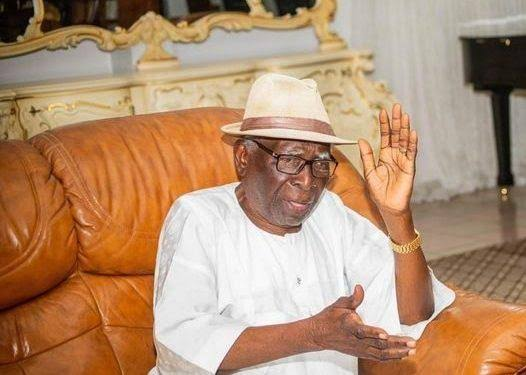
In May 1968, as Dahomey teetered on the brink of political chaos, Urbain-Karim Elisio da Silva, a prominent Aguda patriarch from Porto-Novo, stepped onto the national stage. He wasn’t a career politician but a successful businessman and printer, yet he contested the presidential election. That year, he secured second place in a vote later annulled due to exceptionally low turnout.
His journey to this pivotal moment was shaped by an ancestry deeply rooted in the intertwined histories of West Africa and Brazil. Elisio da Silva’s life, spanning generations and bridging continents, offers a vivid portrait of how personal heritage can intersect with national destiny, ultimately contributing to the preservation of a unique cultural memory.
Di sản của Elisio Da Silva Dahomey Presidency
The story of Elisio da Silva begins not with his birth, but centuries earlier, with the forced migration of Africans across the Atlantic. During the nineteenth century, a significant number of Africans who had endured enslavement in Brazil began to return. They settled in coastal West African towns like Lagos, Badagry, Ouidah, and Porto-Novo.
These returnees, often called Aguda in present-day Benin, brought with them a rich cultural tapestry. Their influence permeated architecture, cuisine, surnames, and religious practices, reshaping the urban fabric of these burgeoning communities. Many also intersected with Brazilian and Portuguese merchants, further enriching their unique identity.
Tracing the Paraíso Lineage
Elisio da Silva’s maternal family, the Paraísos, carved out a particularly influential position in Porto-Novo. Historians João José Reis and Milton Guran trace his lineage back to José Abubakar Bambero Paraíso. José Paraíso was an African enslaved in Bahia, Brazil, who later returned to the West African coast. His story became a cornerstone of family lore.
José Paraíso eventually integrated into Porto-Novo’s Muslim community and even the royal court. While historical accounts of his return and religious journey vary, the Paraíso family solidified its standing as one of the most significant Muslim Aguda families in the city. Their prominence laid a powerful foundation for future generations.
Porto-Novo’s Aguda Heritage
Elisio da Silva’s grandfather, Ignacio Soule Paraíso, inherited and expanded upon this considerable influence. Ignacio became a wealthy planter and merchant, a respected figure among Porto-Novo’s Muslims.
Under French colonial rule, he achieved the unusual distinction of holding a seat on the administrative council of Dahomey, a rare position of power for an African at that time. He passed away in 1939, leaving behind an extensive network of influential descendants.
On his paternal side, Elisio da Silva was the grandson of Honório A. Geo da Silva, a farmer and merchant who presided over Porto-Novo’s Association of Afro-Brazilians.
This dual heritage immersed Urbain-Karim Elisio da Silva in a world shaped by commerce, Islam, a distinct Afro-Brazilian identity, and the enduring memory of return migration to West Africa.
From Commerce to Contention: Dahomey’s Tumultuous Politics
Elisio da Silva, however, built his own reputation, distinguishing himself beyond his familial legacy. By the post-World War II decades, he had established a thriving business empire, particularly in printing. João José Reis and Milton Guran recognized him as one of Benin’s most prosperous businessmen, a notable personality within Porto-Novo’s Muslim and Afro-Brazilian circles.
The printing industry held special significance in a nation striving for identity. Newspapers, political pamphlets, official documents, and educational materials served as vital tools in the public sphere. Da Silva’s commercial activities naturally drew him into the burgeoning world of political and civic influence, precisely as French Dahomey moved towards independence.
Printing the Public Sphere
His printing presses were not merely commercial ventures; they were hubs of intellectual exchange and public discourse. During a period when national identity was being forged and political ideas debated, Da Silva’s operations played a crucial role in disseminating information and shaping public opinion. This direct engagement with public life prepared him, perhaps unexpectedly, for a more direct political role.
Dahomey achieved its independence from France on August 1, 1960. But the new republic quickly earned a reputation for severe political instability. Regional rivalries, frequent military interventions, and persistent disputes among the political elite led to a continuous cycle of power changes, undermining the promise of self-governance. This volatile climate was the backdrop against which Elisio da Silva would soon find himself.
The Road to the 1968 Vote
By late 1967, another military intervention had dramatically altered the political landscape. The officers who had seized power sought a pathway back to civilian rule, albeit under their watchful eyes. A new constitution was enacted, and presidential elections were scheduled for May 1968.
It was into this charged and uncertain atmosphere that Elisio da Silva decided to throw his hat into the ring, entering one of the most critical contests of his public career. The nation was desperate for stability, and he offered a fresh perspective, untainted by the infighting of the established political class.
The Unsuccessful Bid for the Presidency
The presidential election took place on May 5, 1968, under strict military supervision. A defining characteristic of this election was the deliberate exclusion of Dahomey’s dominant political figures. Former leaders such as Hubert Maga, Sourou Migan Apithy, and Justin Ahomadégbé were barred from contesting. This decision predictably sparked widespread calls for a boycott from their loyal supporters.
Despite the high-stakes political maneuvering, five candidates ultimately remained on the ballot. A report from Le Monde on May 4, 1968, identified them as Basile Adjou Moumouni, Paul Hazoumé, Eustache Prudencio, Karim Urbain da Silva, and Jean-Baptiste Vierin Gamadualo. The French newspaper described Da Silva, the industrialist, as a viable contender in a field intentionally thinned of its most recognized names.
A Mandate Undermined by Absence
The election results showed an overwhelming numerical victory for Basile Adjou, who garnered 241,273 votes, accounting for 83.95 percent of the valid ballots cast. Urbain Karim da Silva secured second place with 19,319 votes, or 6.72 percent. Eustache Prudencio received 11,359 votes, Paul Hazoumé 11,091, and Jean-Baptiste Vierin 4,350.
While Da Silva’s second-place finish was politically notable, the chasm separating him from Adjou was immense, reflecting the fractured nature of the electorate.
However, the most significant outcome was the abysmal voter turnout. Only about 26 percent of registered voters participated in the election. This exceptionally low figure served as a stark indicator of public dissatisfaction and the effectiveness of the boycott. The military authorities, citing this lack of participation, subsequently annulled the election results.
The intended transition to an elected civilian president, designed to restore order, had effectively failed, plunging Dahomey into further uncertainty.
After the Annulment
With the May election nullified, the military authorities sought an alternative path. In July 1968, they turned to Dr. Émile Derlin Zinsou, a physician and seasoned politician. His designation as president was then put before voters in a plebiscite on July 28, 1968.
Zinsou’s appointment received approval from a substantial majority, with a 73% turnout in the referendum. He would govern Dahomey until his overthrow in December 1969, illustrating the continued instability.
Though Elisio da Silva never assumed the presidency, his courageous candidacy during a volatile period etched his name permanently into Dahomey’s post-independence political history, highlighting the enduring challenges of nation-building in the region.
Custodian of Memory: The Musée da Silva and Brazil
Elisio da Silva’s connection to Brazil was more than just ancestral; it became a tangible aspect of his public life. He eventually served as the Honorary Consul of Brazil in Benin, an office that symbolized both his personal stature and the deep historical bonds between Brazil and Benin’s Afro-Brazilian population. This diplomatic role underscored his lifelong commitment to preserving this unique cross-cultural heritage.
His contributions did not go unnoticed by the Beninese state. On October 29, 2001, Decree No. 2001-441 officially promoted Urbain Elisio Karim da Silva, recognized as a Beninese economic operator and Honorary Consul of Brazil, to the esteemed dignity of Grand-Cross of the National Order of Benin.
This significant decoration acknowledged a man whose influence spanned business, culture, diplomacy, religion, and public life, cementing his place as a national figure.
Bridging Continents as Consul
As Honorary Consul, Elisio da Silva facilitated connections, cultural exchanges, and economic ties between Benin and Brazil. His position was a testament to the respect he commanded and the historical significance of the Aguda community.
By the early twenty-first century, he also chaired an association representing descendants of Brazilians, further solidifying his role as a guardian of this shared heritage. He remained a respected dignitary within Porto-Novo’s Muslim community, a testament to his multifaceted identity and influence.
A Museum for the Afro-Brazilian Experience
Perhaps Da Silva’s most profound and lasting contribution was his unwavering determination to transform family and community memories into a concrete cultural institution. On November 2, 1998, he established the Musée da Silva des Arts et de la Culture in Porto-Novo.
He personally financed the project, converting a restored colonial-era building adjacent to his residence into a vibrant museum. This private collection extensively documented the Da Silva family, Aguda culture, the history of slavery, the African diaspora, and the broader cultural links between Benin and Brazil.
The museum’s inauguration drew considerable attention from high-ranking officials. President Mathieu Kérékou, Benin’s culture minister, and a representative from UNESCO were all present, underscoring the institution’s national and international significance.
The exhibits, featuring photographs, documents, books, furniture, and historical objects, reflected Da Silva’s vision: to embed the Afro-Brazilian experience within a much grander narrative of African and global history. This undertaking resonated with the enduring colonial change and post-colonial identity formation across West Africa.
Enduring Influence in Modern Benin
Elisio da Silva was also an author and publisher, extending his efforts to preserve memory through the written word. His works, including L’inoubliable héritage des esclaves noirs: la musique afro-américaine, published in Porto-Novo in 2000, explored the cultural ramifications of slavery.
He specifically focused on the musical traditions forged by Africans and their descendants throughout the Americas. Through these publications and his museum, he became an active participant in shaping how the past would be understood by future generations.
His life demonstrated that he was not merely a descendant of those impacted by Atlantic slavery and return migration. Instead, he took an active role in interpreting that history. He ensured that the narratives of resistance, migration, and cultural fusion would remain visible, challenging the erasure of these complex historical threads.
A Patriarch’s Longevity
Urbain-Karim Elisio da Silva’s extraordinary longevity allowed him to remain a significant figure in Porto-Novo’s civic life well into the twenty-first century. On February 19, 2026, the official municipal service of Porto-Novo recorded a courtesy visit from the city’s newly installed mayor, Rachadou Toukourou, to the venerable Patriarch.
This visit, occurring on the day Toukourou officially assumed leadership from outgoing mayor Charlemagne Yankoty, clearly demonstrated Da Silva’s continued status as one of the most respected elders in the Beninese capital.
His public presence persisted even after another major political transition. Romuald Wadagni was sworn in as President of the Republic of Benin on May 24, 2026, succeeding Patrice Talon.
Just over a week later, on June 4, Da Silva, then described as the president of Porto-Novo’s Council of Elders and Cadres, participated in prayers at the city’s principal mosque. These prayers were offered for the new president and for the nation, highlighting his continued spiritual and civic leadership.
Witness to a Nation’s Evolution
More than half a century separated Da Silva’s own appearance on a presidential ballot from these modern events. The businessman who had contested the presidency of Dahomey in 1968 lived long enough to witness an entire spectrum of Beninese history.
This included successive military governments, Mathieu Kérékou’s revolutionary regime, the eventual restoration of multiparty democracy, and several generations of elected Beninese presidents. His life serves as a powerful testament to the broader historical context of political evolution and enduring challenges in West African nations.
Elisio da Silva’s enduring presence underscores a crucial aspect of history: it is not solely found in archives or official records. It lives and breathes through individuals, families, and communities that actively preserve memories across generations.
His life illuminates how the profound consequences of the Atlantic slave trade continued to shape identities, institutions, and public life long after its formal abolition, a legacy he tirelessly sought to make visible.
