




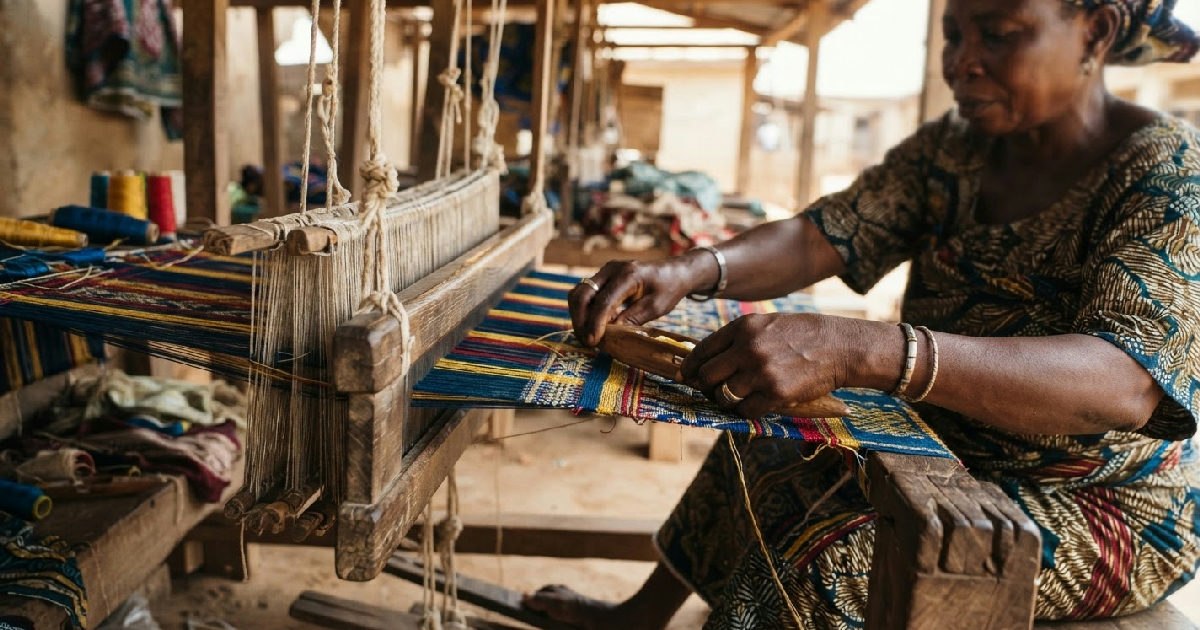
Nigerian handwoven fabrics, particularly treasured textiles like Aso-Oke and Akwete, stand as powerful symbols of cultural identity. Artisans across the country are actively resisting automation, asserting that the manual process is fundamental to the unique character, authenticity, and profound cultural significance of their craft.
This steadfast commitment persists even as domestic and international demand for these intricate textiles continues to surge, driven by a global appreciation for Nigerian fashion and heritage.
The threads of history and cultural significance of Nigerian handwoven fabrics
The story of Nigerian handwoven textiles is deeply intertwined with the nation’s history and its diverse ethnic groups. These fabrics are not merely clothing; they are living relics, carrying centuries of accumulated knowledge and cultural nuances.
Aso-Oke, meaning “top cloth” in Yoruba, traces its origins back centuries, with some historians suggesting its existence as early as the 8th century. It comes alive in regions like Oyo, Osun, and Kwara, with traditional centers in towns such as Iseyin and Ilorin.
This celebrated textile is typically crafted from cotton, silk, bark, and goat’s wool, meticulously woven on looms. The type and quality of Aso-Oke often signal social status and wealth, making it an indispensable part of significant life events.
Weddings, chieftaincy ceremonies, and festivals would feel incomplete without the vibrant presence of Aso-Oke. Its core types – Sanyan, Alaari, and Etu – each tell a distinct story through their material and colour.
Aso-Oke: a legacy woven in three forms
Among the various expressions of Aso-Oke, three elemental types form its foundational identity. Sanyan, often called the “king of cloths” (Sanyan baba aso), is made from wild silk fiber, distinguished by its prestigious brown hue.
Alaari is traditionally woven with a blend of cotton and silk, renowned for its rich red colour that commands attention. Etu, conversely, presents a deep blue or black, often subtly accented with thin white stripes, embodying a different kind of elegance.
These distinctions reflect not just aesthetics but also historical significance and the resources available to weavers. Each variant has its place in the grand tapestry of Yoruba ceremonial wear.
Akwete: a rich weaving tradition from Igboland
From the southeastern part of Nigeria emerges Akwete, another distinguished handwoven textile originating from Akwete town in Abia State. The Ndoki people are its primary producers, with weaving skills traditionally passed down among Igbo women for generations.
While various creation stories exist, the presence of Akwete cloth is documented as far back as the mid-19th century. Lore credits a legendary weaver, Dada Nwakata, with introducing innovations using imported yarn and silk around the 1850s.
Akwete cloth is celebrated for its intricate woven motifs, often featuring geometric designs and symbols inspired by nature and indigenous cultural practices. These designs carry deep cultural meanings, with certain motifs like “Ikaki” (tortoise) once reserved for royalty or specific occasions.
Weavers traditionally use Nkwe looms, some of the largest in Nigeria, constructing them from bamboo, and later, wood and iron. Like Aso-Oke, Akwete is worn during ceremonies, festivals, and cultural events, and historically served various everyday purposes too.
The laborious journey of a handwoven textile
Creating Nigerian handwoven fabrics is a profoundly labor-intensive process, demanding skill, patience, and artistic vision at every turn. It begins long before threads ever meet the loom, with careful fiber preparation.
Cotton, silk, or synthetic fibers are meticulously cleaned, and traditionally, cotton is handpicked with seeds manually extracted. This raw material then undergoes spinning, often on traditional spinning wheels, transforming fibers into threads.
The next stage involves dyeing, where threads are immersed in natural or synthetic dyes to achieve desired colors. These vibrant threads are then sun-dried, a process that has evolved from historically limited palettes to today’s diverse, often imported, loom-ready threads.
Warping follows, a meticulous step where dyed threads are precisely arranged on the loom to form the warp, or vertical threads. Artisans can spend hours arranging these threads, setting the foundation for the pattern to emerge.
The weaver’s dance: warp and weft
With the warp threads in place, the weaver begins the rhythmic process of interlacing the weft (horizontal threads) through them. This manual manipulation of threads creates the fabric’s unique texture and pattern.
Each throw of the shuttle and beat of the reed is a deliberate act, a culmination of practiced skill. It’s this intimate human touch that distinguishes handwoven fabric from its machine-made counterpart, giving it an authenticity that resonates deeply.
A resolute stand against mechanization
The resistance to automation among Nigerian handwoven fabric makers is not simply about preserving old ways; it’s a conscious decision rooted in deeply held beliefs about authenticity, quality, and cultural identity. They see mechanization as a direct threat to the very essence of their craft.
Weavers like Kareem Adeola articulate this sentiment clearly, stating that “If you use a machine to weave aso-oke, it won’t come out as nice as if it was handwoven.” This conviction highlights the belief that the intricate details and texture produced by human hands are simply irreplaceable.
For these artisans, the painstaking manual process isn’t just a method; it defines the fabric’s intrinsic value and authenticity. The “micro-decisions” and “muscle memory” of a skilled artisan are qualities that no machine, however advanced, can replicate.
Cultural identity and generational knowledge
Handwoven fabrics are more than just textiles; they are powerful expressions of Nigeria’s early history and cultural identity. The craft embodies centuries of accumulated knowledge, techniques passed down through generations, often orally and through practical apprenticeship within families and communities.
Automation, therefore, is perceived not just as a technological shift but as an assault on this cultural continuity. It risks severing the link to traditional skills and the communal practices that have sustained these art forms for so long.
As the global market increasingly values the unique narratives behind products, the stories woven into each thread of Aso-Oke or Akwete become part of its appeal. Preserving the handweaving process safeguards these invaluable narratives.
The economic reality: livelihoods and job security
Beyond the cultural and aesthetic arguments, there’s a pragmatic reason for resisting automation: the preservation of livelihoods. Handweaving is a significant economic activity in Nigeria, providing employment and income for countless artisans.
Many fear that the introduction of machines would lead to widespread job displacement, echoing the concerns of textile workers during the 19th-century Luddite movement. This craft has become an economic lifeline, even attracting university graduates keen to learn the tradition.
The high value of authentic handwoven fabrics in domestic and international markets also underscores the importance of this human-centric production model. Customers are willing to pay a premium for the quality, history, and craftsmanship that only manual weaving can provide.
Past efforts and future challenges
There have been attempts to mechanize the production of these fabrics in the past, but these efforts have often met with limited success or outright failure. One weaver noted, “People have tried it before and it did not work. It is meant by God to be handwoven.”
This history reinforces the artisans’ belief that handweaving is the only viable method for creating these specific, culturally resonant fabrics. It also highlights the intricate nature of the craft that has proven difficult for machines to fully replicate.
However, the broader Nigerian textile industry still grapples with significant challenges, including erratic power supply, high production costs, and stiff competition from cheaper imported fabrics. These issues add complexity to the artisans’ stance, even as their specific niche thrives.
Looking ahead: a balance of tradition and progress
The resistance to automation in Nigeria’s handwoven fabric sector suggests a future where these crafts continue to flourish as artisanal, high-value products. It positions these textiles as symbols of cultural resilience in an increasingly mechanized world.
The growing global demand for authentic, handmade goods creates a unique opportunity for these artisans. It underscores that while technology advances, there remains a deep human need for items imbued with story, skill, and heritage.
This dedication to traditional methods keeps the history of Nigeria’s diverse cultures alive, one thread at a time. It prompts a question for us all: in an age of rapid change, what forms of our heritage are we most compelled to protect?
