




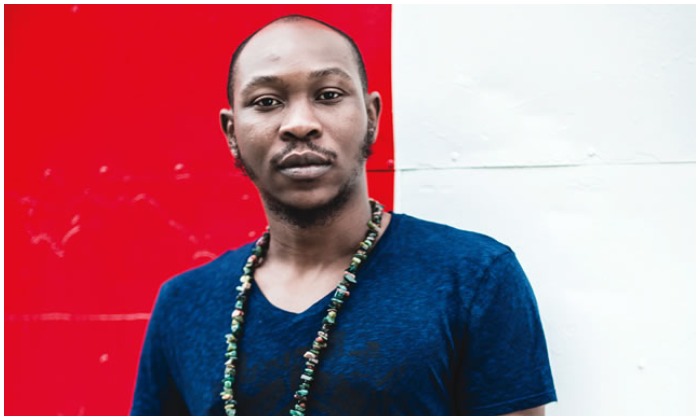
On August 19, 2026, in a North London building groaning under the weight of history, Seun Kuti picked up one of the black books. He was not there to perform. He was there to bear witness. Surrounded by shelves holding a million stories, the Afrobeat musician and activist held one aloft and delivered a mission statement in five words: “This is for our kids.”
Kuti was at the Maa Maat Centre, home to Europe’s largest archive of Black literature, a collection under threat. His presence was an act of solidarity, connecting a new generation’s fight for memory to a legacy of defiance he inherited by blood. This was more than a photo opportunity; it was a pilgrimage.
A legacy of Seun Kuti black books and liberation
To understand Seun Kuti’s journey to that London archive, you must first understand the name he carries. Born in 1983, Oluseun Anikulapo Kuti is the youngest son of Fela Kuti, the pioneer of Afrobeat and a titan of Nigerian resistance.
When Fela died in 1997, a 14-year-old Seun took his father’s place at the head of Egypt 80, his legendary band. It was an inheritance of rhythm, but also of rebellion.
For Seun, music has never just been about sound; it is a tool for what he calls “liberation.” His albums are filled with politically charged anthems that carry the torch of Pan-Africanism.
He was a visible figure during the #EndSARS protests that shook Nigeria, and he has worked to revive the Movement of the People, the political party his father founded in 1979. This life of protest is what makes his quiet act in a London bookshop so loud.
It is a continuation of the work done by the Ransome-Kuti family, who have long been Nigeria’s conscience.
His activism is not just public performance. Those close to him describe Seun Kuti as a voracious reader, a man of deep knowledge. His visit to the Maa Maat Centre was less a celebrity appearance and more a homecoming. He was there because, for him, the fight for political freedom and the fight for knowledge are one and the same.
The man who built the archive
The one million books Seun Kuti came to defend did not assemble themselves. They are the life’s work of one man: Nkrumah Pepukayi. Now 75, Pepukayi is a leading Pan-African community activist who has spent over five decades painstakingly gathering books about Black history, art, and life. He saw what was missing from mainstream shelves and decided to build a library of his own.
In 2003, he acquired a former synagogue in Tottenham and transformed it into the Maa Maat Centre, a community hub for workshops, readings, and learning. But time took its toll. The building began to deteriorate, and after closing during the pandemic, it suffered multiple break-ins in 2025. The collection, a priceless repository of Black identity, was at risk of being lost forever.
Pepukayi’s mission was simple: to ensure Black stories were told, preventing history from being “twisted to benefit others.” He believes reading is a fundamental tool for liberation. This physical space, filled with paper and ink, represents a sanctuary against the erasure of a people’s past.
When Pepukayi said he was “elated” to have Kuti visit, it was the joy of one long-distance runner seeing another pick up the baton.
‘For us, it is necessary’
Standing amidst the towering shelves, Seun Kuti drew a sharp line between two worldviews. “For us, it is necessary to have these books,” he explained, gesturing to the collection.
“For them, it is a business.” His words cut to the heart of the struggle: the fight to preserve culture against the forces of commerce and neglect. He understands the steep cost of acquiring these texts, many of which are rare or out of print.
This battle found its champion in Selina Brown, founder of the Black British Book Festival (BBBF). In 2021, as a self-funded single mother with no industry backing, she launched the festival. It has since grown into Europe’s largest celebration of Black literature.
Earlier in 2026, her work was recognised when Queen Camilla awarded her the UK’s first-ever Queen’s Reading Room Medal, naming her the inaugural National Reading Hero.
When Brown learned of the Maa Maat Centre’s plight, she launched the #Save1MillionBlackBooks campaign through the BBBF. The initial fundraising goal of £75,000, set to cover urgent repairs and begin cataloging the vast collection, was quickly met and exceeded. It showed that while the work of preserving the legacy of a novelist or poet is difficult, the community’s hunger for its own stories is immense.
In an Instagram post celebrating Kuti’s visit, organisers captured the feeling: “Thank you for showing up, Seun. And for your work in preserving our legacy, protecting our history, and making sure the knowledge our elders fought to collect stays in our hands.”
More than a bookstore, a sanctuary
Black-owned bookstores and cultural centres like Maa Maat have always been more than just places to buy books. They are vital community anchors. They are schools where the official curriculum is missing. They are political spaces where strategies are born and debates are held. They provide access to stories and ideas that mainstream institutions have historically ignored or excluded.
These spaces are crucial for fostering identity and building community, both in the diaspora and on the African continent. The fight to save Pepukayi’s collection is not just about preserving old paper; it’s about securing a future where young Black people can see themselves reflected in the pages of history.
It is about ensuring the intellectual inheritance is passed down, just as cultural traditions involving everything from resurrecting notorious prophets to specific culinary practices are.
The threat to the Maa Maat Centre is a familiar story. All over the world, cultural archives face dangers from gentrification, underfunding, and simple indifference. The successful campaign to save this particular archive is a powerful counter-narrative. It proves that with dedicated leadership and community support, these vital sanctuaries can be protected.
What the son carries forward
In the end, this is a story about a person. It’s about what Seun Kuti’s quiet visit to a London library reveals about the man he is. He is not just Fela’s son, forever playing his father’s songs. He is his own man, carrying the weight of that legacy while forging his own path.
He understands that the saxophone can be a weapon, but so can a book.
His action connects the struggles in Lagos with the preservation of history in London, showing a truly Pan-African vision. It suggests that for Kuti, liberation is not an abstract political idea. It is the practical work of building and defending the institutions that allow a people to know themselves. He is not just protesting against a system; he is actively investing in the alternative.
By holding up that single book, Seun Kuti was not just saving a library. He was making a promise to the next generation. The fight his father waged on the stage of the Afrika Shrine continues today in the quiet, dusty aisles of a bookstore.
And it leaves a question for every Nigerian to consider: what part of our own story are we fighting to save?
