




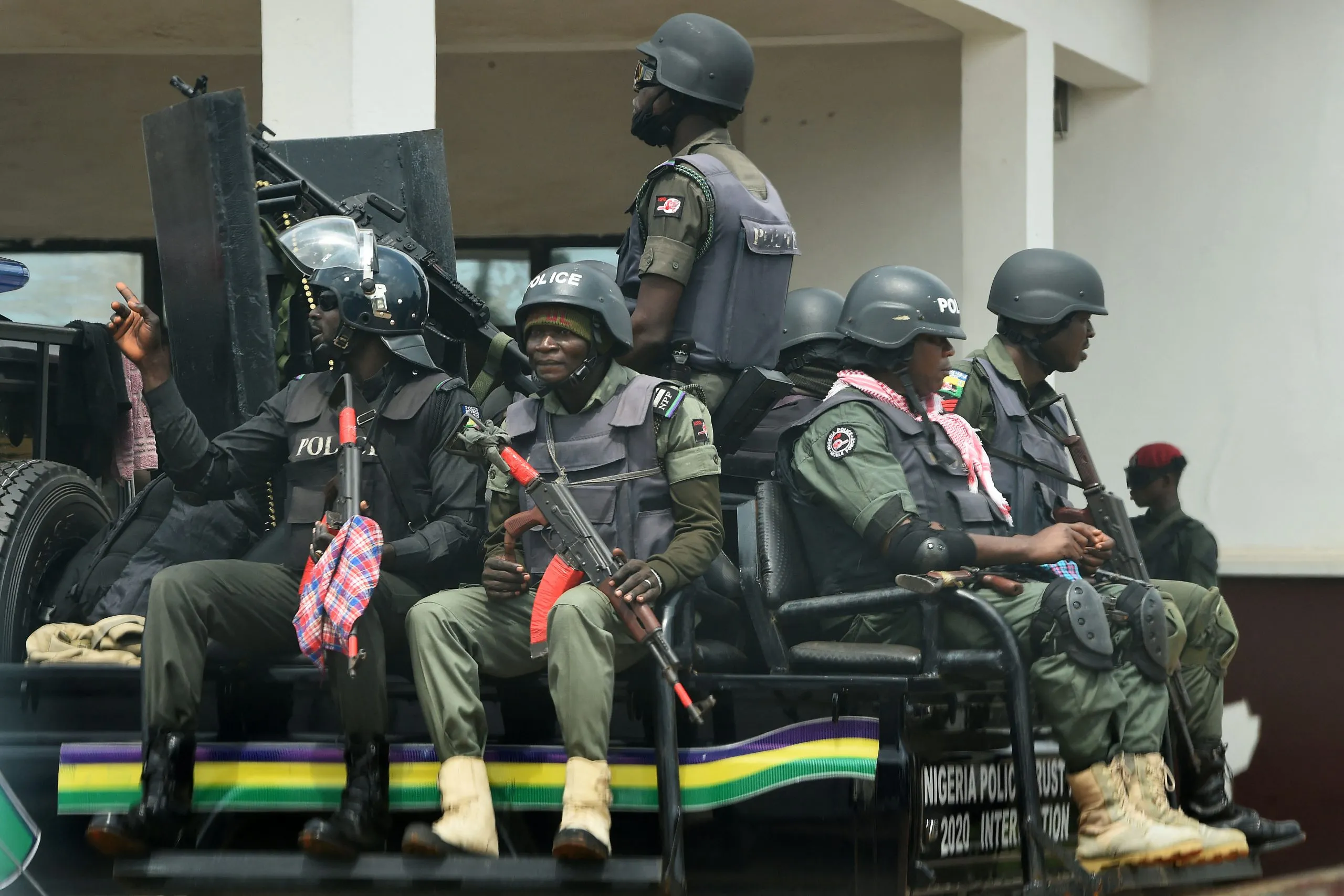
On July 27, 2024, a funeral vigil in Tse Angaador, a quiet farming village in Benue State, devolved into a scene of carnage. This incident highlights the controversial activities of Operation Zenda Benue, an elite police unit.
This tragic incident was not an isolated aberration. It underscored a grim reality for many Benue residents: the very force tasked with their protection had become a dreaded entity. Operation Zenda’s alleged abuses, ranging from extrajudicial killings to forced disappearances, exposed a shocking divergence between its official mandate and its operational reality in the 2020s.
The Tse Angaador Massacre and Operation Zenda Benue
Polycarp Yaapera attended the funeral vigil for Kumawuese Bam, alongside his younger brother, Aondoakura. He remembered the sudden eruption of gunfire, seeing his 34-year-old brother, a father of three, collapse beside him.
Polycarp hid behind a mud wall for five minutes as the chaos unfolded. When the shooting ceased, he emerged to find seven bodies. His brother, Aondoakura, was among the dead.
Another victim was Lubem Bam, son of Helen Bam, the very mother for whom the funeral was held. Helen, who had lost her husband in 2015, now grieved two children. She described police officers kicking open her door, ransacking her room, and allegedly stealing ₦32,000 and a smartphone.
Mrs. Bam’s profound despair was evident during a January 2026 visit by PREMIUM TIMES. “Anytime I see police, I want to ask them to kill me too,” she lamented, still reeling from the events two years prior.
Mbaveluior Yaapera, the community head, alleged that Operation Zenda commander Akegh Ernest led the team. The officers reportedly loaded the bodies into a Hilux van and drove away, leaving behind a terrified populace too afraid to pursue them.
An anonymous eyewitness later confirmed seeing the bodies deposited at a private mortuary in Ugba. Unlike standard police practice of displaying deceased “armed bandits,” these bodies were taken directly to a mortuary, bypassing the general hospital.
Following the massacre, community representatives met with local officials, including then-chairman of Logo Local Government Area, Benjamin Uzenda. Uzenda reportedly admitted the killings were a police “error” but warned against further action, implying a withdrawal of security in future conflicts with armed herders.
Solomon Wombo, the community’s House of Representatives member, provided ₦500,000 for the victims’ burials. However, he did not respond to inquiries about accountability or follow-up actions regarding the circumstances of the killings.
The victims — Ordughga Tyoapine, Kater Tarpav, Yaapera Ternenge, Nater Setim, Ioryevese Tarpav, Bam Lubem, and Yaapera Aondoakura — were buried on 10 August 2024, in Tse Angaador.
A Pattern of Police Raids and Destruction
The Tse Angaador tragedy was not an isolated incident. Six months earlier, on 12 January 2024, Operation Zenda conducted a similar raid in Tse Jikina, another community within Logo Local Government Area. Akegh Ernest, then a divisional police officer, allegedly led this operation as well.
The objective was reportedly to arrest Iorhom Orkile, an herbal practitioner accused of supplying charms to bandits. Residents recounted officers searching compounds without warrants and assaulting locals. Tornyor Orkile, Iorhom’s brother, filed a suit against the police, Operation Zenda, and Akegh Ernest, but the case was later struck out due to a judge’s transfer and alleged pressure to drop the complaint.
During a January 2026 visit, PREMIUM TIMES documented 25 burnt and abandoned houses in Tse Jikina. One of these belonged to Zuamo Tornyor, a university student whose family home was destroyed in the raid. These incidents painted a clear picture of an unchecked police unit operating with little regard for human rights or due process.
The unit’s actions seemed to disregard the very principles of law enforcement, much like the broader challenges faced by Nigeria’s institutions, including its power privatization efforts which became an industrial bottleneck.
Disappearances and Deaths in Custody
Beyond the direct raids, Operation Zenda faced multiple allegations of deaths and disappearances in its custody, raising serious questions about police accountability in Benue State.
In May 2022, Emmanuel and Terna Chado were watching a football match in Tor Mkar Mbazerem. Terna was later arrested following police tracking of phone calls. His family never saw him alive again.
Police claimed Terna died on 17 May 2022, from a stray bullet during a gun exchange while he was assisting in an arrest. They stated he was buried two days later, without his family’s knowledge. This account deeply troubled his brother, Charles Chado.
Charles filed a fundamental rights enforcement suit at the Federal High Court in Makurdi. On 15 March 2024, Justice R. J. Egbe awarded Terna’s family ₦50 million in compensation for his extrajudicial execution. Yet, the family confirmed they received no payment from the police.
The fate of Paul Achov remained officially unresolved after his arrest on 2 August 2025, at a Makurdi relaxation spot. Human rights activist Ukan Kurugh, handling Achov’s case, obtained a police report labelling him a criminal gang member, but no evidence or formal charge was presented.
Kurugh’s petition to national authorities in October 2025 led to information from a police source suggesting Achov had been killed. His sister, Ruth, a Philosophy graduate, pleaded for accountability: “If they have evidence, they should charge him to court. If he is innocent, they should clear his name.”
Another concerning case involved Fanen Kpentemen, arrested on 20 September 2025, over an alleged WhatsApp fraud. A family member reported Kpentemen died by Saturday. Police spokesperson Udeme Edet, however, issued a statement claiming Kpentemen was an armed robbery suspect who died after being lynched by youths while attempting to escape.
The family disputed this official narrative, alleging torture and questioning why they were not promptly informed of his death. The conflicting accounts highlighted a systemic lack of transparency in police operations.
On 11 January 2026, Tordue Shapila, 35, was arrested at his family home in Apir village, Makurdi, by men identifying as Operation Zenda officers. His father, Christopher Shapila, recounted how they denied family access for weeks, despite assurances of his good health.
Legal efforts to secure Shapila’s release or arraignment were ignored. On 18 March, police informed his lawyer he had died, claiming he was killed in a shootout during an investigation in Gboko. The family rejected this explanation, demanding an investigation, independent autopsy, and ₦5 billion in compensation.
These repeated instances, each with its unique harrowing details, challenged the official narrative of Operation Zenda as a purely protective force. They presented a disturbing picture of arbitrary power and a justice system that often failed its most vulnerable. These events echo the enduring challenges faced by rural communities, a struggle epitomized by the Benue school closure crisis that led to Ochanya Ogbanje’s death.
Accountability: Official Denials and Deaf Ears
The numerous allegations of extrajudicial killings and abuse by Operation Zenda were met largely with official denials and a notable lack of decisive action from authorities.
Operation Zenda Commander Ernest Akegh vehemently denied any wrongdoing, insisting his unit operated “in line with the law.” He declined to provide autopsy reports for deceased suspects, directing inquiries to higher police command.
Benue police spokesperson Udeme Edet, when questioned about the July 2024 Tse Angaador killings, stated she was not in her role at the time and could not comment. She maintained the official police position on Philip Fanen’s death, absolving the police of culpability, but failed to provide an autopsy report or answer questions regarding Paul Achov’s disappearance.
The state government, through Jacob Gbamwuan, Director-General of the Bureau of Homeland Security, largely deferred responsibility. Gbamwuan described the allegations as “heavy” but suggested that the Nigeria Police Force itself should establish an investigative committee. This stance highlighted a bureaucratic labyrinth that seemingly obstructed independent inquiry.
Rommy Mom, president of Lawyers Alert, a human rights organization, stressed the importance of investigating these abuses. He argued that unpunished police misconduct only emboldened officers to commit further wrongs, perpetuating a cycle of violence and impunity.
Benue State’s increasing security budget — ₦9.27 billion in 2023, ₦12 billion in 2024, and a proposed ₦15.60 billion for 2025 — further amplified questions about accountability.
With substantial public funds allocated for security, the apparent failure to protect citizens, and the alleged transformation of a protective unit into a feared oppressor, sparked concern over governance and the rule of law. The irony was stark: more money for security did not automatically translate to more safety or justice for residents.
The Real Story of Power in Benue
Operation Zenda was conceived as a bulwark against rising criminality in Benue, a symbol of the state’s commitment to order. Its narrative was meant to be one of courageous officers safeguarding communities.
But the real story, as told by families and communities, was profoundly different. It was a narrative of fear, of lives cut short, and of justice deferred or denied. The unit, designed to protect, became an embodiment of unchecked power.
This reveals a sobering truth about Nigeria: the official story of state institutions often masks a more complex, and sometimes brutal, reality. When those meant to uphold the law become its transgressors, the very foundation of public trust erodes, leaving citizens to question where safety truly lies.
A Call for Justice and Reform
The incidents linked to Operation Zenda exposed deep fissures in policing and governance within Benue State. The families of the dead and missing continued their arduous struggle for answers and accountability. Their stories served as a stark reminder of the urgent need for comprehensive police reform.
Without transparent investigations, swift justice, and genuine oversight, the cycle of alleged abuses could continue. The chasm between the ideal of a protective police force and the lived experience of terror remains a critical challenge for Nigeria. Rectifying this imbalance is crucial for restoring faith in the institutions meant to serve and protect all citizens.
