




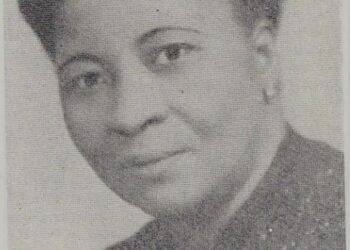
In 1907, Elizabeth Abimbola Awoliyi became the first Nigerian woman to practice medicine, a profession then dominated by men.
It began with Chief Elizabeth Abimbola Awoliyi, born Elizabeth Abimbola Akerele on November 11, 1910, in Lagos. Her journey from a young girl in colonial Lagos to Nigeria’s first practicing female physician dismantled barriers. She didn’t just enter a profession; she fundamentally reshaped the professional landscape for women in the country.
Early life and breaking educational barriers
Growing up in Lagos, the fourth of David Evaristo and Rufina Akerele’s seven children, Elizabeth Abimbola Awoliyi’s path was defined early by education. She first attended St. Mary’s Convent Primary School. A crucial next step came when she received a scholarship to Queen’s College, Lagos.
Queen’s College itself was a relatively new institution, established in October 1927. It began with just 20 girls, marking the first government-owned secondary school dedicated to girls in Nigeria. This access to quality schooling was rare at the time and proved foundational for Awoliyi’s ambitious future.
Her family, of Aguda origin, instilled a drive that propelled her towards academic excellence. This foundation allowed her to consider avenues that were largely closed to other young women. She was aiming for a world that had not yet been built for her.
Forging a path in Irish medical schools
In 1929, at just 19, Elizabeth Abimbola Akerele embarked on a voyage to Ireland, a bold move that underscored her family’s commitment and her personal resolve. She pursued medical studies at both University College Dublin (UCD) and the Royal College of Surgeons in Ireland (RCSI). These institutions would become the crucible of her pioneering medical career.
Her academic achievements were swift and significant. On July 3, 1936, she achieved a historic milestone, becoming the first West African woman officially entered on the Roll of Licentiates of the Royal College of Surgeons in Ireland (LRCSI). This was not merely a personal triumph but a crack in the wall of a historically exclusive profession.
She continued her studies with exceptional distinction, graduating from UCD in 1938 with a first-class honours degree and a medal in medicine. She also earned a distinction in anatomy, showcasing her profound understanding of the human body.
This made her the second West African woman to qualify as an orthodox-medicine trained physician, following Agnes Yewande Savage, who had graduated from the University of Edinburgh in 1929 and largely practiced in what was then the Gold Coast.
Awoliyi’s crucial decision to return to Nigeria immediately after her studies set her apart. She chose to establish her medical career within her homeland, a choice that would define the evolution of women’s healthcare systems in Nigeria. This wasn’t just about qualification; it was about presence and leadership where it was most needed.
Building a medical career at Massey Street Hospital
The year 1938 saw Dr. Elizabeth Abimbola Awoliyi arrive back in Nigeria, ready to apply her formidable skills. She began her long and impactful career at Massey Street Hospital in Lagos, starting as a Junior Medical Officer. The hospital quickly became the stage for her growing expertise and dedication.
She married Dr. S. O. Awoliyi, a fellow medical doctor and surgeon, in 1942. Together, they formed a powerful medical alliance that would contribute significantly to Nigeria’s nascent healthcare infrastructure. Her specialisation in gynaecology was particularly vital, addressing critical health needs among Nigerian women that had often been overlooked.
Her dedication and skill saw her ascend through the ranks, eventually earning the title of Chief Consultant Gynaecologist. By 1960, she shattered another ceiling, taking on the role of Medical Director of Massey Street Hospital. She led the institution until her retirement in 1969, overseeing its operations during a period of significant national change.
This leadership position at a major Lagos medical institution was revolutionary. It demonstrated unequivocally that Nigerian women were not only capable of entering the medical profession but could also excel in senior clinical and administrative roles. Her path provided a clear blueprint for others to follow, transforming a system that previously offered little space for female leadership.
Advancing maternal and child healthcare systems
Dr. Awoliyi’s commitment to medical excellence didn’t stop with her initial degrees. In 1949, she traveled to the United Kingdom with her husband for further postgraduate studies. There, she honed her skills in midwifery and gynaecology, training at prestigious institutions like Hammersmith Hospital and Lewisham Hospital in London.
She also obtained a Diploma in Child Health (DCH) in 1945 and a Diploma in Obstetrics and Gynaecology.
These advanced specialisations reflected her deep concern for maternal and child health. By the late 1950s, she had developed a significant reputation across Lagos for her work with mothers and children. Her initiatives included pioneering vaccination drives and establishing free clinics, directly addressing the systemic neglect in women’s and children’s health services.
Her influence extended beyond the public sector. She also established her own private hospital, which prioritised surgical expertise in gynaecology. This venture also ensured accessible care for many, further cementing her reputation as a doctor dedicated to her community.
For a sense of the cultural currents during her working life, one might consider the influence of artists like Celestine Ukwu on Nigerian thought and society at the time.
Public service and lasting influence
Dr. Awoliyi’s career transcended clinical medicine, reaching into the realm of public service and national development. Her contributions earned her significant recognition, including being appointed a Member of the Most Excellent Order of the British Empire (MBE) in 1958. This honor acknowledged her profound services to medicine and the wider community.
Beyond imperial recognition, she received traditional and national honors. She was named Iya Abiye of Lagos State in 1962, a title meaning “Mother of the Beautiful” or “Mother of Good Things.” She also held the title Iyalaje of Oyo Empire and received the Nigerian national honor, Officer of the Order of the Federal Republic (OFR).
Her leadership extended to pivotal women’s organisations. She was a founding member and pioneer president of the Lagos branch of the National Council of Women’s Societies (NCWS). She then served as the second President of the National Council of Women’s Societies of Nigeria from 1964 until her passing in 1971.
This was a turbulent time in Nigeria, marked by profound national challenges, as seen in events like the Ishola Oyenusi execution in the same year of her death.
As a consultant to the NCWS family planning clinic, which later evolved into the Planned Parenthood Federation of Nigeria, Awoliyi connected her medical expertise with broader societal welfare. She was a vocal champion for girls’ education and women’s suffrage, actively lobbying for policies that broadened educational access for young women.
Her work reshaped the system by which women could engage with public health and civic life.
Her extensive involvement didn’t stop there. Awoliyi was President of the Child Care Voluntary Association and an active President of the Business and Professional Women’s Association. She also played a role in the Lagos Colony Red Cross and the Motherless Babies Home Governing Council of Nigeria.
Furthermore, she became the first president of the Holy Cross Parish Women Council at the Holy Cross Cathedral in Lagos.
She maintained memberships in a host of other organisations. These included the Girls Association of Nigeria, The Catholic Women’s Association, Old Girl’s Association of St. Mary’s Convent School, St. Anthony’s Guild, and the Catholic Ladies Friendly Society. Each affiliation demonstrates her dedication to community upliftment and the advancement of women.
She even owned a 27-acre poultry and citrus farm in Agege, Lagos State, and directed a commercial medical store in Lagos, showcasing her entrepreneurial spirit. She died on September 14, 1971, at the age of 60 or 61, just six years after her husband, Dr. S. O. Awoliyi, passed away.
A system transformed: the legacy of a medical pioneer
The story of Chief Elizabeth Abimbola Awoliyi isn’t merely that of an individual; it is the origin story of a critical system within Nigeria. She charted a course that reshaped the very possibility of professional life for Nigerian women.
Her achievements created a precedent, transforming the medical landscape from one of male exclusivity to one that, by her death, had begun to recognise and nurture female talent.
Her insistence on practicing in Nigeria, developing specialties in women’s health, and taking on administrative leadership roles directly addressed the systemic gaps in healthcare provision and gender representation. The Dr. Abimbola Awoliyi Memorial Hospital in Lagos Island stands as a tangible testament to her enduring impact.
Her son, Tunji Awoliyi, has dedicated much to preserving her legacy. Her journey reflects the evolving challenges and aspirations within Nigerian healthcare to this day.
Awoliyi’s life poses a question for contemporary Nigeria: how do we continue to build on the foundations laid by such pioneers? Her career exemplifies how singular determination can dismantle long-standing systemic barriers. It shows that the history of Nigeria’s institutions is deeply intertwined with the stories of the remarkable individuals who dared to forge new paths.
