




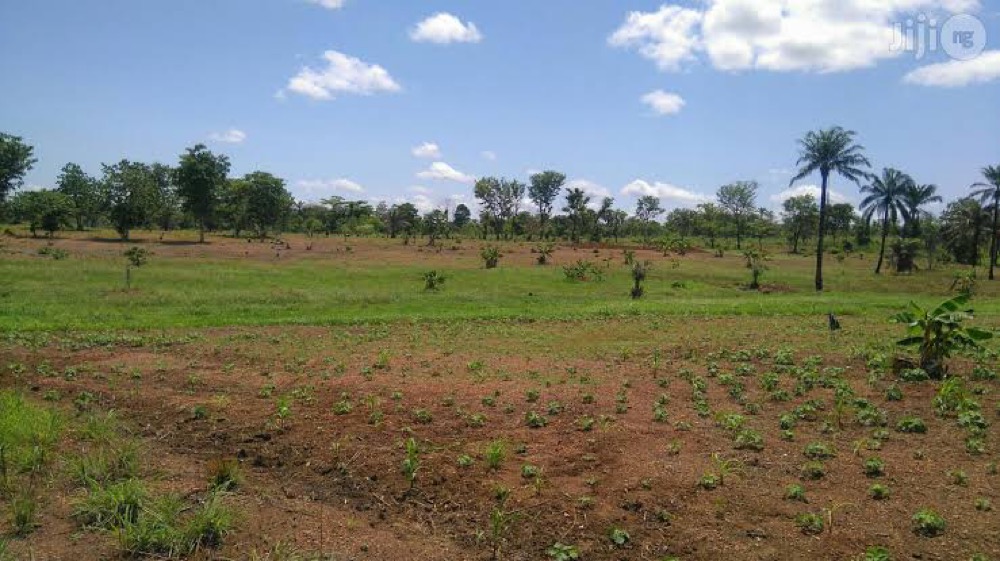
At the United Nations Convention to Combat Desertification COP17 in Ulaanbaatar, Mongolia, Nigeria commits million to restore 19 million hectares of degraded land.
The fight against land degradation in Nigeria is being waged on two fronts: diplomatic negotiation on the global stage and practical restoration in the arid and semi-arid regions at home. This dual approach relies heavily on external technical and financial support from the UNCCD, the Food and Agriculture Organisation (FAO), and the World Bank.
The stakes are immense, impacting millions of lives caught between ecological collapse and the search for increasingly scarce productive land. Failure to act, authorities warn, will only deepen poverty and insecurity.
How land degradation drives food insecurity and conflict
The core of Nigeria’s ecological crisis lies in its shrinking and damaged rangelands. Etim William confirmed that approximately 50 per cent of Nigeria’s rangelands are already degraded, a shocking figure that points directly to severe environmental distress. These grasslands and shrublands, vital for grazing, are being lost to overexploitation, uncontrolled burning, and conversion into croplands and urban infrastructure.
The immediate human consequence of this degradation is visible in the deepening farmer-herder conflicts that have plagued central and northern Nigeria for years. As traditional grazing corridors vanish, pastoralists are forced to move their herds through cultivated farmlands, intensifying competition for land resources.
This cycle of environmental decay driving social breakdown is rapidly becoming one of Nigeria’s defining challenges. The health of the land is intrinsically linked to peace and security, a fact often overlooked in political analyses.
Beyond conflict, the decline in land quality directly compromises agricultural output, leading directly to food insecurity, hunger, and heightened poverty. When land is degraded, it loses biodiversity and vital soil organic matter, which reduces crop yields and makes the remaining productive land unsustainable.
This systemic pressure forces communities to migrate in search of greener pastures, creating further instability in receiving regions, a pattern visible across the Niger Delta’s borders and the northern frontier states.
Land degradation also diminishes the nation’s ability to withstand climate events, exacerbating the impact of dust carried by the Northeast Trade Winds during the harmattan season.
The government’s commitment, known as Land Degradation Neutrality, is a program designed by the UNCCD to achieve zero net land degradation. This is enshrined in Sustainable Development Goal 15.3.1. Achieving neutrality means actively maintaining land cover, productivity, and soil fertility to ensure no net loss in the quantity or quality of the nation’s land resources.
The ambitious target of 19 million hectares
The scale of Nigeria’s restorative ambition has grown significantly, thanks in part to technical support from the UNCCD. Initially, Nigeria aimed to restore 10 million hectares of degraded land, a massive undertaking in its own right. However, a subsequent phase of target-setting, supported by the international convention, raised this goal dramatically.
Nigeria is now committed to the restoration of approximately 19 million hectares, cementing its status as a major global actor in the fight against desertification. This commitment underscores the fact that the Federal Ministry of Environment views land restoration not just as an environmental goal but as an economic and security imperative.
This goal is complicated by the immense funding gap faced by the department charged with its execution.
The restoration work is primarily concentrated in the 11 desertification frontline states, where the impact of ecological deterioration is most severe. These states include Sokoto, Kebbi, Zamfara, Kano, Katsina, Jigawa, Adamawa, and Taraba, among others. These areas are characterized by arid and semi-arid conditions that make them highly vulnerable to desertification and drought, requiring specialized interventions.
The techniques deployed on the ground are practical and specifically designed for resilience in low-rainfall environments. These include the establishment of tree plantations using local varieties that can withstand drought conditions. In a country struggling with water scarcity, the department has focused heavily on innovative water provision.
Water provision and community resilience
One of the most critical interventions involves sophisticated underground water storage systems. These systems are designed to collect rainwater efficiently during the rainy season and channel it into protected storage for use when the rains cease in the long dry season. This technique provides reliable access to water in areas increasingly affected by drought.
Beyond these storage systems, the department also drills boreholes, including solar-powered boreholes, to provide sustainable water sources for communities and livestock. By mitigating the effects of drought through reliable water supply, these interventions aim to reduce the immediate pressure on rangelands and help stabilize local ecosystems.
This focus on local adaptation aligns with the global recognition that effective resource management is key to addressing climate vulnerability.
Nigeria’s diplomatic push for a drought protocol at UNCCD COP17
While the physical work continues in the northern states, Nigeria is also active on the international diplomatic circuit. At the ongoing UNCCD COP17, running from August 17 to 28, 2026, in Ulaanbaatar, Mongolia, Nigeria is playing a leading role in advancing Africa’s position. The primary objective is to push for a legally binding instrument on drought management, effectively a drought protocol.
The Nigerian delegation, comprising approximately 60 delegates, is negotiating as part of the African Group of Negotiators. This unified approach ensures that Nigeria’s objectives—which include financial support and drought resilience strategies—are aligned with the broader African agenda.
This diplomatic cohesion is essential given that delegates from 196 countries and the European Union are attending the conference, where issues like resource mobilization and resource management will dominate discussions.
Former President Muhammadu Buhari had previously issued a directive calling for multi-stakeholder collaboration among various ministries to combat desertification. This policy mandate, established after meeting with Ibrahim Thiaw, Executive Secretary of the UNCCD, underlines Nigeria’s high-level commitment to the issue. Thiaw emphasized that land degradation is fundamentally about food, peace, and security, making the restoration effort central to the nation’s stability.
Beyond the protocol, Nigeria is actively seeking greater financial support to meet its national needs and fund its National Adaptation Plan. Restoration, William noted, requires “a huge investment that no nation can undertake alone,” emphasizing the need for international collaboration.
The outcome of the negotiations will heavily influence the pace at which the 19 million-hectare target can be pursued. The question of how Nigeria divides its wealth locally often pales in comparison to the scale of international financing required for climate action.
The essential role of international collaboration
Nigeria’s fight against land degradation is critically supported by multilateral institutions, providing necessary technical expertise and funding that augment limited national appropriations. The collaboration with international partners has significantly enhanced the activities of the Federal Ministry of Environment, particularly in data collection and target refinement.
The UNCCD itself provides direct funding for specific projects and has been instrumental in helping Nigeria gather reliable data to assess the extent of desertification. This partnership allowed the initial target of 10 million hectares to be effectively doubled to the current 19 million-hectare goal. These global partnerships are vital, especially when domestic funding struggles to keep pace with the enormous demands of nationwide restoration.
The World Bank supports the Agro-Climatic Resilience in Semi-Arid Landscapes (ACReSAL) project, which focuses specifically on addressing degraded landscapes in the semi-arid region. ACReSAL is designed to build resilience against climate change and promote climate-smart agriculture practices among local populations. This project provides a financial and technical framework to ensure interventions are sustainable and aligned with broader development goals.
Similarly, the Food and Agriculture Organisation (FAO) supported the Action Against Desertification project in northern Nigeria. This project has already yielded tangible results, including the restoration of approximately 5,000 hectares of degraded land. These efforts demonstrate that while the challenge is vast, targeted, internationally backed interventions can produce measurable success on the ground.
Nigeria’s history is dotted with figures who forged Nigeria’s conscience by standing against injustice, but the fight against ecological failure requires a different kind of alliance—one between nations and nature.
Obstacles on the ground: Insecurity and vandalism
Despite the high-level commitment and international backing, the actual implementation of restoration projects faces formidable hurdles on the ground. The greatest challenge cited by Etim William is the pervasive insecurity across the target regions. Areas affected by banditry, terrorism, and kidnapping are often inaccessible, preventing essential restoration work from taking place.
Even where access is possible, projects face relentless vandalism. Solar pumps and panels are stolen from water facilities, and fencing designed to protect newly established plantations is frequently broken. Crucially, cattle are often deliberately taken into project sites, where they consume young seedlings planted for restoration. This acts as a direct sabotage of the environmental efforts, undoing years of work in a matter of hours.
The combination of these security risks and the consistent financial constraints means the department must operate with limited resources in high-risk zones. William described the funding available to the department as merely “a pittance” compared to the scale of investment required for nationwide restoration.
This chronic underfunding necessitates reliance on partners like GIZ and even private sector support, such as that received from the Nigerian Bottling Company, just to execute awareness campaigns and minor projects.
The solution requires a dual focus: enhanced security provision to protect environmental infrastructure and a fundamental shift in local attitude toward conservation. Attitudinal change is crucial, necessitating that communities, pastoralists, and NGOs understand the value of rangelands and stop the activities that cause degradation.
The goal is clear: by restoring the land, Nigeria strengthens its food security, reduces farmer-herder conflicts, and minimizes the adverse effects of climate change.
The long-term value of rangelands and climate resilience
The current crisis forces a deeper look at the long-term value of Nigeria’s rangelands, which historically have been undervalued and neglected. The theme of this year’s World Desertification and Drought Day—”Rangelands: Recognise, Respect, Restore”—was a deliberate call to action, demanding broader attention to these crucial ecosystems.
Degradation is driven by numerous factors, including climate change, overgrazing, deforestation, illegal mining, and the pressure of overpopulation. But poverty, too, is a central driver, forcing unsustainable land use practices among vulnerable populations.
The failure to protect these environments has direct, visible consequences on the daily lives of millions. The harmattan phenomenon, characterized by dusty air carried by the Northeast Trade Winds from the Sahara Desert, is directly linked to degraded landscapes and diminished forest cover.
William pointed out that if landscapes were better protected with vegetation and trees, the impact of these seasonal climate events would be significantly reduced.
Ultimately, the push for the 19 million-hectare restoration target is about building national resilience against climate change and securing Nigeria’s agricultural future. By achieving land degradation neutrality, the nation can create a buffer against the environmental shocks that increasingly characterize the 21st century.
The actions taken today—from the diplomatic chambers of Ulaanbaatar to the newly planted seedlings in the 11 frontline states—will determine the stability and prosperity of Nigeria’s land resources for generations to come. The goal is to move from talking about the problem to enforcing the changes necessary for survival.
Achieving this requires a whole-of-society partnership, recognizing that the health of the land is the foundation of the nation.
