




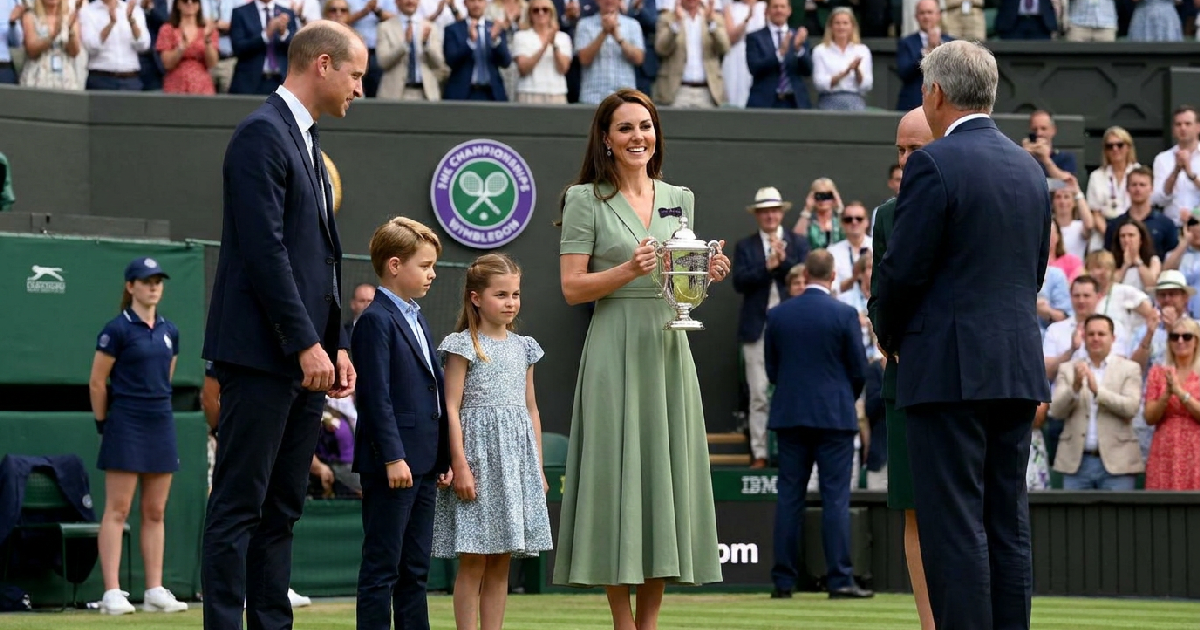
All eyes were on Centre Court as Catherine, Princess of Wales, arrived on Sunday, July 12, 2026, for the Wimbledon Men’s Singles Final. Her presence wasn’t just about sport; it was a powerful statement of resilience and continuity. The Princess, in her capacity as Patron of the All England Lawn Tennis and Croquet Club (AELTC), officially closed Wimbledon 2026.
She did so making a distinctive visual impression in a bespoke sage green Emilia Wickstead dress, accompanied by Prince William and their children, Prince George, aged 12, and Princess Charlotte, aged 11. This appearance carried a particular weight for many, marking a significant public engagement following her battle with cancer.
A cherished royal tradition at Wimbledon’s finale
The final Sunday at Wimbledon is always steeped in tradition, but this year, it felt especially resonant. Fans and royal watchers eagerly anticipated the Princess of Wales’s return to the Royal Box.
Her attendance signified a poignant re-engagement with one of her most cherished patronages. It also underscored the Royal Family’s deep, historical ties to the prestigious tennis tournament held annually in London.
The enduring link between royalty and tennis
The connection between the British Royal Family and Wimbledon stretches back more than a century. It began officially in 1907 with the attendance of Prince George and Princess Mary, who would later become King George V and Queen Mary.
Since that time, a member of the Royal Family has consistently held a significant role, either as president or patron, within the All England Club. This consistent royal presence elevates the tournament beyond a sporting event into a significant cultural spectacle.
Catherine’s personal connection and dedicated patronage
Catherine, Princess of Wales, took over the patronage of the AELTC from Queen Elizabeth II in 2017. It’s a role she has embraced with visible enthusiasm and dedication.
An avid tennis fan herself, she has attended numerous Wimbledon championships since joining the Royal Family in 2011. She’s only missed the event twice: once in 2013 due to pregnancy with Prince George, and again in 2020 when the tournament was canceled entirely.
Her commitment extends beyond official duties; she’s been seen in the Royal Box alongside her family, and famously joined “The Queue” in her youth. On July 3, 2026, she even surprised fans by handing out tickets before play, further cementing her genuine love for the sport.
The bespoke elegance of Wimbledon fashion
As always, the Princess of Wales’s attire drew considerable attention. She chose an elegant Emilia Wickstead wool crepe midi dress in a rich sage green hue, sometimes described as olive green. The dress featured a dramatic cape-style overlay and soft draped detailing.
This bespoke piece is believed to be a unique adaptation of Wickstead’s “Tidus” style from her Resort 2026 collection, tailored specifically for Catherine with a short flutter sleeve and a full fit-and-flare silhouette. She completed the look with classic tan Ralph Lauren Celia pumps and a matching DeMellier Nano Montreal handbag.
Accessorising with meaning and style
Subtle yet significant accessories accompanied the Princess’s dress. She wore elegant Van Cleef & Arpels earrings, adding a touch of sparkle to her ensemble. The iconic green-and-purple Wimbledon bow was pinned proudly to her dress, a nod to the tournament’s traditions.
Her hair was styled in loose, flowing waves, creating a look that was both regal and relaxed. Every detail, from the bespoke dress to the carefully chosen accessories, showcased a blend of modern elegance and respect for tradition.
A family united at Centre Court
The presence of Prince William and their children added a poignant layer to the occasion. Prince George, aged 12, and Princess Charlotte, aged 11, joined their parents for the Men’s Singles Final. This united family appearance resonated deeply with the public.
Princess Charlotte, showing a developing style of her own, wore a sky-blue dress that closely resembled an outfit her mother had worn to last year’s men’s final. Prince William and Prince George coordinated in matching navy suits and striped ties, projecting an image of family unity and support.
The “Kate effect” and its cultural impact
Catherine’s influence on fashion, often referred to as the “Kate effect,” remains a powerful phenomenon. Garments she wears often experience rapid sell-outs, providing a substantial boost to the brands she champions.
This effect extends beyond mere sales; it serves as a form of cultural and soft diplomacy. By consistently choosing British designers such as Emilia Wickstead, Catherine actively promotes national talent and craftsmanship on a global stage, highlighting the interconnectedness of culture and commerce.
This kind of impact isn’t new for public figures, but the Princess of Wales has honed it into an art form. Her choices reflect an evolving royal style, blending classic elegance with modern sensibilities, often making subtle diplomatic statements through her attire.
A return that speaks volumes
The Princess of Wales’s appearances at Wimbledon 2026 — her third visit to the tournament this year — carried an emotional weight that transcended tennis and fashion. Her return followed a period of intense private struggle and recovery from cancer treatment in 2025.
The announcement earlier in 2026 that she was in remission brought a collective sense of relief. Her confident presence at such a high-profile event like Wimbledon symbolized a powerful return to her public life and royal duties. It was a tangible sign of her recovery and steadfast commitment to her role, offering reassurance to many around the world.
For decades, individuals at the helm of cultural institutions have carried immense symbolic weight. Just as figures like Isabelle Huppert lead cultural institutions, Catherine’s consistent and visible role at Wimbledon helps define its public image. Her story of resilience, played out on such a public stage, adds another chapter to the enduring narrative of public service and the symbolic strength of the monarchy.
Ultimately, seeing Catherine, Princess of Wales, close Wimbledon, poised and surrounded by her family, served as a profound reminder. It showed that even amidst personal challenges, the traditions of public duty and national institutions persist, connecting past and present in a continuous thread of shared experience.
Every public appearance by a figure of her stature is a reflection of history’s living presence in our contemporary world.
