




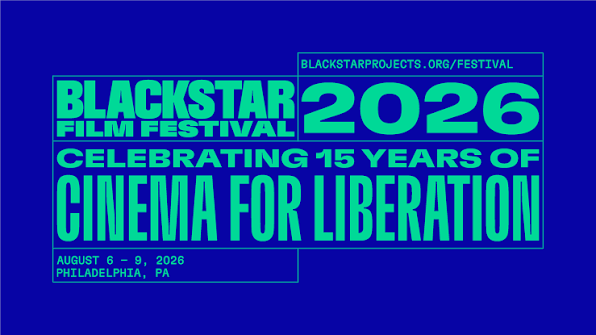
Fifteen years after its founding, the BlackStar Film Festival continues to create moments of recognition and storytelling through film, as envisioned by Maori Karmael Holmes.
She saw a world where Black, Brown, and Indigenous narratives were often absent or distorted, and she dared to build a stage for them. That stage, the BlackStar Film Festival, celebrates its 15th anniversary this August 6–9 in Philadelphia and streaming globally, reaffirming its powerful commitment to independent cinema from the global majority.
A haven for storytelling from the global majority
Holmes, the festival’s Founder, CEO, and Artistic Director, founded BlackStar because she saw a deep void. There simply weren’t enough dedicated film festivals for Black filmmakers, a space where stories could be shared free from the confines of stereotypical representations. The festival has since blossomed into an annual gathering fostering connection, discussion, and critical learning.
When Maori Karmael Holmes first conceived of the BlackStar Film Festival, she wasn’t just launching an event; she was building an institution. Her vision was clear: to create a platform built explicitly for and by Black, Brown, and Indigenous artists. This dedication has allowed BlackStar to become a vital cultural hub, often spoken of as the “Black Sundance” for its growing influence.
The festival champions the visual and storytelling traditions of the African diaspora and global Indigenous communities. It offers a crucial, Black-led space for joy and collective thriving.
This kind of dedicated institutional support for diverse voices helps challenge the historical power imbalances within the global film industry, much like other cultural bodies strive to shape their narratives, as seen with leadership changes at France’s Cinémathèque.
Maori Karmael Holmes’ founding vision
Holmes’ drive stemmed from a desire to share stories that moved beyond limiting perceptions of people of color. She has cultivated an environment where artistic freedom flourishes, allowing filmmakers to push boundaries and explore complex themes authentic to their experiences. It’s a deliberate effort to build a movement, not just host an event.
A global cinematic showcase in Philadelphia
This year’s BlackStar Film Festival unfurls from August 6 to 9 in Philadelphia, Pennsylvania. Screenings will take place at the Kimmel Center for the Performing Arts, Wilma Theater, and Suzanne Roberts Theatre. Additionally, parties and events are planned across the city, including Frankie’s Summer Club and the Barnes Foundation, ensuring a vibrant in-person experience.
For those unable to travel, the festival offers global streaming, extending its reach far beyond Philadelphia’s borders. The impressive lineup features 91 films from over 40 countries, promising a rich tapestry of narratives. Audiences can look forward to 22 World Premieres, 10 North America Premieres, 4 United States Premieres, 13 East Coast Premieres, and 34 Philadelphia Premieres.
Opening and closing night features
The festival kicks off on August 6 with the world premiere of West Side Familia (2026), directed by Taylor Hosking. This film delves into the lives of a legendary Puerto Rican biker crew and community elders on Manhattan’s Upper West Side. They fight to preserve their neighborhood’s culture, history, and traditions against the encroaching tide of gentrification and erasure.
Closing the festival on August 9 is the North American premiere of Haile Gerima’s epic Black Lions—Roman Wolves (2026). This five-part saga powerfully recounts Ethiopian resistance to Italy’s 1935 invasion. Gerima’s work doesn’t just present a historical account; it reveals a war fought not only with arms but through memory and culture, honoring a nation that famously refused to kneel.
Diverse voices, compelling narratives
The festival’s breadth is one of its most compelling attributes, spotlighting stories from across the globe. Nigerian director Dammy Twitch brings his film Call of My Life (2025) for its U.S. Premiere, a story about 31-year-old Soluchi, a call center agent grappling with past hurts and finding new connection. This selection highlights BlackStar’s dedication to showcasing diverse regional narratives.
Audiences will also see Sanaz Sohrabi’s An Incomplete Calendar, a North American premiere that uses forgotten songs and archives to explore liberation movements and the fight for oil sovereignty. Fahamu Pecou’s The Store, a world premiere, offers a unique perspective.
It envisions a bodega as a gateway to ancestral wisdom and an alternate reality where Black people thrive, offering patrons an escape from the mundane.
Miryam Charles’ Treasure Island (L’île aux trésors), another world premiere, revisits Summer 1993 through the eyes of 12-year-old Marthe and her brother as they attempt to escape their Haitian heritage. The film beautifully explores themes of identity and belonging. Charles will also participate in a panel discussion on August 7, adding another layer to the festival’s interactive experience.
Fostering dialogue and collective thriving
BlackStar isn’t solely about watching films; it’s about engaging with the ideas they provoke and the histories they illuminate. This year’s festival features an impressive roster of notable guests and speakers, including Sky Hopinka, Michèle Stephenson, Cybil St. Aude-Tate, and Felicia Pride. These luminaries contribute to the festival’s reputation as a vital forum for intellectual and creative exchange.
A particular highlight promises to be the August 9 retrospective screening of the new 4K restoration of Alile Sharon Larkin’s acclaimed 1982 film, A Different Image. Following the screening, Larkin will engage in a conversation with Melissa Lyde, offering rare insights into a seminal work of Black independent cinema.
Such moments underline how BlackStar builds bridges between generations of filmmakers and audiences, ensuring that past and present resonate.
The “By Indie Means Necessary” panel
The festival will also host a critical panel discussion titled “By Indie Means Necessary,” moderated by Imran Siddiquee. This panel brings together an impressive lineup of voices crucial to BlackStar’s journey and the broader independent film movement: Denise Beek, Kim Brundidge, Maori Karmael Holmes, Nehad Khader, and Sekou Campbell.
Their collective experience will offer invaluable perspectives on the challenges and triumphs of independent filmmaking, all within BlackStar’s supportive, Black-led environment.
These discussions are designed to spark dialogue and encourage deeper engagement with the themes presented on screen. It’s a deliberate effort to foster connection, discussion, and learning, creating a space where diverse artistic expressions can be understood and celebrated on their own terms. This communal approach is central to BlackStar’s mission of collective thriving.
The BlackStar Film Festival’s fifteen-year journey has etched its place as more than just a cultural event; it’s a historical touchstone. It represents a sustained effort to counter pervasive stereotypes and to provide authentic portrayals of Black, Brown, and Indigenous lives.
This push for authentic representation in media has deep historical roots, stretching back to pioneers who understood the power of the moving image to shape perceptions and challenge oppression.
It shows that the struggle for how we see ourselves on screen is as alive today as it ever was, a battle fought frame by frame for the right to tell one’s own story.
