




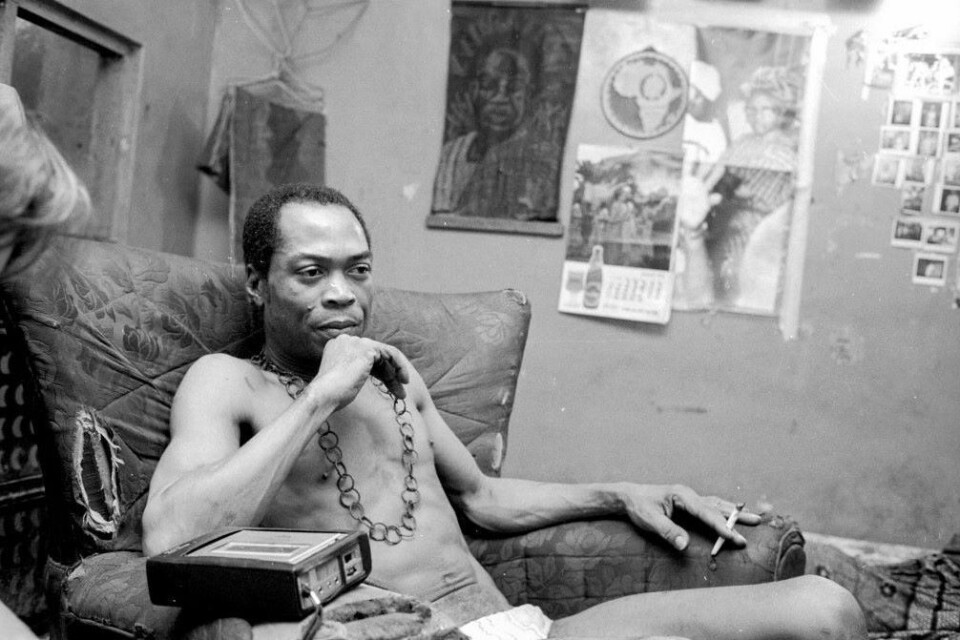
On September 4, 1984, Afrobeat pioneer Fela Anikulapo Kuti was arrested at Murtala Muhammed Airport in Lagos. He was preparing to fly to the United States for a concert tour. The charge, attempting to unlawfully export £1,600, led to a shocking five-year prison sentence.
By the 1980s, Fela was far more than a musician; he was Nigeria’s most prominent and fearless critic of military rule. His music and his commune, the Kalakuta Republic, were direct challenges to the authority of successive governments. His frequent arrests were routine, but the 1984 case under Major-General Muhammadu Buhari’s regime was different; it was designed to silence him for good.
Cash sent Fela Kuti’s political crucible
Fela Kuti’s life unfolded against a backdrop of deep political turbulence in Nigeria. Born into the intellectually vibrant Ransome-Kuti family in 1938, his mother, Funmilayo Ransome-Kuti, was already a globally recognized women’s rights and anti-colonial activist. His father, Reverend Israel Ransome-Kuti, was a respected educator and clergyman.
This upbringing instilled in Fela a profound sense of social justice. After studying music in London, he forged Afrobeat, a distinctive sound blending highlife, jazz, funk, and African rhythms. His 1969 visit to the United States deepened his engagement with Black nationalism, transforming his music into a powerful vehicle for dissent.
A legacy of defiance
By the early 1970s, Fela’s compositions like “Zombie,” “Alagbon Close,” and “Sorrow, Tears and Blood” directly challenged military authority and policing practices. His Lagos commune, the Kalakuta Republic, became a symbol of defiance against state control. This led to escalating clashes.
In February 1977, soldiers brutally attacked Kalakuta Republic, destroying the compound and injuring many residents, including Fela’s mother. She died from her injuries in April 1978. This event solidified Fela’s resolve and intensified his criticism of the Nigerian state, despite continuous arrests and physical assaults.
The airport trap
The 1984 arrest at Murtala Muhammed International Airport marked a new chapter in this long-standing conflict. Fela was attempting to travel to the United States for a concert tour when authorities detained him on September 4. Nigeria was then under the military rule of Major-General Muhammadu Buhari, who had seized power in December 1983.
Fela maintained he had declared the £1,600, which he had withdrawn from a British bank account, upon entering Nigeria just days before his intended departure. He insisted he completed the necessary customs documentation again when leaving. However, this crucial customs declaration form mysteriously vanished.
The prosecution challenged Fela’s account, alleging he had failed to declare the currency and attempted to conceal it. Fela also claimed a customs officer requested a bribe. His family later alleged that two customs officers, Aregbesola and Monye, who could have supported Fela’s defence, were detained to prevent their testimony.
What began as a foreign exchange dispute quickly spiralled into an international incident. The case was moved from the Federal High Court on September 7 to the Port Harcourt Zone of the Exchange Control (Anti-Sabotage) Tribunal. This special tribunal, formed under the military government’s strict foreign exchange decrees, comprised a judge and military assessors.
A tribunal under military sway
Proceedings at the tribunal began on September 20, 1984. The military government had introduced the Exchange Control (Anti-Sabotage) Decree No. 7 of 1984, which imposed severe penalties for such offences. This legal framework allowed for trials that significantly differed from ordinary court proceedings, raising concerns about fairness and due process.
On November 8, 1984, the tribunal convicted Fela of attempting to export currency unlawfully, sentencing him to five years’ imprisonment. The Supreme Military Council, the highest ruling body, upheld this sentence on December 24, 1984. This quick affirmation cemented public perception that the trial was politically driven.
Justice denied: procedural irregularities
The circumstances surrounding Fela’s trial drew widespread international criticism. Brigadier Tunde Idiagbon, then Chief of Staff, Supreme Headquarters, reportedly made remarks suggesting the government’s intent to secure a lengthy prison term for Fela. Such statements raised serious questions about executive interference in judicial proceedings, undermining the impartiality of the process.
Defence lawyers faced significant obstacles; they were reportedly refused copies of the judgment and trial transcript despite formal applications. Furthermore, the special tribunal system offered no ordinary right of appeal. These procedural irregularities fueled international demands for a retrial or Fela’s immediate release, as concerns mounted over a colonial challenge to justice under military rule.
The judge’s confession and release
Fela was initially held at Kirikiri Prison in Lagos, then transferred to Maiduguri, far from his family and professional network. His incarceration attracted global attention, with human rights organizations and fellow musicians campaigning for his freedom. This period of imprisonment would later inspire his protest song, “Beasts of No Nation,” directly criticizing the Buhari government.
A significant political shift occurred on August 27, 1985, when Major-General Ibrahim Babangida overthrew Buhari’s government in another military coup. This change provided a new political climate, but Fela remained imprisoned. The case continued to be a focus of international scrutiny due to the persistent allegations of judicial misconduct.
The final, extraordinary twist arrived in April 1986. Gregory Okoro-Idogo, the judge who had presided over Fela’s tribunal, reportedly visited Fela in prison. Newswatch magazine alleged that Judge Okoro-Idogo apologized for the sentence, disclosing that military authorities had pressured him to ensure a guilty verdict and a long sentence. This revelation devastated public confidence in the original proceedings.
Following this reported admission, the Babangida government ordered Fela’s release on April 24, 1986. He had served approximately 20 months of his five-year sentence.
Judge Okoro-Idogo was quietly retired, and the state’s politically charged case against its most famous critic collapsed under the weight of its own corruption and the growing international outcry, highlighting the systemic vulnerabilities in military justice, a frequent outcome of African military coups.
Enduring legacy of resistance
Fela Kuti emerged from prison with his political convictions undiminished. He immediately addressed journalists at the Afrika Shrine, announcing plans to revive his political organization, the Movement of the People. He even expressed ambitions to pursue the Nigerian presidency, demonstrating his unwavering commitment to challenging authority.
His return to the stage was marked by a comeback concert at the National Stadium in Lagos, followed by resumed international touring with Egypt 80. Fela’s music and public statements continued to vigorously criticize military rule, corruption, and the conditions within Nigeria’s prison system. His ordeal had interrupted his career, but it deepened his artistic and political resonance.
The image of Fela raising a clenched fist, often with police nearby, became a powerful symbol of his resistance. This gesture, rooted in Black Power ideals, reflected his unwavering commitment to Black consciousness, African self-determination, and opposition to oppressive institutions. It encapsulated his refusal to surrender his voice, even when facing severe state power.
Fela Kuti’s court battles represent a critical chapter in Nigeria’s political and cultural history. His 1984 arrest, five-year sentence, and subsequent release underscored the fraught relationship between outspoken political criticism and military power. The controversy transcended a mere currency dispute, raising fundamental questions about judicial independence and the treatment of government critics in Nigeria.
This episode serves as a stark reminder of how political dissent, popular culture, and the administration of justice become entangled during periods of military rule. It revealed the enduring power of a single individual’s courage to expose systemic failings, and what it meant to resist in an era when justice was often compromised.
The impact of such cases was profound, reshaping public discourse and galvanizing opposition to unaccountable governance, a theme that reverberated across the nation from Lagos to the judicial proceedings in Port Harcourt’s invisible killer case.
