



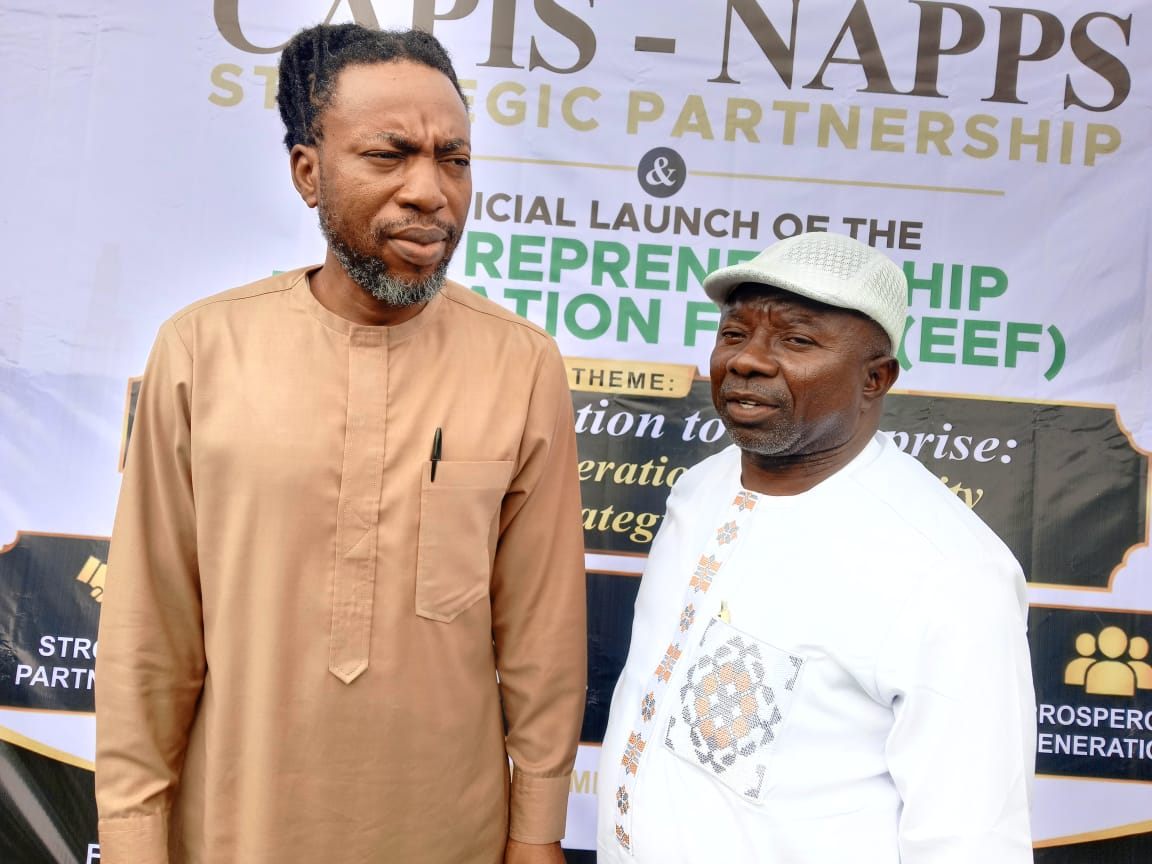
Capital Portfolio & Investment Systems (CAPIS) Limited and NAPPS formally unveiled the N5bn Entrepreneurship Education Fund (EEF) on Tuesday, August 18, 2026, to reshape private education in Nigeria.
The event in Port Harcourt, Rivers State, saw Paul Adonis Peters, Managing Director/Chief Executive Officer of CAPIS Limited, and Adafe Sunday Jaja, President of NAPPS Rivers State Chapter, present a vision to bridge the gap between traditional schooling and lifelong prosperity for Nigerian children.
Connecting education to opportunity in a changing world
This strategic partnership, born from discussions that began in 2021, aims to imbue young learners with an entrepreneurial mindset from an early age. It’s an ambitious effort to ensure that education culminates not in frustration but in genuine opportunity, providing both academic knowledge and a solid financial foundation for adulthood.
The vision articulated by Paul Adonis Peters at the Port Harcourt launch was clear: education alone, while vital, is no longer sufficient for the demands of the 21st century. He painted a picture of a Nigerian child starting nursery school today, destined to inherit a world transformed by artificial intelligence, robotics, and industries yet to exist.
“Education should never end in frustration. Education should end in opportunity,” Peters declared. His words echoed a growing national conversation about preparing young Nigerians not just for existing jobs, but to create the jobs and businesses of tomorrow. The N5bn education fund is a direct response to this urgent need.
Peters challenged the conventional understanding of national investment. He argued that the greatest assets are not found in oil or minerals, but in people. Every skyscraper begins in someone’s imagination, every scientific breakthrough in classroom curiosity. This philosophy underpins the entire partnership.
The Kids Capital Trust: a foundation for financial futures
Central to CAPIS’s approach is the Kids Capital Trust (KCT), a flagship service designed to provide children with a robust financial start to adult life. It allows parents to make a one-off payment, for instance, N250,000, which could yield over N5 million by the time the child turns 21. This includes an insurance component, offering a dual layer of security and growth.
Peters emphasised that the KCT is more than just a financial product. He stated, “We believe that every child deserves the opportunity to begin adulthood not only with an educated mind, but also with a strong and sustainable financial foundation.” This directly complements the entrepreneurial education by providing the capital base many young Nigerians often lack.
The journey to a N5bn education fund
The formal launch in Port Harcourt on August 18, 2026, marked the culmination of years of groundwork. Conversations between CAPIS and NAPPS first began in 2021, driven by a shared understanding of the critical role private schools play in Nigeria’s educational ecosystem. These discussions solidified into a Strategic Partnership Agreement signed on March 9, 2022, between NAPPS Rivers State Chapter and CAPIS Limited.
Adafe Sunday Jaja, President of NAPPS Rivers State Chapter, highlighted the significance of private schools in national development, a continuous effort since the road to independence. They have consistently filled crucial gaps in the educational landscape, offering quality learning environments and shaping future leaders. But he also acknowledged that traditional solutions were no longer enough.
The partnership, Jaja explained, moves beyond mere financial services. It focuses on creating systemic opportunities for schools, empowering parents, and equipping children with the confidence and creativity needed for a rapidly changing world. The N5bn education fund is the financial engine designed to fuel this transformation.
Rivers State leads the charge for educational transformation
The decision to launch the initiative in Port Harcourt, Rivers State, signals a strategic starting point. While the immediate focus remains on schools in Rivers State, the vision is expansive. The partnership aims to extend its reach across the entire South-South region, before rolling out nationwide.
This phased approach allows for initial implementation, learning, and refinement within a specific geographical context. It also positions Rivers State as a pioneer in this transformative educational model. The engagement of NAPPS leaders from across the South-South zone at the launch underscored this regional commitment.
Building enduring institutions for educational development
The Entrepreneurship Education Fund (EEF) is not conceived as a temporary solution or a short-term intervention. Paul Adonis Peters stressed that the EEF is an institution, designed to outlive governments and founders. It is intended to be a perpetual educational endowment, strengthening schools and preserving its capital for generations to come.
This emphasis on institutional longevity speaks to a broader ambition: to create sustainable mechanisms for educational development in Nigeria, reflecting larger discussions on how Nigeria divides its resources. The fund will offer grants to participating and qualified private schools, fostering innovation and promoting entrepreneurship education across the sector. This long-term view counters the often-episodic nature of educational initiatives.
Governance and trust: the pillars of sustainability
Recognising that good intentions alone do not build great institutions, CAPIS and NAPPS also unveiled the Entrepreneurship Education Fund Governance Charter. This charter is more than a document; it’s a covenant, Peters noted, ensuring transparency, accountability, stewardship, integrity, and professional excellence in the fund’s management. This commitment to robust governance is crucial for attracting and maintaining trust.
The Securities and Exchange Commission (SEC) has recognized and registered CAPIS Limited, providing an additional layer of assurance regarding the firm’s legitimacy and adherence to regulatory standards. This regulatory oversight is vital for any financial scheme involving public funds and the future of Nigeria’s youth. Ensuring investor protection and fund integrity is paramount for a project of this scale.
The broader impact on Nigeria’s educational landscape
This partnership between CAPIS and NAPPS arrives at a crucial juncture for Nigeria’s private education sector. Private schools have consistently played a significant role in providing quality education, often filling gaps where public infrastructure struggles. However, they too face challenges, from funding to curriculum development.
The N5bn education fund addresses a core economic challenge: how to equip students with both knowledge and the means to apply it productively in a competitive economy. By integrating entrepreneurship education with access to capital, the initiative aims to cultivate a generation of innovators and job creators, rather than just job seekers. This could shift the paradigm for educational outcomes.
A model for future public-private collaborations
The strategic alliance between a venture capital firm and a national association of private school owners presents a unique model. It suggests a pathway for other sectors where private enterprise can collaborate with established institutions to drive systemic change.
It’s a testament to the power of shared vision beyond traditional boundaries, focusing on human capital as Nigeria’s most valuable resource, a theme echoed by families like the Ransome-Kutis.
The success of this initiative in the South-South region could provide a blueprint for similar collaborations nationwide. It highlights a proactive approach to addressing youth unemployment and fostering economic empowerment from the foundational stages of a child’s development. The lessons learned here could influence future policy directions.
This initiative asks profound questions about the purpose of education and the responsibilities of institutions. Can this N5bn education fund truly transform Nigeria’s private school system into a conveyor belt of entrepreneurs and financially secure adults?
The journey has just begun, but in Port Harcourt, a significant step was taken toward building a future where every Nigerian child has the chance to thrive. The answer will unfold in the classrooms and businesses of generations yet to come.
