




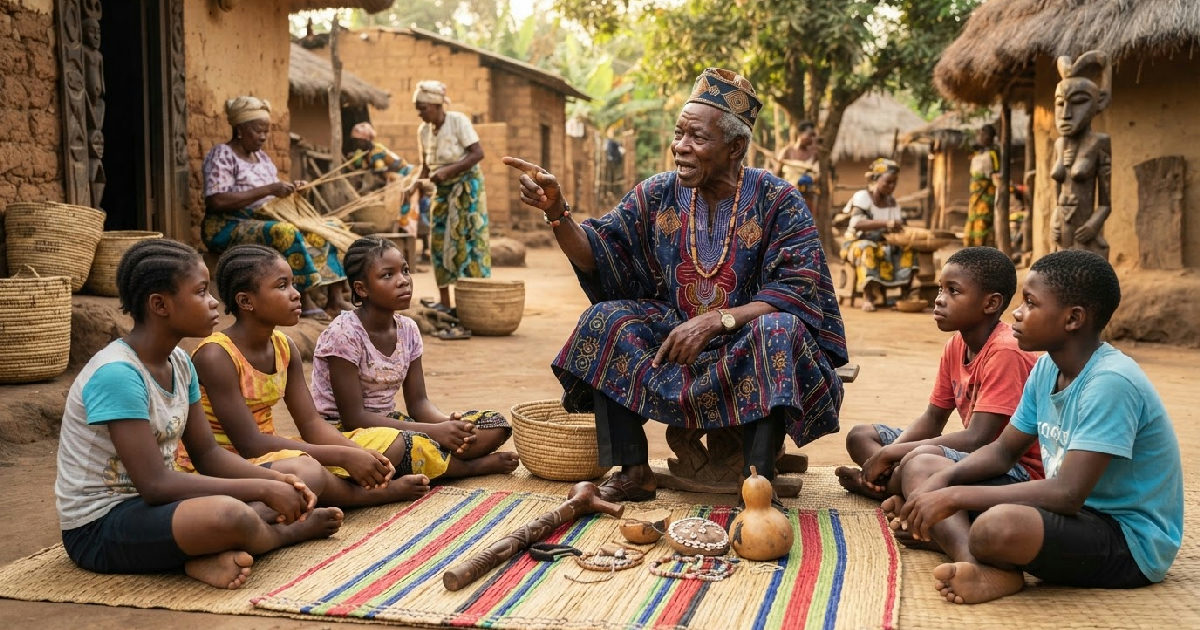
On August 19, 2026, Afrolegends.com shared a profound Bamiléké proverb highlighting African history and heritage. com, a platform dedicated to African history and heritage, brought to light a profound Bamiléké proverb on August 19, 2026.
It’s a wisdom that transcends its origins, reflecting a deep-seated cultural system that champions initiative and persistent effort. The proverb, translated to mean “one never loses by taking action,” serves as a compass for countless individuals, reinforcing the idea that even the smallest effort can yield tangible results.
The roots of Bamiléké wisdom traditions
The Bamiléké people, the largest ethnic group in Cameroon, have long been custodians of a rich oral tradition where proverbs are central to education and societal cohesion. Their history traces back to migrations from Egypt between the 11th and 14th centuries, eventually settling in Cameroon’s West and Northwest regions by the 17th century.
Organized under the leadership of a “fon,” or chief, these communities have passed down knowledge and ethical frameworks through generations. This intricate system of governance and cultural transmission ensures that ancestral wisdom remains relevant, guiding their communal and individual lives. Proverbs are crucial for teaching younger generations about life, moral principles, and accountability.
The resilience of Bamiléké culture, maintained through centuries of movement and adaptation, highlights the importance of these foundational sayings. They aren’t just quaint expressions; they are practical tools for navigating life’s complexities, much like a well-structured legal code or an economic policy. These proverbs also guide decision-making and foster critical thinking within the community.
“A hen’s beak”: a system for sustained action
At the heart of Dr. Y.’s August 19 post is the powerful Bamiléké proverb, “Du sol le bec de la poule ne revient jamais bredouille.” This proverb encapsulates a philosophy that prioritizes engagement over passivity, asserting that every action, no matter how small, has potential for return. It’s a direct call to avoid idleness and embrace productive effort.
This isn’t merely a suggestion; it’s a foundational element of a cultural system designed to encourage diligence and deter procrastination. The hen, a common and observable animal, offers a simple yet profound metaphor for the consistent, incremental efforts required to achieve success. Its constant pecking at the ground, even without immediate reward, is ultimately fruitful.
For generations, this cultural tenet has informed economic activities and personal development within Bamiléké communities. It shapes an individual’s approach to farming, trade, and even education, where persistent application is understood to be the precursor to meaningful gains. The proverb embodies a system that consistently rewards initiative and sustained application.
Afrolegends.com: a modern channel for ancient wisdom
In an increasingly digital world, platforms like Afrolegends.com play a crucial role in preserving and disseminating African heritage. Founded in 2009 by Dr. Y., the blog leverages audio and video to share stories and traditions that often exist outside written records. It’s a vital system for ensuring that unwritten history finds a wider audience.
Dr. Y., an individual described as “a child of love, an artist, a scientist, a lover, a friend, a human,” brings a diverse perspective to the platform. Their passion for world history, especially African narratives, drives a mission to make this rich cultural tapestry accessible to a global audience.
This initiative reflects a conscious effort to bridge the past with the present, using modern tools to amplify ancient voices. With over 3 million visits since its inception, Afrolegends.com has clearly found its mark, proving a significant appetite for such content.
It acts as a digital conduit, helping a Bamiléké proverb, originally spoken in oral traditions, reach individuals who might never encounter it otherwise. This platform exemplifies how the system of cultural preservation can evolve without losing its essence.
The collective strength of Bamiléké proverbs
The “hen’s beak” proverb doesn’t stand alone; it is part of a larger interconnected system of Bamiléké aphorisms that collectively guide ethical conduct and practical decision-making. These proverbs often convey complex moral lessons through accessible imagery, making them powerful educational tools. They serve as a foundational system for community values.
Consider, for example, the saying, “When we fall in the mud, we do not deny getting soiled,” which emphasizes honesty and responsibility. This proverb instructs individuals on the importance of acknowledging their mistakes rather than attempting to conceal them. It reflects a societal system that values integrity and accountability.
Another powerful adage, “Do not enter the river without knowing its depth,” highlights the critical role of foresight and caution. This counsel advises against reckless action, urging individuals to assess risks thoroughly before committing. Such wisdom has been instrumental in shaping prudent leadership and communal decision-making for generations. It underscores the Bamiléké appreciation for careful planning.
Systems of foresight and consequence
Beyond individual action, these proverbs also illustrate systems of consequence, teaching that present choices have future repercussions. The proverb, “If you see a mouse and do not kill it, tomorrow your house will be overrun,” is a stark warning against ignoring small problems.
It advocates for immediate, decisive intervention to prevent minor issues from escalating into unmanageable crises. This wisdom is applicable to everything from household management to national policy decisions.
Similarly, the saying, “Don’t ask for salt to be sweet,” offers a pragmatic view of human nature and expectations. It advises against hoping for goodness from those inherently wicked, a crucial insight for maintaining peace and managing relationships within the community. This shapes a system of social understanding, tempering idealism with realism. These proverbs serve as a moral compass.
Another telling Bamiléké proverb, “The lazy one is always on the road to the palace to go beg in front of the king (and tattle),” critiques laziness and dependency. It implies that those who avoid work often resort to seeking handouts or engaging in gossip. This proverb illustrates a system where self-reliance is valued over idleness.
These proverbs, therefore, don’t just offer isolated bits of advice. They form a comprehensive system of thought that addresses various facets of life, from personal integrity to community harmony and strategic foresight. Their continued relevance in contemporary African societies underscores their timeless value. The wisdom they impart remains a guiding force.
The enduring impact of African oral wisdom
The transmission of proverbs as a system for education and ethical guidance isn’t unique to the Bamiléké; it’s a cornerstone of broader African cultures. Across diverse African societies, similar oral traditions help inculcate values, resolve disputes, and maintain social order. They are living archives of collective wisdom, constantly reinterpreted but fundamentally stable.
This system of oral heritage means that fundamental truths are embedded in everyday language, accessible to everyone regardless of formal education. It ensures that the lessons of ancestors aren’t confined to dusty books but are alive in conversation, song, and storytelling. It’s a powerful, self-sustaining system of cultural perpetuation.
As African societies navigate modernization and global influences, these proverbs offer a critical anchor to identity and time-tested principles. The renewed focus on sharing such wisdom, exemplified by platforms like Afrolegends.com, highlights a collective recognition of their ongoing power.
They remind us that the seeds of future prosperity are often found in the soil of ancestral action and insight. This applies equally to environmental challenges and social development.
The Bamiléké proverb of the hen’s beak, then, isn’t just a quaint saying. It is a powerful articulation of a system that prioritizes action, diligence, and foresight.
Its continued propagation, through both traditional oral channels and modern digital platforms, ensures this profound African wisdom remains a dynamic force. It shapes how individuals approach challenges and opportunities. What might the consistent, unyielding pecking of a people achieve, if every small action yields a return?
