




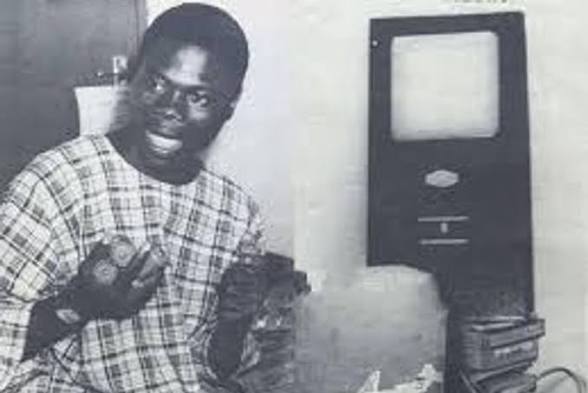
In 1971, a 20-year-old Nigerian student named Mudashiru Ayeni reportedly developed a battery-powered machine designed to perform the duties of an office receptionist. This invention, known as the “Mudagraph” or “Receptograph,” aimed to automate simple office requests and respond to visitors.
Yet, Ayeni’s attempt to gain recognition for his innovation tragically led to psychiatric evaluations. Instead of a public demonstration for Nigeria’s Head of State, General Yakubu Gowon, his ambition was met with institutional suspicion and profound disbelief.
Nigerian student who built a future
To truly grasp Ayeni’s story, one must consider Nigeria’s landscape in 1971. The devastating Nigerian Civil War had concluded just a year prior, in January 1970, with the surrender of Biafran forces. General Yakubu Gowon, then Head of State, spearheaded national efforts focused on reconciliation, rehabilitation, and reconstruction.
The nation was keen to rebuild its shattered infrastructure and institutions. A key part of this vision involved developing scientific and technical capacity, seen as vital for modernization, boosting productivity, and reducing reliance on foreign expertise. It was within this context of national rebuilding and an emerging technological drive that Ayeni’s inventive spirit ignited.
Rebuilding a Nation
The post-civil war era was defined by urgent national priorities. Gowon’s government sought to heal a deeply fractured country, striving for unity after years of conflict. This included revitalizing educational institutions, which had suffered significant setbacks, and re-establishing public services.
The emphasis was on practical development and self-reliance. This created an environment where homegrown solutions to everyday problems, such as Ayeni’s office assistant, could theoretically thrive. The nation looked towards its own people to contribute to a brighter future.
The Drive for Technical Capacity
Nigeria in the early 1970s recognized the importance of technological knowledge. The ambition was not merely to reconstruct but to modernize. This meant investing in education and fostering an environment where technical skills could flourish.
Young minds like Ayeni were, in theory, the future of this ambition. Their innovations were crucial to moving Nigeria forward. Unfortunately, the path for pioneering inventors often proved more complex than the national rhetoric suggested.
The Mudagraph: A Pioneering Design
Ayeni’s invention, alternately known as the Mudagraph or Receptograph, reportedly functioned as an automated office assistant. It was a battery-powered device, intended to streamline routine administrative tasks in a professional setting.
The machine’s primary capabilities included responding to visitors and providing simple information. It could indicate if an office worker was busy, available, or away, effectively automating basic reception duties.
This concept was quite advanced for its time. Office reception work involved repetitive queries, and Ayeni saw an opportunity for mechanical assistance. His device represented an early attempt to apply technology to administrative communication long before digital assistants became commonplace.
Functionality and Purpose
The Mudagraph was designed for practical utility. By pressing a button, a visitor could ascertain the status of a specific individual, eliminating the need for a human receptionist to relay every piece of information. This efficiency could free up human staff for more complex duties.
While modern accounts sometimes compare it to artificial intelligence, it’s important to note the distinctions. The Mudagraph offered predetermined responses. It was not a system capable of independent learning or decision-making. Still, its conceptual foresight was undeniable.
Early Automation Concepts
Ayeni’s work provided a glimpse into early Nigerian thought on office automation. It showed an understanding that repetitive human tasks could be simplified through mechanical or electronic means. This vision predated the widespread adoption of computers and digital technology in the workplace.
The machine’s core idea was to address a common administrative bottleneck. Such an approach underscored a practical, problem-solving mindset. Ayeni sought to build tangible solutions for everyday life, a driving force for many innovators.
From Innovation to Institutional Doubt
Perhaps the most dramatic turn in Ayeni’s story was his ambition to showcase his creation to the highest authority. He aimed to present his robot to General Yakubu Gowon, hoping for governmental recognition and support for his work.
However, this aspiration reportedly ended in profound disappointment and a startling turn of events. Rather than receiving an audience, Ayeni was allegedly referred for psychiatric evaluation. His pioneering invention was met with suspicion and an unwillingness to accept its credibility.
The accounts of Ayeni’s ordeal stand as a stark counterpoint to other individual careers and recognition for efforts in Nigeria’s history. They show the hurdles some innovators faced when challenging established perceptions. Eugene Keazor’s decorated police career, for example, illustrates a different path to national acknowledgment.
Attempted Presentation to General Gowon
Ayeni’s desire to demonstrate his device to Nigeria’s Head of State was a bold move. It suggested a belief in his invention’s potential national significance. He envisioned his work as contributing to the country’s post-war technological advancement.
The available accounts do not confirm whether General Gowon personally intervened or ordered the evaluations. The incident appears to stem from a broader institutional reaction to Ayeni’s unconventional claims. The precise circumstances of this refusal remain shrouded in historical ambiguity.
The Psychiatric Assessments
The reported psychiatric evaluations stand as a troubling chapter in Ayeni’s experience. Modern reports indicate he underwent eight separate assessments before being declared mentally sound. These evaluations cast a shadow over his pursuit of invention.
Instead of a technical appraisal of his machine, Ayeni faced a questioning of his mental state. This suggested a systemic inability to comprehend or accept his forward-thinking ideas, highlighting the difficulties unconventional thinkers faced during that era. The lack of detailed medical records for these assessments, including the facility names or specific dates, leaves many questions unanswered.
Disruption and Later Encounters
Ayeni’s challenges extended beyond the psychiatric evaluations. Accounts also claim that the controversy surrounding his invention led to the disruption of his education. He was reportedly prevented from attending classes and ultimately forced to leave school.
This alleged educational setback underscored the harsh consequences of challenging established norms. Instead of nurturing his curiosity, the institutions tasked with his development reportedly curtailed it. Education, ideally, should be a space for experimentation and the practical application of skills.
Education Halted
The details surrounding Ayeni’s expulsion remain unclear, including the name of the institution or the formal reasons for such disciplinary action. Yet, the narrative suggests a missed opportunity for the Nigerian educational system to foster burgeoning talent. His story raises questions about how educational bodies assessed unusual claims, particularly those pushing technological boundaries.
His experience serves as a stark reminder that innovation needs a supportive environment, not just talent. Without such support, promising ideas and individuals can easily be sidelined or lost. The path for young Africans in development, a topic Ayeni himself reportedly wrote about, proved difficult for him.
Understanding Nigeria’s past involves examining individual experiences within broader historical trends, such as those illustrated by the stories found in Lagos’s Brazilian houses.
Aminu Kano’s Encouragement
Despite these setbacks, Ayeni reportedly found a glimmer of hope. Some accounts suggest he sought and received support from Aminu Kano, a prominent Nigerian politician who served as Federal Commissioner for Communications under Gowon. Kano reportedly listened to Ayeni and offered encouragement.
This encounter offered a different response to Ayeni’s ambition, one of engagement rather than dismissal. The involvement of a figure tied to communications would have been particularly relevant to an invention focused on automated office interactions. Beyond Kano, there were also reports of businessmen expressing interest in commercializing the Mudagraph.
However, the precise nature of these interactions, or whether the invention ever reached commercial production, remains undocumented. The support, while significant for Ayeni’s morale, did not lead to a clearly recorded market success.
An Uncharted Legacy and Its Resonance Today
The subsequent fate of Mudashiru Ayeni and his pioneering machine largely vanished from public record. There is no clear documentation of mass production, commercial success, or his continued work as an inventor. This absence leaves a considerable gap in Nigeria’s technological history.
The original device itself—whether preserved, dismantled, or lost—is also unaccounted for. Without surviving artifacts, detailed drawings, or contemporary reports, the full capabilities of the Mudagraph are difficult to reconstruct. This lack of preservation underscores the vulnerability of individual inventors’ contributions when not formally documented.
The Fate of the Invention
The disappearance of Ayeni’s invention from the historical record is a powerful lesson in the importance of archiving. When the technical details and personal stories of innovators are not preserved, valuable insights into a nation’s creative past can be lost forever. It highlights how many groundbreaking efforts may go unrecognized or fade into obscurity.
The public’s rediscovery of Ayeni’s story decades later, largely thanks to archival initiatives like Archivi.ng, emphasizes this point. It serves as a reminder that the history of technology is not just about grand successes but also about early, often struggling, attempts. These smaller, forgotten experiments are crucial to understanding the full trajectory of innovation.
Ayeni’s experience resonated deeply when it resurfaced in February 2026, prompting renewed discussion about Nigeria’s treatment of unconventional ideas. It became a powerful illustration of the institutional skepticism that young inventors could face. This episode offers insights into the varied forms of national service, much like those showcased by a Nigerian general leading peacekeeping efforts abroad.
A Call for Documentation
His story prompts reflection on how societies evaluate novel concepts. It suggests a need for fair assessment based on demonstrable capabilities, rather than immediate disbelief. For contemporary Nigeria, where young innovators continue to seek technological solutions, Ayeni’s narrative serves as a historical caution and an inspiration.
Encouraging innovation means more than celebrating established successes. It demands creating supportive ecosystems with access to technical guidance, resources, and mentorship. It requires institutions capable of evaluating new ideas constructively and treating their creators with dignity, ensuring that no aspiring inventor again faces such a disheartening path.
