




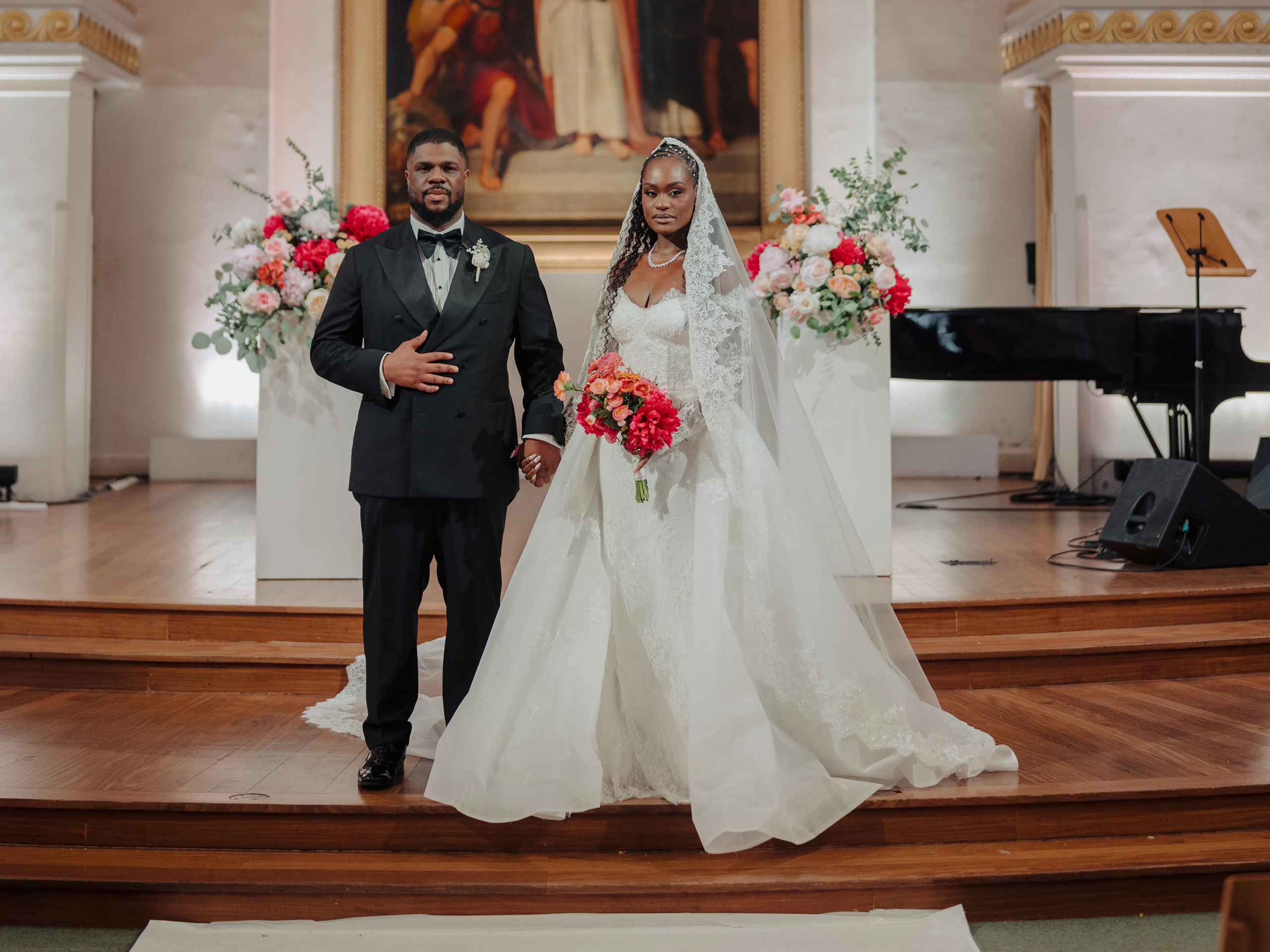
British-Nigerian author Bolu Babalola has turned the lens onto her own life, sharing the intricate details of her London and Lagos wedding journey in a recent feature for Vogue.
This deep dive into her personal celebration, which included both a London church wedding and a vibrant traditional Yoruba-Ijaw ceremony in Lagos, reflects the very themes of love, connection, and cultural identity that define her acclaimed literary works like Love in Colour, Honey & Spice, and Sweet Heat.
The Bolu Babalola wedding: A Tale of Two Cities
Her story, like those she crafts, is one of serendipity and intention, played out across continents.
Babalola has made a career writing about love that feels real and aspirational. Now, her own path to matrimony reads like one of her most engaging plots. The narrative began not in a carefully constructed fictional world, but in the bustling heart of Lagos during “Detty December.”
It was a chance encounter on a January evening at a rooftop bar. A stranger, T, approached her, offering a drink. Babalola later recounted that his presence didn’t disturb her existing sense of ease; instead, it simply amplified it. She was drawn in quickly, captivated first by his voice, then by his face, a connection that felt both instant and deeply resonant.
A Fateful Lagos Evening
Their initial conversation swiftly led to a first date over sushi, bypassing the drawn-out text exchanges common in modern courtship. What transpired that night became instant family lore. Babalola, by her own admission, has no memory of it, but relatives insist she visited her cousins’ rooms late that night, proclaiming she had found her future husband.
The layers of destiny thickened as Babalola discovered, early in their relationship, that their paths had crossed multiple times over the years. They had frequented the same parties in both London and Lagos, their orbits overlapping without ever quite connecting, until the right moment finally arrived.
T’s name itself carried a profound significance, meaning freedom in Ijaw, his native language. Adding to the mystique, a friend reminded Babalola that she had years prior dreamt of a name beginning with that very letter.
This confluence of small, seemingly insignificant details built a narrative almost too perfect for fiction, yet entirely real for her.
From Chance Meeting to Proposal
Their relationship blossomed across the geographical divide between London and Lagos, a dual existence that would eventually mirror the structure of their wedding celebrations. The proposal, a moment often meticulously planned in rom-coms, arrived on their second anniversary with all the charm and surprise of a literary climax.
T orchestrated a clever ruse, inviting Babalola to what she believed was a last-minute food tasting at his sister’s not-yet-opened restaurant. Instead, she walked into a scene straight from a dream: a red carpet unfurling, a floral arch framing the entrance, and their special song filling the air.
As she took it all in, she turned to find him already on one knee, asking her to spend forever with him. It was a moment carefully crafted, but deeply personal, reflecting the thoughtfulness that defines their bond.
This blend of the extraordinary and the intimate is a hallmark of Babalola’s storytelling. The unveiled narratives in her books often explore how grand romantic gestures intersect with everyday realities, and her own proposal was no exception. It solidified her belief that love isn’t just a feeling; it’s an active creation, a narrative written day by day.
Weaving Cultures: London and Lagos Ceremonies
The wedding celebrations themselves were a beautiful fusion, distinctly honouring both the British and Nigerian threads of their lives. This duality wasn’t just a logistical choice; it was a profound statement about identity, heritage, and the journey that brought them together. Babalola and T ensured that each ceremony retained its unique cultural essence.
The traditional Yoruba-Ijaw ceremony unfolded in the vibrant city of Lagos, a celebration steeped in ancestral customs and joyful communal spirit. This event was a spectacle of colour and movement, featuring four distinct outfit changes for Babalola, each representing a shift in the ceremony, and the rhythmic pulse of traditional drummers.
The air was thick with celebration, a testament to the rich cultural tapestry of Nigeria and the joyous union of two families.
A London Church Wedding
The church and legal wedding took place in London, the city where their relationship found its footing. All Souls in Langham Place, a church deeply intertwined with Babalola’s family history since her childhood, served as the sacred venue. The choice of location was deeply personal, connecting their new beginning to her lifelong roots.
Following the solemnity of the church ceremony, the reception extended just across the street to The Langham. This seamless transition from a place of spiritual significance to one of elegant festivity highlighted the thoughtful planning that went into honouring both their individual and shared histories.
The Yoruba-Ijaw Celebration
Back in Lagos, the traditional ceremony was an explosion of cultural pride. The multiple outfit changes are a common feature of Nigerian traditional weddings, each ensemble typically signifying different stages of the day or representing various aspects of the families involved. The presence of traditional drummers underscored the joyous, celebratory atmosphere, inviting guests to participate in the age-old customs of music and dance.
This dual celebration powerfully articulated the reality for many British-Nigerians, who navigate and embrace rich, layered identities. Yoruba identity, in particular, is often expressed through elaborate celebrations and deep family connections, making such a ceremony a central declaration of heritage.
Designing the Dream Gown
Bolu Babalola’s London wedding gown was a collaborative creation, designed by her and her mother during a trip to Istanbul. They worked in the Fatih district, bringing to life a vision that was both personal and exquisite. The dress was a mermaid silhouette, crafted from delicate lace and adorned with tiny, subtly shimmering crystals that scattered across the fabric.
It featured an elegant off-the-shoulder sweetheart neckline, long sleeves, and a dramatically elaborate train. At her mother’s suggestion, a detachable overskirt was added, providing versatility and an additional touch of grandeur for the ceremony. Babalola described the gown as making her feel simultaneously regal and authentically herself, a perfect reflection of her unique style and personality.
The process of co-designing the dress with her mother underscores the deep familial bonds that are a recurring motif in both Babalola’s life and her literary work. It speaks to the intergenerational connections that shape identity and celebrations within Nigerian culture, even when transplanted to a global context.
This attention to detail, from the gown’s design to the choice of ceremony locations, illustrates a woman meticulously crafting her own story, just as she does for her characters.
Beyond the Pages: Babalola’s Vision of Love
The overarching theme for Babalola’s wedding day was “When Bolu Met T: Love in Bloom.” This clever title wasn’t just a nod to her well-documented devotion to romantic comedies; it was a deeper reflection of her philosophy on love itself. She believes that love isn’t merely an intimate connection between two individuals, but an expansive force that reaches outward, enriching and engaging the entire community.
This perspective resonates deeply within Nigerian cultural contexts, where weddings are rarely just about the couple. They are communal events, celebrations of family unions and community ties. Babalola’s theme encapsulates this beautifully, merging Western romantic ideals with an inherent understanding of African communal values. It is a testament to how personal narratives can illuminate broader cultural truths.
The Vogue Treatment: A New Chapter
For a writer whose work is steeped in the celebration of love, having her own wedding story chronicled by *Vogue* marks a significant moment. It’s a powerful statement about the resonance of her narrative both on and off the page, affirming her as not just a storyteller, but also as a living embodiment of the romantic ideals she champions.
The *Vogue* feature, published around August/September 2026, including an earlier mention in British Vogue in August 2026 and then again on September 21, 2025, extends her reach beyond literary circles into the global fashion and lifestyle sphere.
It provides a unique platform to share a love story that is distinctly British-Nigerian, bridging cultures and inspiring readers with its authenticity and joy. This exposure does more than just showcase a beautiful wedding; it amplifies West African identity and storytelling on an international stage, reflecting a growing appreciation for diverse narratives.
Bolu Babalola’s journey, from crafting beloved rom-coms to living out her own, offers a compelling vision of contemporary love. Her wedding wasn’t just a personal milestone; it was a carefully curated narrative, told with grace, cultural pride, and a keen eye for the kind of emotional detail that makes her writing so compelling.
She continues to remind us that the best love stories are often the ones we live ourselves, especially when they honor every part of who we are and where we come from.
