



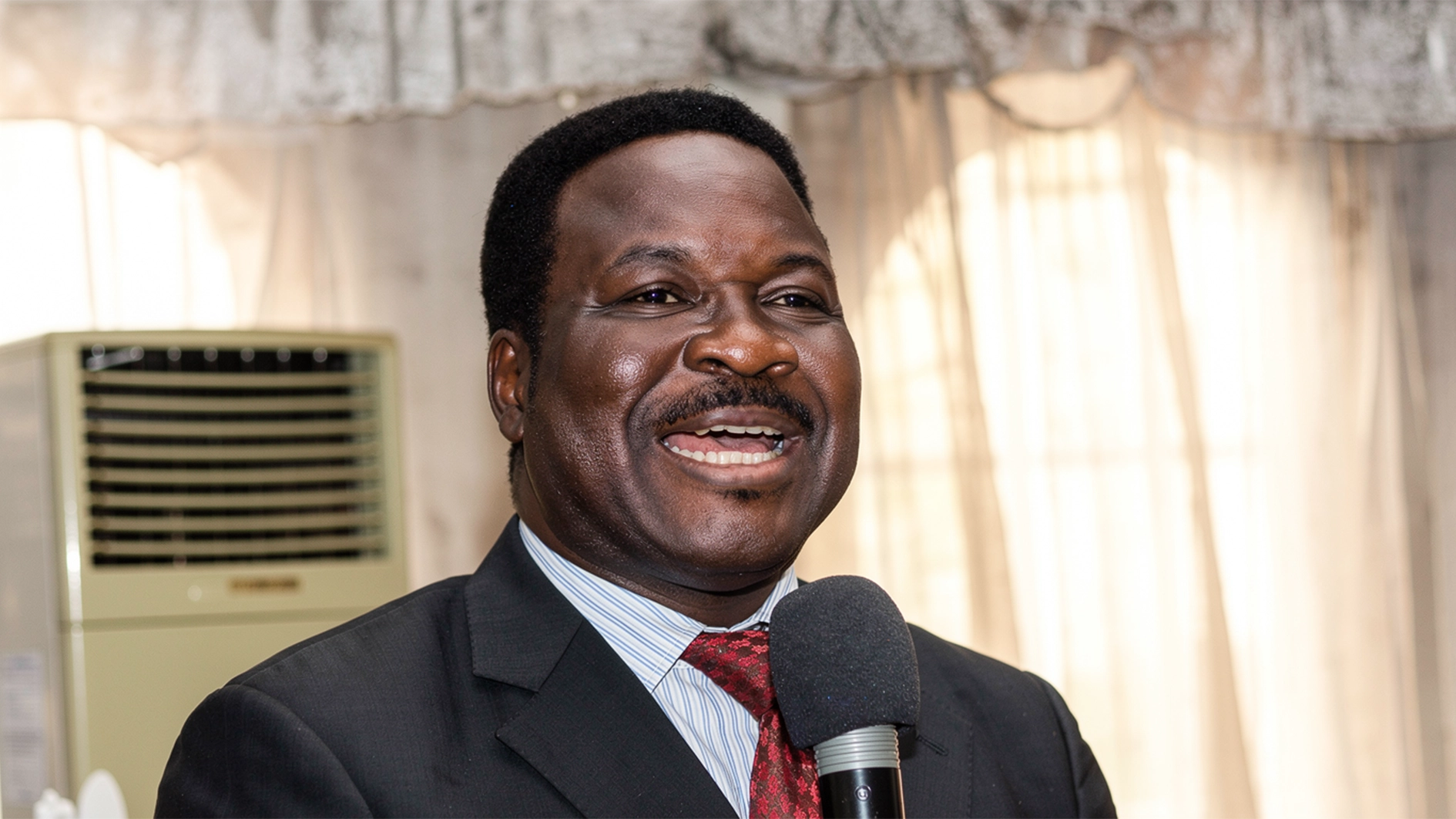
On December 29, 1987, a legal clash unfolded at the High Court of Lagos State, centered around the Mike Ozekhome fuel subsidy lawsuit. This pivotal case saw the renowned lawyer challenge the military government’s authority regarding fuel subsidies.
This single-day legal battle not only highlighted the deep-seated economic debate over petroleum pricing in an oil-producing nation but also starkly illustrated the restricted environment in which Nigerian courts operated during a period of concentrated executive and legislative authority in military hands.
The economic storm behind the Mike Ozekhome fuel subsidy lawsuit
The lawsuit by Mike Ozekhome didn’t emerge in a vacuum. It was a direct response to the wide-ranging economic reforms initiated by General Ibrahim Badamasi Babangida’s administration. Nigeria was grappling with severe economic difficulties in the mid-1980s, including a collapse in international oil prices.
To combat this, the government adopted the Structural Adjustment Programme (SAP) in 1986. SAP was designed to address issues like declining oil revenues, mounting external debt, and foreign exchange shortages. It pushed for deregulation and greater reliance on market mechanisms.
The removal of the petroleum subsidy was a key component of these reforms. President Babangida, the Armed Forces Ruling Council (AFRC), and the Attorney-General of the Federation were all named as defendants in Ozekhome’s action. It was a direct confrontation with the highest echelons of military power.
Ozekhome’s argument for Nigeria’s oil wealth
At the heart of Mike Ozekhome’s case was a powerful, intuitive argument that has resonated through decades of Nigerian public discourse. He contended that it was a “misnomer for Government to talk about removing oil or petroleum subsidy since no one can subsidize his God-given natural product.”
Ozekhome argued that Nigeria, as an oil-producing country, should not price its domestic petroleum products by comparing them to countries that did not possess similar crude oil resources. He used an analogy that struck a chord: a farmer who grows yams wouldn’t measure its value for his own consumption by comparing it to prices paid by those who don’t produce yams.
This analogy articulated a widespread public belief: Nigeria’s natural oil endowment should offer its citizens a distinct advantage in fuel prices. His challenge therefore framed the subsidy issue as a question of national birthright and equitable resource distribution.
However, the government’s counsel, Moshood Adio, then Director of Civil Litigation, countered these arguments with procedural objections. Adio argued that Ozekhome lacked locus standi, meaning he had no legal standing to bring the action. He also claimed the action was speculative and that the High Court of Lagos State lacked jurisdiction to hear the case.
Judicial limits under military rule
Justice Idowu Agoro ultimately sided with the government’s preliminary objections. He agreed that Ozekhome did not have the necessary legal standing and that the court lacked jurisdiction. This meant the substantive economic arguments about the fuel subsidy were never fully heard.
The court’s ruling on December 29, 1987, underscored the stark realities of judicial power during military rule. Justice Agoro held that “no citizen could question or prevent ‘the merit, desirability or expediency’ of anything done or planned to be by the country’s president or the Armed Forces Ruling Council (AFRC).”
He declared the subsidy decision fell within the “absolute power of the AFRC,” beyond judicial intervention.
This environment was vastly different from Nigeria’s current constitutional system. During military administrations, decrees often superseded existing laws and could even suspend constitutional provisions. Many decrees included “ouster clauses” specifically designed to prevent courts from questioning governmental actions.
The influence of military rule shaped how justice could be sought. The Supreme Court later recognised the binding force of such clearly worded military decrees in cases like Attorney-General of the Federation & Others v C. O. Sode & Others, confirming the courts’ limited ability to review executive decisions.
This legal landscape meant that Ozekhome’s case became a powerful symbol. The striking National Concord headline, “Oil Subsidy Palaver: No Citizen Can Sue IBB,” captured the era perfectly. It showed how military legislation could sharply curtail the courts’ capacity to scrutinise government actions, blending economic policy with raw executive power.
Babangida’s petrol price adjustments
The legal challenge occurred amidst a sustained period of petroleum price adjustments by the Babangida administration. Before these reforms began, Premium Motor Spirit (PMS) sold for roughly 20 kobo per litre. The first significant hike came on March 31, 1986, raising the price to 39.5 kobo per litre, well before Ozekhome filed his lawsuit.
Following the court case, more increases followed. On April 10, 1988, the price climbed again to 42 kobo per litre. Then in 1989, the government introduced a two-tier system, where private motorists paid 60 kobo per litre while commercial vehicles could access fuel at the lower rate of 42 kobo at specific outlets.
This two-tier arrangement proved difficult to manage, plagued by abuse and enforcement issues. By the end of 1989, it was abandoned in favour of a uniform price of 60 kobo per litre. Another increase came on March 6, 1991, pushing the price to 70 kobo per litre.
This sequence of price hikes demonstrates that the 1987 lawsuit was a snapshot within a larger, continuous program of petroleum-pricing reform. It happened after the initial major increase but before subsequent adjustments further entrenched the government’s policy.
The persistent economic questions of subsidy
While Mike Ozekhome’s political argument resonated with public sentiment about Nigeria’s oil wealth, the economics of fuel subsidy have always been complex. A detailed 1994 study by the Central Bank of Nigeria Economic and Financial Review offered insights into these complexities, using data from the Nigerian National Petroleum Corporation.
The study outlined two main ways to calculate the cost of petroleum products. One method focused on the direct costs of crude oil production, operations, and distribution. The second, more nuanced approach, considered the opportunity cost of crude oil—the potential revenue lost if the crude was not sold on the international market.
Before 1986, the CBN study revealed that crude oil supplied for domestic refining was valued at 80 per cent of the international market price. The remaining 20 per cent was effectively a subsidy linked to domestic production. This showed that even an oil-producing nation could still technically subsidise its fuel.
A government can absorb part of the cost, regulate retail prices below supply cost, or accept lower returns from domestic consumption. Economic policy decisions often involve balancing these factors.
Petroleum pricing is a delicate interplay of refinery efficiency, exchange rates, transportation costs, taxation, household incomes, and public revenue, alongside the core question of how the benefits of natural resources should be shared. These intricate factors are precisely why Nigeria’s subsidy debate has persisted for so long.
A familiar debate in a new era
The core questions raised by the Mike Ozekhome 1987 fuel subsidy lawsuit didn’t vanish with the end of military rule. Successive civilian governments have also grappled with petrol prices, attempting deregulation or defending subsidies for various social and economic reasons.
The debate reached a critical new phase on May 29, 2023, when President Bola Ahmed Tinubu announced the end of the petrol subsidy in his inaugural address.
This decision dramatically altered the economics of petrol consumption and quickly became a defining policy of Tinubu’s administration. By 2026, the discussion had moved beyond the sustainability of the old subsidy system. Attention turned to what happened to the vast financial resources released by the reform.
In July 2026, Finance Minister and Coordinating Minister of the Economy Taiwo Oyedele explained that a significant portion of these fiscal gains, from both fuel subsidy removal and foreign-exchange reform, had been absorbed by increased debt-servicing costs and higher government expenditures.
Officials at a Federal Government briefing in Abuja on August 19, 2026, further clarified that petrol-subsidy removal had mobilised an additional ₦15.8 trillion for the Federation between June 2023 and December 2025. They stated this created fiscal space for infrastructure, security, education, and social protection initiatives.
The constitutional and economic landscape of 2026 is, of course, far removed from 1987. Nigeria operates under a civilian democratic order, and its petroleum sector has undergone decades of institutional transformation. However, the fundamental public question remains strikingly similar: how should Nigeria’s petroleum wealth benefit its citizens, and who should bear the burden when fuel prices are reformed?
Justice Agoro, in his 1987 ruling, reportedly assured Ozekhome that “all hope was not lost ‘since the record of the present military regime showed that it was a listening government’;” and that he believed “all shades of opinion would be considered and evaluated before taking a decision on whether or not to remove the subsidy on petroleum.”
This hope for consideration, even under authoritarianism, highlights the deep-seated public expectation for governmental accountability on this issue. Understanding Nigeria’s military past helps illuminate these enduring tensions.
The enduring legacy of a single court case
The 1987 confrontation between Mike Ozekhome and the military government led by General Ibrahim Badamasi Babangida marks a critical juncture in Nigeria’s history. It fused three complex national issues: the management of petroleum wealth, the extent of executive power, and the critical question of access to justice for ordinary citizens.
Ozekhome’s challenge to the logic of removing a petroleum subsidy from a crude-oil-producing nation was never fully adjudicated on its economic merits. Justice Idowu Agoro struck out the case on a preliminary objection, reflecting a political system where military decrees severely limited the scope of judicial review.
This outcome, though not a judgment on the economic substance, solidified the government’s immediate ability to implement its policies.
The events surrounding the lawsuit became a component of the broader economic transformation of the Babangida years, a period marked by continuous adjustments to petrol prices. These changes, starting in 1986 and continuing through 1988, 1989, and 1991, illustrate a sustained governmental effort to reform the petroleum sector.
Decades later, Nigeria has evolved significantly. Its political system is democratic, the petroleum industry has matured, and the economy has expanded. Yet, the central question persists: who truly benefits from Nigeria’s vast oil resources, and how should the costs of economic reforms, particularly concerning fuel, be distributed among the government, businesses, and its citizens? This unanswered question continues to shape the nation’s trajectory.
