




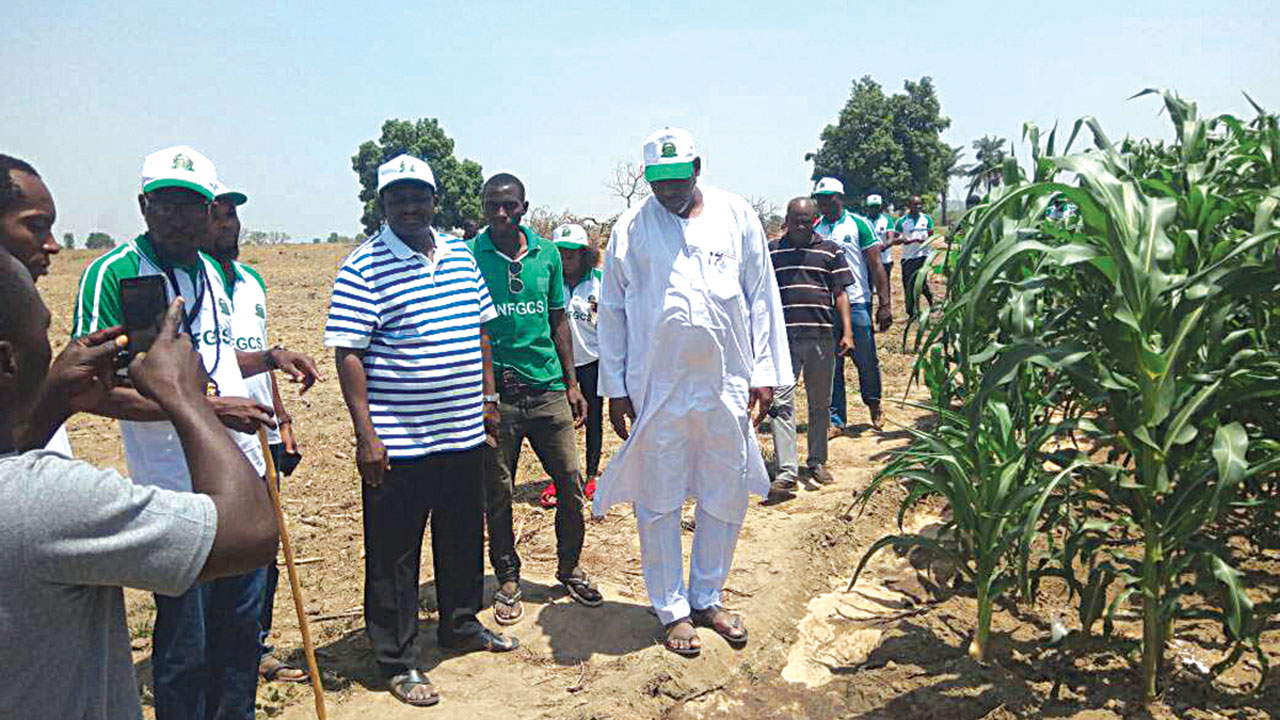
In a small farming community in rural Nigeria, the harvest is a time of both hope and anxiety.
But what if the farm itself held the key to powering the village? A new model for development is taking root, built on a simple but powerful idea: that agriculture and energy are not separate problems, but a single, interconnected solution.
Infrastructure Development Group: power and food
By treating agricultural processing as the consistent, reliable customer that a local power grid needs to survive, a new system is being built to solve two of Nigeria’s most persistent challenges at once.
For decades, Nigeria has wrestled with two seemingly separate, intractable problems. The first is a massive energy deficit. Nearly 600 million people across Africa lack access to electricity, a figure that includes a vast number of Nigerian communities located far from the national grid.
For these towns and villages, economic development has a hard ceiling; without power, you cannot preserve goods, run machinery, or build modern businesses.
The second crisis happens in the fields. In sub-Saharan Africa, post-harvest losses routinely claim between 30 and 50 percent of all agricultural yields. Lacking reliable cold chains and processing facilities, farmers watch their hard-won crops degrade.
The economic cost is staggering, with some estimates suggesting up to 80 percent of potential export value is lost simply because less than 10 percent of local produce is processed domestically.
This reality has trapped rural economies in a cycle of subsistence and waste. The solution—small-scale, localised power grids or ‘mini-grids’—has always faced a crippling commercial hurdle. To attract the private investment needed to build them, these grids require a predictable, paying customer.
But without power in the first place, those customers, like processing plants or cold storage units, cannot exist. It’s a classic chicken-and-egg problem that has left rural Nigeria in the dark.
Designing a new system: The agri-energy nexus
The breakthrough came from reframing the problem. Instead of viewing energy and agriculture as separate sectors, development financiers began to see them as deeply interdependent. This thinking is championed by organisations like the Private Infrastructure Development Group (PIDG), a collective backed by several European governments, the UK, and Australia, which finances and develops infrastructure projects across Africa and Asia.
Their model identifies agricultural processing not just as a potential electricity customer, but as the foundational one. In an interview on August 26, 2026, PIDG’s Chief Executive Officer, Philippe Valahu, described this as the core of their strategy.
“From an investment perspective, rural mini-grids require steady, productive-use demand to remain financially sustainable,” he explained, “and agri-processing provides that predictable, anchor base load to crowd in private capital.”
This concept of an ‘anchor load’ is the key that unlocks the entire system. A cashew processing plant, a cold storage warehouse, or a maize mill operates on a consistent schedule, drawing a steady amount of power. By building a mini-grid to serve this anchor business, developers can guarantee a revenue stream.
That guarantee makes the project bankable, attracting investors who would otherwise deem a rural utility too risky. Once the grid is built for the factory, it can then be extended to power homes, schools, and small shops in the surrounding community, creating a ripple effect of development.
This approach mirrors historical efforts to spur growth, like the post-war pivot for Nigerian industry, which also relied on targeted financing to build economic capacity.
The model in motion: From Ogun cashews to Congolese mini-grids
This is not a theoretical model; it is already being deployed across West Africa, including in Nigeria. The system’s success lies in its ability to adapt to local needs, financing everything from large industrial plants to clusters of small-scale grids. These projects demonstrate a clear pathway from investment to impact.
A prime example is the new cashew processing plant constructed by Robust International in Ogun State. Supported by a 100 percent guarantee on a $75 million debt facility from PIDG’s GuarantCo, the plant is set to more than double its daily capacity to 220 metric tonnes.
Beyond the numbers, it creates 900 long-term jobs, with 90 percent specifically reserved for women, capturing value that would otherwise be lost from shipping raw nuts abroad.
This integrated approach is being replicated across the continent, proving its flexibility:
- Democratic Republic of Congo & Rwanda: Through a US$1.7 million commitment, PIDG’s InfraCo Africa is helping Equatorial Power co-develop eight new solar mini-grids directly coupled with seven agri-processing hubs on Idjwi Island (DRC) and in south-east Rwanda.
These initiatives signal a shift away from centralised, state-led mega-projects towards a more nimble, private-sector-driven ecosystem.
This requires a stable political and economic environment, a far cry from the volatility that once saw economic planning dictated by events on How Broad Street became the silent signal of military rule. Today, the system is built on financial guarantees that reassure investors against such risks.
De-risking the system to unlock investment
The engine of this entire system is a sophisticated financial architecture designed to do one thing: reduce risk. International pension funds and insurance companies control trillions of dollars, but they are conservative. They cannot invest in a rural African mini-grid directly because the perceived risks—from currency fluctuations to operational failures—are too high.
PIDG’s model uses a process called ‘blended finance’ to build a bridge between this vast pool of capital and the projects that need it on the ground.
The process works through specialised entities. GuarantCo provides guarantees that act like an insurance policy for lenders. The Emerging Africa & Asia Infrastructure Fund (EAAIF) provides long-term debt, while InfraCo develops projects from an early stage. In Côte d’Ivoire, a guarantee for the Valency cashew processor saw a €37 million loan repackaged as a bond.
GuarantCo “wrapped” this bond with its high credit rating, effectively swapping the project’s risk for its own. This de-risking made the bond attractive enough for a major institutional investor like M&G Investments to buy it.
This financial engineering allows for massive scaling. In Nigeria, EAAIF committed $30 million to a $1.25 billion syndicate to fund Indorama’s third urea fertiliser plant.
By financing a facility that will produce 4.2 million metric tons per year, the investment helps insulate Nigerian farmers from volatile global fertiliser prices and saves the country scarce foreign reserves.
It is a system designed to build economic self-sufficiency from the ground up, a challenge very different from those faced by the nation builders like Colonel Joseph Akahan and Nigeria’s Military System, but one that requires a similar level of strategic vision.
Unlocking Nigeria’s own capital: The final piece of the puzzle
While international capital has been crucial for proving the model, the ultimate goal is to build a self-sustaining system funded by Africa’s own resources. African institutional investors, like pension funds and insurers, currently manage over $2 trillion in assets. Yet, regulatory constraints and perceived risk mean only a tiny fraction of this is invested in the continent’s long-term infrastructure needs.
The key to unlocking this capital lies in creating financial instruments that speak the language of conservative investors: local currency, low risk, and stable returns. This is where local credit enhancement facilities become critical. In 2017, PIDG partnered with the Nigeria Sovereign Investment Authority (NSIA) to establish InfraCredit Nigeria.
Its mission is to provide guarantees for infrastructure bonds, elevating their credit rating and making them safe enough for Nigerian pension funds to invest in.
The results prove the concept works. Since its launch, InfraCredit has unlocked N327 billion from over 20 Nigerian institutional investors, channeling it into vital infrastructure projects within the country. It is a powerful demonstration that the necessary capital exists locally; it just needs the right structure to de-risk the investment.
After proving its model, PIDG made a commercial exit from the project in early 2026, netting a $26 million return and leaving behind a sustainable national institution.
This success story offers a blueprint. By replicating the InfraCredit model across the continent, a vast reservoir of domestic savings can be transformed into the patient, long-term capital needed to build the roads, power plants, and processing facilities of the future. The agri-energy nexus provides the projects; domestic credit enhancement provides the funding.
It is a system designed not just to build infrastructure, but to build the financial markets that will one day fund it all themselves.
