




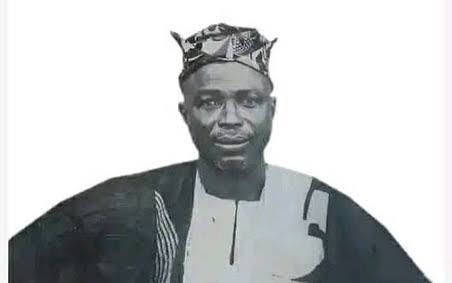
In 1915, a sleek, gleaming motorcar rumbled through the dusty streets of Ibadan, a sight that turned heads and signalled a new era. Behind the wheel was Salami Agbaje, then 35 years old, an enterprising merchant who would become the first indigenous Ibadan resident recorded by historian Olufunke Adeboye to own such a vehicle.
This purchase wasn’t just a personal luxury; it was a powerful statement of commercial success and foresight, marking Agbaje’s place as a motoring pioneer and a towering figure in colonial Ibadan’s economic and political landscape.
From apprentice to entrepreneurial powerhouse
Born in Lagos around 1880, Salami Agbaje’s life traced an extraordinary arc from humble beginnings as a tailor’s apprentice to one of Ibadan’s wealthiest citizens and an influential high chief. He died in the city in 1953 at the age of 72 or 73, having spent decades shaping its commerce, infrastructure, and social fabric.
His story provides a vivid illustration of how individual ambition and innovation intersected with the profound economic shifts of early 20th-century Nigeria.
Salami Agbaje’s journey to prominence began not in Ibadan, but in Lagos, where he was born to Mr. Durowoju, an Islamic teacher from Iseyin, and Mrs. Sinatu, a native of Ibadan. He started as a tailor’s apprentice, a trade that offered little scope for the expansive vision he seemed to possess.
So, towards the close of the 19th century, he made the strategic move to Ibadan, a city brimming with opportunities as colonial rule took hold.
His early commercial acumen quickly became apparent. Agbaje initially shifted from tailoring to logging, tapping into a nascent industry. The construction of the Lagos-Ibadan railway between 1898 and 1901 proved to be a critical catalyst for his burgeoning career. He secured contracts to supply timber for the railway, laying the groundwork for his considerable fortune.
Laying foundations in timber and trade
The profits from timber contracts provided the essential capital Agbaje needed to diversify his ventures. He soon expanded into produce buying, a sector that formed the backbone of the colonial economy. Here, he bought agricultural products like cocoa, palm produce, and rubber directly from local farmers in the interior.
He then resold these commodities to larger European export firms, effectively bridging the gap between rural producers and international markets. This intermediary role demanded keen market knowledge, strong commercial contacts, and the agility to respond to fluctuating opportunities. Agbaje demonstrated these qualities in abundance, becoming a crucial player in the region’s supply chain.
The railway’s unseen architect
Agbaje’s involvement with the Lagos-Ibadan railway wasn’t just about supplying timber; it positioned him at the heart of an infrastructure revolution. This railway dramatically enhanced the movement of goods, connecting Ibadan, a major Yoruba commercial centre, directly to the coastal port of Lagos. It created new markets for local produce and imported manufactured goods, opening doors for astute traders.
His success in this environment was testament to a generation of African entrepreneurs who, despite colonial economic structures favouring European companies, carved out their own networks. Agbaje went beyond local trade, becoming one of Nigeria’s first indigenous importers. He brought in diverse goods, including cotton, gin, rum, sewing machines, umbrellas, hats, and building materials, further cementing his mercantile influence.
Salami Agbaje and the 1915 car that made history
The year 1915 cemented Salami Agbaje’s place in Ibadan’s historical narrative. His purchase of the city’s first indigenous-owned motorcar was more than a personal milestone; it was a public declaration of his staggering economic success. At a time when cars were rare, expensive, and primarily symbols of colonial authority or European wealth, Agbaje’s automobile shattered conventions.
This visible display of prosperity captured the imagination, but it also masked a deeper entrepreneurial ambition. For Agbaje, the car wasn’t just a trophy; it was a tool. He saw the future of transport and quickly moved to capitalise on it. He established the first privately owned motor garage in Ibadan, laying the essential groundwork for a motorised future in the city.
Driving Ibadan’s transport revolution
As road transport gained traction across Western Nigeria in the 1920s, Agbaje transformed from a mere car owner into a pivotal commercial operator. Historian Oladipo Olubomehin identified him as a leading motor transporter based in Ibadan, then part of Oyo Province.
This was a period of rapid expansion for vehicle traffic, with Oyo Province alone seeing registered motor vehicles surge from 174 in 1921 to 504 by 1924.
His transport enterprise became synonymous with the growing importance of privately operated road transport across Southern Nigeria. Lorries and passenger vehicles, famously known as “bolekaja” in Yoruba-speaking areas by the early 1960s, began to connect communities beyond the railway lines.
This innovation linked remote farms and smaller markets to the larger commercial hubs, revolutionising trade and movement. Agbaje was not just an observer; he was a driving force behind this profound technological and commercial shift.
Ascending the ranks: chieftaincy and conflict
Agbaje’s influence wasn’t confined to the marketplace; his wealth inevitably propelled him into Ibadan’s intricate social and political structures. The city’s traditional political system allowed for advancement through a hierarchy of civil and military chieftaincy lines. Succession to the revered Olubadan stool wasn’t purely hereditary; chiefs ascended through established ranks, a process in which Agbaje actively participated.
By the late 1940s, Salami Agbaje had secured the prestigious title of Otun Balogun of Ibadan, placing him among the city’s most senior chiefs. Political scientist Richard Sklar noted Agbaje’s status as an important literate leader among his peers, seemingly close to the Olubadan succession. But this accelerated rise, coupled with his independent mindset and distinctive views on wealth and administration, brewed considerable political opposition.
The Agbaje agitation: when new wealth met old expectations
The tensions surrounding Agbaje erupted into what became known as the Agbaje Agitation, a contentious period between 1949 and 1951. Junior chiefs and Mogajis launched a campaign against him, fueled by objections to his political sway, his administrative outlook, and what some perceived as his untraditional conduct as a wealthy senior chief.
This was a deeper conflict than just one man’s personality; it reflected the clashing values of a society grappling with rapid change. The dispute attracted the attention of the colonial government. H. L. M.
Butcher was appointed to investigate allegations of misconduct against Chief Salami Agbaje, alongside broader accusations of inefficiency within the Ibadan and District Native Authority. The commission’s formal report in 1951 ultimately exonerated Agbaje of the misconduct charges.
However, the episode starkly exposed the deep divisions within Ibadan’s political landscape, where colonial structures, nascent nationalist politics, and traditional institutions were often at odds. The agitation also became a fertile ground from which new political organisations and alliances emerged in Ibadan during the early 1950s, highlighting the complex forces at play.
Agbaje’s differing values regarding charity, which prevented him from becoming the Oba of Ibadan in 1949, show how closely intertwined personal conduct and public office remained.
Education, enterprise, and lasting legacy
While some criticised Salami Agbaje’s approach to wealth, particularly regarding traditional expectations of public generosity, his legacy was more complex and far-reaching. One of his most enduring contributions was in education, a commitment that offered a different model of social investment than lavish feasts or personal gifts.
In 1945, a decade before the Western Regional Government introduced its celebrated universal free primary education programme in January 1955, Chief Agbaje Memorial Primary School I was founded in Ayeye, Ibadan. Accounts describe it as a tuition-free institution established by Agbaje himself, actively encouraging children from less affluent families to attend.
This initiative reveals a forward-thinking perspective on how private wealth could serve broader societal needs, investing in institutional development over fleeting displays of largesse.
A vision for institutional philanthropy
Agbaje’s investment in education wasn’t an isolated act; it reflected a growing understanding among some Nigerian elites that institutional development was key to future prosperity. His generation navigated a shifting landscape where older forms of generosity existed alongside new models of societal contribution, including schools, formal businesses, and modern transport infrastructure.
His commitment to community development through education exemplified this evolving perspective, providing opportunities that extended well beyond individual beneficiaries. This approach aligns with the impact of other influential Nigerian cultural figures who shaped society through their vision and work. Beyond education and transport, Agbaje’s entrepreneurial spirit stretched to other ventures that shaped Ibadan’s social life.
He was a pioneer cinema owner, introducing film entertainment to the city. This further demonstrates his capacity to identify emerging opportunities and his willingness to invest in new technologies and services that appealed to the rapidly modernising urban population.
His mansion, built in the 1930s and still standing in Beere, Ibadan, remains a tangible symbol of his achievements.
A life that shaped a city
Salami Agbaje’s life, spanning from his birth in Lagos around 1880 to his death in Ibadan in 1953, offers a powerful lens through which to view Nigeria’s colonial past. His story is far richer than just the anecdote of his 1915 motorcar, though that vehicle remains a potent symbol.
He built his empire from the ground up, starting with timber, expanding into produce, and then spearheading the motor transport revolution.
His economic influence naturally flowed into the political arena, where he ascended to the esteemed position of Otun Balogun. His journey, however, also illuminated the profound tensions within Ibadan society as it grappled with new forms of commercial wealth and the enduring expectations of traditional leadership.
Agbaje’s support for administrative changes, including reforms to Native Courts and the Native Authority, showcased his belief in modern governance, even when it put him at odds with established norms.
Ultimately, Salami Agbaje was a man whose career connected many major threads of colonial Nigerian history: the rise of modern transport and commerce, the emergence of a powerful indigenous entrepreneurial class, evolving ideas of elite responsibility, and the complex transformation of traditional political institutions.
His legacy, enshrined in the school he founded and the transport networks he helped build, continues to speak to the dynamism and adaptability of Nigerians in a period of immense change. He stands as a testament to the individuals who, through their choices and challenges, profoundly shaped the Nigeria we know today.
