




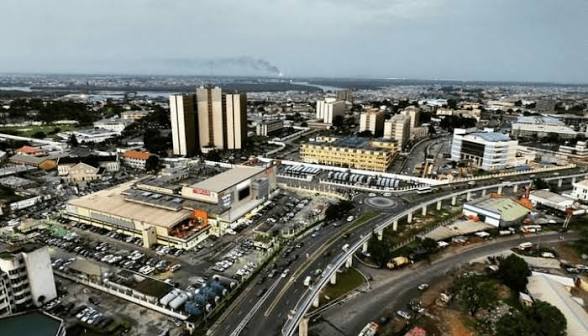
In August 1913, a significant decision was made that imprinted a British politician’s name onto what would become one of West Africa’s most vital port cities. Frederick Lugard, then Governor-General of Nigeria, wrote to Lewis Harcourt, Britain’s Secretary of State for the Colonies, seeking permission to name a nascent harbour after him.
This administrative act marked a crucial moment in Port Harcourt history, laying the groundwork for a metropolis whose identity would become intertwined with colonial ambition and economic strategy.
The name that came from a London office
Port Harcourt, now the capital of Rivers State, began its life as a meticulously planned colonial enterprise. Its origins blend geographic necessity, the strategic pursuit of economic resources, and the personal choices of powerful figures like Lugard and Harcourt. Understanding its birth in 1913 offers insights into the foundational forces that shaped modern Nigeria, creating both opportunities and enduring challenges for its communities.
Lewis Vernon Harcourt, born in 1863, was a prominent Liberal Party politician in Britain. He held the influential cabinet position of Secretary of State for the Colonies from 1910 until 1915, placing him at the administrative heart of the vast British Empire during a critical period of development in Nigeria. He remained in Britain, not personally selecting the site or supervising its construction.
When the Nigerian port received his name in 1913, Harcourt was known simply as Lewis Harcourt. He would later be elevated to the peerage as Viscount Harcourt in 1917. His acceptance of the honour meant a significant Nigerian urban centre would forever bear his surname, an act that underscored the hierarchical nature of colonial power.
Frederick Lugard’s proposal for the developing harbour
The direct connection between Harcourt and the city’s name came through Sir Frederick Lugard, a central figure in Nigeria’s colonial narrative. Lugard, serving as governor of both the Northern Nigeria Protectorate and the Southern Nigeria Protectorate, was at that moment overseeing preparations for the formal amalgamation of these territories. He wielded immense authority on the ground, directing monumental infrastructure projects.
Historian S. O. Okafor identified a Lugard communication to Harcourt dated 18 August 1913, concerning the name of the new harbour. In it, Lugard proposed that the developing port should bear Harcourt’s name. He noted “in the absence of any convenient local name,” a statement that highlighted the colonial mindset, often overlooking existing indigenous place names.
Coal, railways, and a new eastern port
The establishment of Port Harcourt was not an arbitrary decision; it was a strategic imperative driven by economic opportunity. British colonial authorities focused keenly on improving transport links between Nigeria’s coast and its resource-rich eastern interior. Before Port Harcourt, older ports including Bonny, Opobo, and Calabar served eastern Nigerian commerce.
The urgency for a new, deep-water port intensified dramatically with the discovery of substantial coal deposits in Enugu in 1909 by geologist Albert Ernest Kitson. Transporting this valuable mineral efficiently from the interior to the coast required a dedicated railway connection. This economic driver spurred the relentless search for a harbour capable of integration into a new railway network.
Surveying the Diobu area for development
The meticulous search for this optimal maritime location is well-documented in Nigerian archival records. Historian Ayodeji Olukoju’s study of Port Harcourt, drawing extensively on these records, describes the search for a suitable maritime location. A colonial expedition investigated the Diobu area in 1913.
Land near the Iguocha cliffs was identified as suitable for harbour development, providing access to the waterways and firm ground. This foundation could support a large railway terminus and associated facilities. The surveying work involved officers and personnel of the colonial Marine Department, including Captain H. A. Child and Lieutenant R. H. W. Hughes of the Royal Navy.
The land before colonial intervention
While the British administration meticulously planned Port Harcourt as a novel port and township, the chosen territory was far from empty. The area around Diobu, where the new city was to rise, already formed part of an inhabited local landscape. Indigenous communities, primarily the Ikwerre and Ijaw ethnic groups, including the Diobu people, had long cultivated and lived on these lands.
This region possessed its own rich array of indigenous names, reflecting centuries of local history and cultural significance. Names like Rebisi or Ozugboko (Ikwerre names), Igwuocha (an Ikwerre/Igbo term meaning “white hill” or “white cloud”), and Hakoti Kiri or Parakot (Okrika word) were deeply embedded in the local consciousness. These names underscored the profound connection these communities had with their ancestral lands.
Acquisition and transformation of indigenous lands
The establishment of Port Harcourt necessitated the acquisition of significant swathes of this inhabited territory.
While archival records refer to negotiations with local chiefs over land required for harbour and railway development, the colonial government ultimately compelled local residents, primarily from the Ikwerre and Ijaw ethnic groups, to cede their lands for the port and city’s construction. This transformed ancient patterns of land use and displaced communities.
The colonial construction fundamentally altered the existing landscape, introducing railway facilities, wharves, administrative buildings, and commercial zones. Plans for the emerging terminal and town layout also included areas for European residences, separate from what colonial officials designated as the “native town.”
This arrangement reflected the social and racial structure of British colonial urban planning during the period. The modern Port Harcourt metropolis later expanded far beyond these initial boundaries.
Building a crucial infrastructure
The early development of Port Harcourt was intrinsically linked to the construction of the Eastern Railway line. This ambitious project, initiated in 1913, aimed to connect the nascent port directly to the Enugu coalfields, providing the necessary infrastructure for efficient mineral extraction and export.
The British Colonial Office’s Annual Report on Nigeria for 1915 recorded the progress of the railway from Port Harcourt towards the coalfield.
The southern section covered approximately 151 miles. Construction continued despite difficult weather conditions because the colonial administration considered the supply of coal increasingly important. By the end of 1915, railway construction had advanced considerably inland. The line reached the Udi coalfield in May 1916, solidifying Port Harcourt’s role as a key export point.
Expanding trade and regional influence
While coal was a primary driver, Port Harcourt was always intended to serve a broader commercial purpose. Eastern Nigeria already possessed an extensive agricultural export economy. Palm oil and palm kernels were particularly important products of the eastern hinterland, traded through Niger Delta and eastern ports for generations.
The new port and its railway offered the colonial administration an unparalleled opportunity to link this productive hinterland with a railway-connected maritime outlet.
The railway line was designed to carry not only agricultural commodities and minerals but also various other products towards the coast for export. In return, imported merchandise, machinery, and administrative supplies could travel inland, further integrating the hinterland into the colonial economy. This infrastructure helped shape Nigeria’s maritime commerce for decades.
By 1916, Port Harcourt had established itself as the country’s main deep-water port, rapidly becoming Nigeria’s second-largest port after Lagos by 1926. This rapid ascent demonstrated the profound power of railway infrastructure to reshape existing patterns of commerce across the region.
Lugard’s wider vision for Nigeria in 1913
The naming of Port Harcourt in August 1913 occurred during a pivotal time for Frederick Lugard’s broader colonial project. The political entity known as the Colony and Protectorate of Nigeria had not yet formally come into existence. Lugard had returned to Nigeria in 1912, given authority over both the Northern and Southern Nigerian administrations as preparations were made for their amalgamation.
The Colony and Protectorate of Southern Nigeria and the Northern Nigeria Protectorate were formally brought together on 1 January 1914. Lugard subsequently served as Governor General of the amalgamated Nigerian administration.
The naming of Port Harcourt therefore occurred during the final months before political amalgamation, at a time when Lugard already exercised authority across both Northern and Southern Nigeria, setting a precedent for urban development and colonial governance.
The enduring legacy of Port Harcourt’s origins
Port Harcourt did not emerge through a single event but rather through several stages of colonial planning, surveys, land acquisition, and infrastructure development between 1912 and 1917. While some accounts associate its beginning with 1912, the strongest documentary evidence concerning the selection and naming of the harbour belongs to 1913.
Construction continued, with the railway reaching the Udi coalfield in 1916 and the port beginning operation in 1917.
The name Port Harcourt history provides a powerful example of how colonial political authority influenced the names placed on African maps. The decision to name the developing harbour after Lewis Harcourt commemorated a serving British Colonial Secretary within territory under British rule.
It reflected the hierarchy of the imperial system, where senior colonial administrators held the power to create official towns and determine their names. This origin story, like many others, helps us understand Nigeria’s formation.
Yet, the city itself now represents more than a century of Nigerian experience, extending far beyond the aims of its colonial founders.
From colonial port to modern metropolis
Port Harcourt’s economic identity changed dramatically during the twentieth century. Commercial quantities of crude oil were discovered at Oloibiri in the Niger Delta in 1956. Nigeria began exporting crude petroleum in 1958, marking the beginning of a new economic era. Port Harcourt subsequently became closely associated with the country’s petroleum industry.
Its location in the Niger Delta placed the city near major oil and gas operations, and energy-related businesses became increasingly important to its economy. Political change transformed the city as well when Nigeria achieved independence on 1 October 1960. In 1967, the Federal Military Government created Rivers State, making Port Harcourt its capital.
The city also occupied a strategically important position during the Nigerian Civil War from 1967 to 1970. By the post-war period, Port Harcourt had become far more than the railway terminus and harbour conceived by colonial planners.
The echoes of 1913 in today’s Port Harcourt
Port Harcourt emerged through the combined forces of colonial administration, maritime surveying, railway development, and commerce. In 1913, Frederick Lugard proposed that the new harbour be named after Lewis Vernon Harcourt. Harcourt accepted the honour, giving the developing settlement the name it still bears today.
The harbour site underwent examination by Marine Department personnel, and colonial officials were involved in land acquisition, while engineers developed the railway and port installations.
The Eastern Railway reached the Udi coalfield in 1916, and Port Harcourt began functioning as a port in 1917. Coal played a major role in its establishment, but palm produce and wider regional commerce were equally important to the port’s long-term development.
What began as a planned colonial transport centre grew into one of Nigeria’s major cities. Its name recalls the political authority of British colonial rule, while its subsequent history belongs to the generations of Nigerians who transformed Port Harcourt into the metropolis known today.
The layers of its past continue to inform its present, offering a rich context for understanding how Nigeria came to be.
