




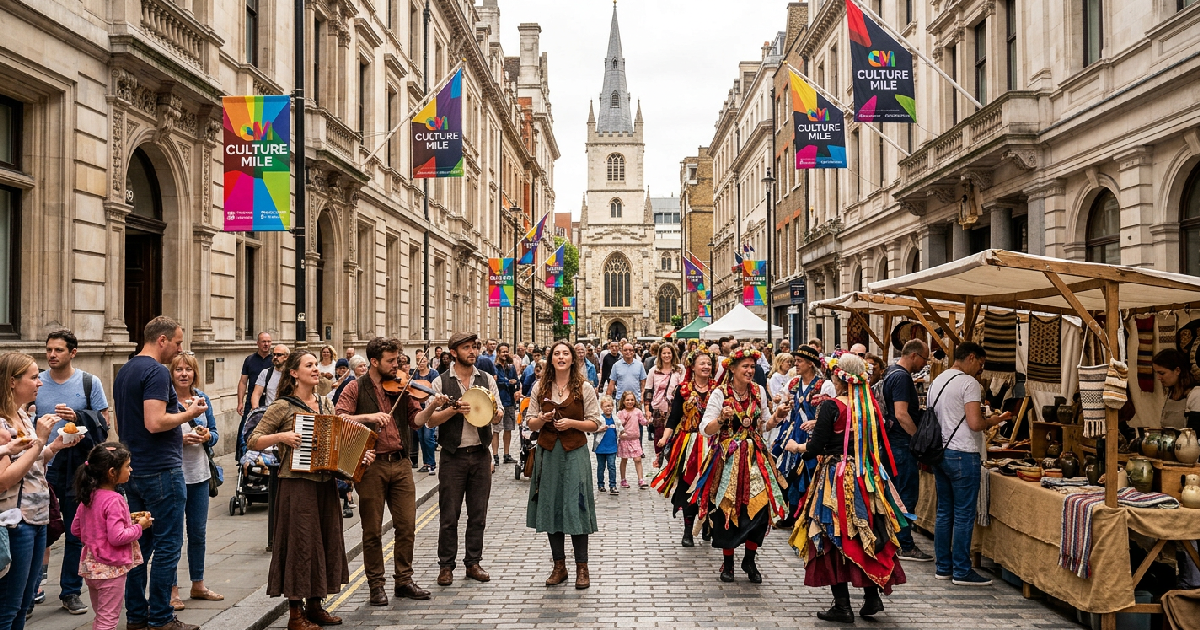
London’s historic heart, the City, is set to host a unique blend of past and present as the Culture Mile initiative rolls out a modern interpretation of a medieval summer fayre. This free public event, designed to transform the Square Mile into a vibrant cultural hub, offers a fresh perspective on ancient traditions.
Organised by the Culture Mile, a partnership led by the City of London Corporation, the event aims to draw both residents and visitors into a reimagined festival experience. It promises to intertwine contemporary arts and entertainment with the rich historical tapestry of the area, creating an accessible and engaging programme for all ages.
Revitalising London’s historic heart with culture
The Culture Mile project represents a significant strategic endeavour by the City of London Corporation to establish a vibrant, world-class cultural destination. Spanning a mile from Farringdon to Moorgate, it connects a remarkable concentration of cultural and educational institutions.
These institutions include the Barbican Centre, Museum of London, Guildhall School of Music & Drama, and London Symphony Orchestra. The initiative seeks to build on the area’s existing strengths, making culture more accessible and integrated into daily urban life.
By curating events like the modern medieval summer fayre, the Culture Mile actively works to challenge perceptions of the City as solely a financial district. It’s about showcasing its profound historical roots and its potential as a dynamic centre for creativity and community engagement.
This ongoing revitalisation effort underscores a broader trend in global cities to leverage cultural assets for urban regeneration. Such initiatives demonstrate how arts and heritage can drive economic activity and enhance quality of life.
Key details
The concept of a medieval fayre, typically conjuring images of jesters, knights, and craft stalls, is being meticulously re-engineered for a 21st-century audience. Organisers are focused on ensuring the event feels both historically resonant and distinctly contemporary.
This means visitors can expect to encounter traditional elements, perhaps with a modern artistic twist. Think live performances that fuse ancient storytelling with digital projections, or artisan markets featuring contemporary crafts alongside more classical offerings.
It’s a deliberate effort to avoid mere historical re-enactment, instead creating an innovative cultural experience. This approach aligns with modern curatorial practices that seek to reinterpret heritage in engaging new ways for diverse audiences.
The careful balance between historical accuracy and modern appeal is crucial for the fayre’s success. It needs to capture the imagination without alienating those seeking a traditional connection to the past.
A contemporary take on tradition
This reinterpretation of the medieval fayre signals a shift in how public events are conceived within historical urban settings. It acknowledges that modern audiences often seek interactive and multi-sensory experiences.
Instead of passively observing, attendees are encouraged to participate in activities that bridge eras. This could involve workshops where visitors learn ancient crafts using modern tools or engage with performers who bring historical figures to life with contemporary narratives.
The event design also considers the unique architectural backdrop of the City of London. Historic buildings and hidden courtyards will likely serve as atmospheric stages, adding another layer of authenticity and wonder to the proceedings.
Such events offer a compelling reason for people to explore parts of the City they might otherwise overlook. They provide opportunities to discover hidden gems and appreciate the area’s diverse heritage.
Key details
A key objective for the Culture Mile is to foster a sense of community ownership and participation. Free events play a vital role in achieving this, removing financial barriers to cultural engagement.
The fayre is expected to attract a broad demographic, from local families and workers to international tourists. Its inclusive nature ensures that London’s cultural offerings are accessible to everyone.
By providing a platform for local artists and performers, the event also nurtures homegrown talent. It contributes to a thriving creative ecosystem within the City, offering visibility and opportunities for many.
This emphasis on community involvement extends to potential collaborations with local businesses, offering bespoke products or services. Such partnerships further integrate the fayre into the fabric of the immediate urban environment.
Broader impact on London’s cultural landscape
Events like the Culture Mile’s modern medieval fayre are more than just one-off spectacles; they contribute significantly to London’s reputation as a global cultural capital. They demonstrate the city’s capacity for innovation in arts and heritage.
In a world where urban centres constantly vie for international recognition, a vibrant cultural calendar is a powerful asset. These initiatives help to maintain London’s competitive edge, attracting talent and investment.
The fayre also helps diversify London’s cultural offerings beyond its traditional theatre and museum circuits. It creates new reasons for people to explore different districts and experience unique local flavours.
This aligns with efforts to broaden the definition of urban culture, encompassing a wider array of public art, festivals, and community-led projects. It moves beyond institutionalised culture into the public realm.
Supporting local artists and businesses
The economic benefits of such cultural events extend far beyond ticket sales, especially for free festivals. Increased footfall directly translates to more customers for local shops, cafes, and restaurants.
For independent artists and craftspeople, the fayre provides a valuable marketplace and exposure. It’s an opportunity to connect directly with an interested public and generate income, supporting the creative economy.
Moreover, the planning and execution of large-scale public events require a range of services, from production and logistics to security and marketing. This creates temporary employment opportunities, boosting the local economy.
The success of these events often relies on a network of creative and logistical partners, fostering a collaborative environment. This often leads to innovation culture spreading throughout the urban ecosystem.
Accessibility and inclusivity in public events
Making events free and open to all is a cornerstone of the Culture Mile’s philosophy. This commitment ensures that diverse socio-economic groups can fully participate in London’s rich cultural life.
Beyond cost, accessibility also means considering physical access for those with mobility challenges. Organisers often implement measures like accessible routes and facilities to ensure ease of navigation for everyone.
Inclusivity extends to programming that reflects London’s multicultural population. The fayre may incorporate elements from various cultural traditions, presented through a contemporary lens, to resonate with a wider audience.
These efforts are crucial for building a cohesive and culturally aware city. They ensure that public spaces truly serve all members of the community, fostering a shared sense of belonging.
The evolving role of city spaces
The City of London, historically a financial powerhouse, is undergoing a transformation in its identity and function. Events like the medieval fayre are central to this evolution, softening its corporate image.
As remote work trends continue to reshape urban dynamics, city centres are increasingly focusing on becoming vibrant mixed-use environments. Culture and leisure are critical components of this new urban blueprint.
This means repurposing public squares, historic streets, and even commercial areas into temporary venues for cultural activities. It makes the urban environment more permeable and responsive to community needs.
The shift reflects a growing recognition that cities must offer more than just workspaces. They need to provide compelling reasons for people to live, visit, and engage with their unique character outside of office hours.
Moreover, it highlights a proactive approach to urban planning, adapting to changing social and economic landscapes. The City is actively investing in its public realm to remain relevant and attractive.
Looking ahead: future of Culture Mile initiatives
The success of events like the modern medieval summer fayre will undoubtedly inform future programming for the Culture Mile. It offers valuable insights into public appetite for innovative cultural experiences.
Expect to see continued experimentation with formats and themes that draw on the City’s unique heritage while embracing contemporary artistic expression. The aim is to build a lasting legacy of cultural engagement.
There’s potential for these events to expand in scale and frequency, becoming annual fixtures in London’s cultural calendar. This would solidify the Culture Mile’s position as a premier destination for arts and entertainment.
Further collaborations with international partners and technology integration could also be on the horizon, pushing the boundaries of what public cultural events can achieve. This continuous evolution is key.
Ultimately, the Culture Mile’s vision is about creating a dynamic ecosystem where culture thrives, accessible to everyone. The modern medieval fayre is a significant step in realising that ambitious, long-term goal for the City of London.
