



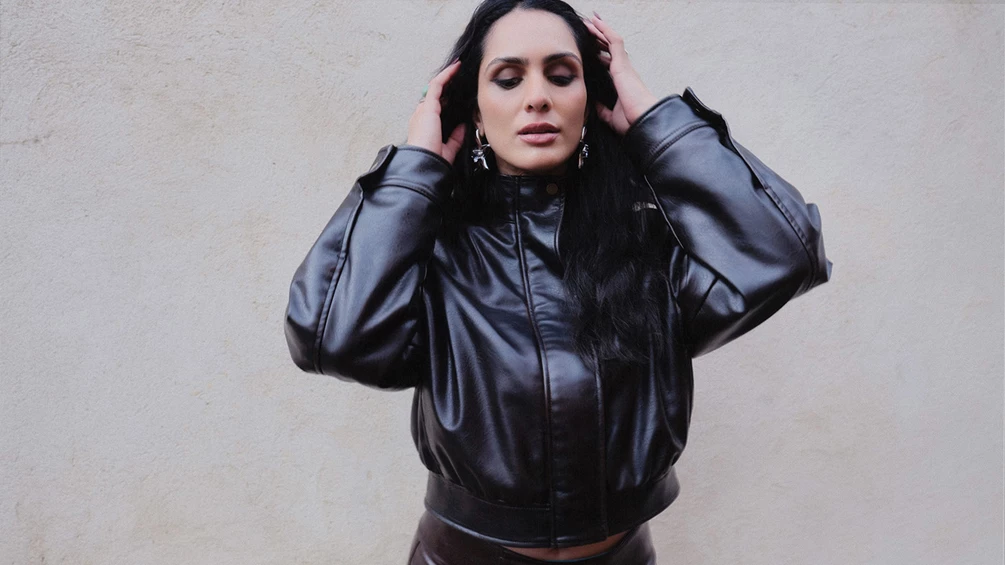
New York City-based DJ and producer ZAINAB is about to reshape the sound of global electronic music. Her highly anticipated debut EP, titled ‘Canal View’, drops on August 14, 2026, via Ninja Tune’s pioneering Technicolour imprint.
This six-track project isn’t just a collection of beats; it’s a journey from Lahore’s ancient streets to Brooklyn’s pulsating clubs, all seen through the eyes of an artist who refuses to be confined by borders.
ZAINAB’s ‘Canal View’ EP: a sonic mosaic of identity
The announcement arrives alongside the release of the EP’s third single, ‘Banglahore’, a collaboration with British-Bengali artist Surya Sen. It’s a track that embodies ZAINAB’s vision of music as a universal language, capable of mending historical rifts and celebrating shared heritage. The EP promises a fresh perspective, weaving Urdu lyrics and a unique cultural tapestry into the fabric of contemporary dance music.
At its heart, the ZAINAB Canal View EP is a deeply personal exploration of identity. Born in Lahore, Pakistan, and raised in New York, ZAINAB (whose full name is Zainab Hasnain) has crafted an auditory world where her dual heritage flourishes.
She describes the EP as “an amalgamation of Lahore and New York: looking back and forth between both places and asking what those sounds become when they come together.”
The EP’s title itself, ‘Canal View’, harks back to the Lahore neighbourhood where she spent her childhood, a place that shaped her early perspectives. It symbolises her viewpoint as someone who grew up “at the edge of town, looking out at the world and being influenced by so many different things.”
This fusion of experiences manifests in tracks that speak volumes without uttering a single word, though many tracks do speak, in Urdu.
Urdu on the dancefloor: a powerful statement
One of the most striking elements of ‘Canal View’ is ZAINAB’s deliberate inclusion of Urdu lyrics. She highlights the scarcity of her native language in the global dance music scene, despite its 246 million speakers worldwide. This isn’t just a stylistic choice; it’s a powerful cultural reclamation, bringing a rich linguistic heritage to a genre often dominated by Western sounds.
Tracks like the debut single ‘Jadoo’, released on March 27, 2026, exemplify this approach, featuring Urdu-sung lyrics over kinetic, arpeggiated house production. Then there’s ‘Her Eyes’, the second single from April 28, 2026, which samples the legendary Libyan-Egyptian singer-songwriter Hamid Al Shaeri. ZAINAB’s ability to weave these diverse threads into a coherent, compelling sound is a testament to her unique artistry.
‘Banglahore’: music over historical divides
The EP’s third single, ‘Banglahore’, featuring British-Bengali electronic producer and rapper Surya Sen, is perhaps the most poignant track. ZAINAB explains the title is a blend of “Bangladesh” and “Lahore,” representing their respective origins. She sees it as a symbolic collaboration between the two nations, acknowledging their “difficult history” and “animosity” to promote unity.
This gesture of musical diplomacy is significant, particularly in a region where historical tensions run deep. It’s a bold statement that culture and collaboration can transcend political divides, offering a blueprint for connection where official channels often fail. The song acts as a sonic olive branch, proving that shared rhythms can foster understanding.
Technicolour and Ninja Tune: a legacy of breaking boundaries
For ZAINAB, releasing ‘Canal View’ on Technicolour, an imprint of the iconic Ninja Tune label, is a dream realised. “I’ve been a fan of the label for years and have always loved how they’re on the forefront of pushing new and exciting sounds forward in the dance music space,” she shared.
Ninja Tune, founded in 1990 by Matt Black and Jonathan More (AKA Coldcut), built its reputation on experimental electronic music.
Technicolour, specifically, serves as Ninja Tune’s singles label, channeling its parent company’s “musical restlessness” into submerged techno and other experimental electronic genres. This makes it an ideal home for ZAINAB’s eclectic sound, reflecting a label philosophy that values innovation over convention. It’s a perfect match for an artist determined to carve out her own sonic niche within global electronic music.
From Boiler Room to Brooklyn: ZAINAB’s ascent
ZAINAB’s journey to this debut EP has been anything but conventional. She started as a classically trained violist and dancer, later working as a journalist before diving into DJing after a course at a DJ school. Her diverse background informs her dynamic sets, which effortlessly blend Hip-hop, Afrobeats, Baile-funk, Bhangra, House, and Dance music.
She’s no stranger to the big stages, having performed at Boiler Room, Glastonbury, Coachella—where her back-to-back set with DJ Habibibeats drew one of the largest crowds—and Lollapalooza. These high-profile appearances underscore her rising status in the industry, marking her as a compelling voice shaping the future of dance music.
Azadi: building liberatory dance floors
Beyond her releases, ZAINAB also curates a party series and future label called Azadi, an Urdu word meaning “freedom.” Azadi’s mission is clear: to build “liberatory dance floors and create spaces where identity, sound, and community converge.” It’s a vision that extends beyond music, aiming to create inclusive spaces where people can celebrate their heritage freely.
This initiative reflects a broader movement within the music industry to foster environments that are not just about entertainment but also about cultural affirmation. Azadi champions the idea that the dancefloor can be a site of both joy and liberation, a place where diverse experiences are welcomed and amplified. It’s an ethos that resonates deeply with ZAINAB’s artistic output.
The evolving sound of Pakistani artists in global electronic music
ZAINAB’s emergence onto the international stage is part of a fascinating evolution in the sound of Pakistani artists within global electronic music. For years, geopolitical realities and social norms have meant the electronic music scene in Pakistan developed largely underground. But despite these challenges, a vibrant community of artists is creating what many describe as “spectacular, idiosyncratic music.”
Events like Pakistan’s first Boiler Room in Karachi in 2022 showcased this burgeoning dance music community to a global audience. Platforms like Coke Studio Pakistan have also played a crucial role, pioneering the fusion of traditional instruments with modern electronic beats, often performed in Urdu and other regional languages.
ZAINAB stands as a testament to this creative spirit, bringing her unique Lahore-New York perspective to the forefront.
Her work, much like that of other pioneering Pakistani artists, demonstrates that cultural heritage isn’t a relic of the past but a dynamic force shaping contemporary art. It’s a constant dialogue between tradition and innovation, local roots and global reach. This dynamic ensures that the sounds emanating from Pakistan will continue to enrich and diversify the world of electronic music for years to come.
A new chapter for global dance music
The release of the ZAINAB Canal View EP marks more than just a debut for an artist; it signals a new chapter for global dance music. ZAINAB is not just releasing an EP; she’s opening a gateway, inviting listeners into a world where boundaries blur and cultures intertwine.
Her music serves as a powerful reminder that the richest artistic expressions often emerge from the intersections of diverse experiences.
In a world that often seeks to divide, ZAINAB’s
