



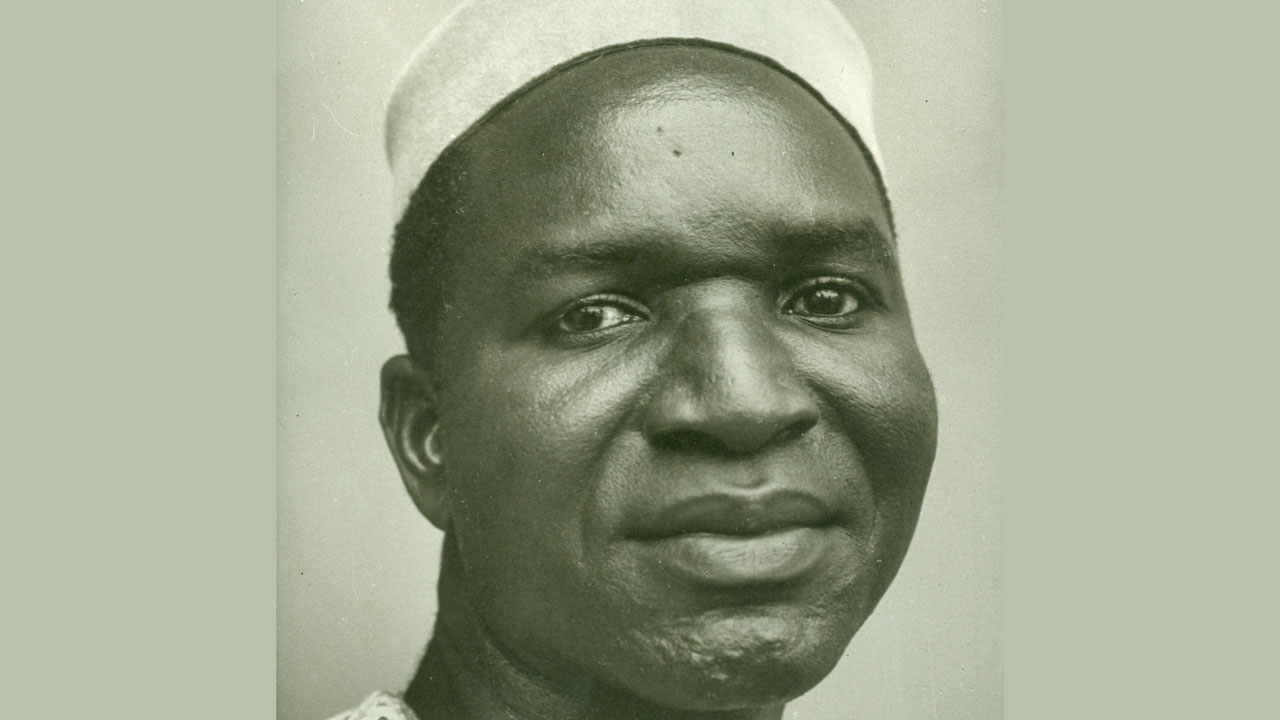
In 1943, Michael Adekunle Ajasin, a seasoned educator with 15 years in Nigerian classrooms, journeyed to Sierra Leone to enroll at Fourah Bay College.
His story isn’t just one of individual achievement; it’s a vivid illustration of how formal education in the colonial era forged a generation of West African leaders. Ajasin’s path from schoolmaster to statesman, rooted in a commitment to learning, offers a unique lens through which to understand the origins of Nigeria’s public service ethos.
Early life and the making of an educationist
Born in Owo on November 28, 1908, Michael Adekunle Ajasin’s destiny seemed interwoven with education from an early age. His formative years included studies at St. Paul’s CMS School in Owo and St. Andrew’s College, Oyo, which he attended from 1924 to 1927. These early experiences laid the groundwork for a lifelong devotion to teaching and learning.
By 1928, Ajasin began his professional life as an assistant teacher at St. Andrew’s CMS School in Warri. Two years later, he rose to headmaster of St. Luke’s CMS School in Sapele, a position he held for 13 years until 1943.
He was not a young school-leaver when he sought higher education; he was a mature professional, aged 36 for most of 1945, looking to deepen his substantial expertise.
A solid foundation in Nigerian schools
His pre-university career wasn’t merely a stepping stone; it was a period of intense practical engagement with the realities of Nigerian schooling. For over a decade, Ajasin immersed himself in classroom instruction and school administration. This hands-on experience gave him a profound understanding of the educational challenges and opportunities facing young Nigerians.
This practical background was crucial for his later intellectual pursuits. It meant his studies at Fourah Bay and subsequently in London were not theoretical exercises but rather continuations of a professional journey. He was seeking to strengthen an already formidable career in education, aiming to improve the system he knew so intimately.
Fourah Bay College: A West African intellectual hub
When Michael Adekunle Ajasin arrived in Sierra Leone in 1943, Fourah Bay College was far more than just a university; it was a beacon for higher education across Anglophone West Africa. Established by the Church Missionary Society on February 18, 1827, its initial mission was to train African teachers, catechists, and clergy.
By 1876, its formal affiliation with Durham University cemented its reputation as a premier academic institution.
This meant that for generations of students from places like Nigeria, the Gold Coast, and The Gambia, Fourah Bay offered the only viable route to a university education when local opportunities were severely limited. The institution’s prestige contributed to Freetown’s reputation as the “Athens of West Africa,” a city brimming with educated elites and professionals.
Wartime studies and intellectual connections
Ajasin immersed himself in this vibrant academic world, studying English, Modern History, and Economics. He completed his Bachelor of Arts degree in June 1946. This combination of subjects reflected his existing commitment to education and his growing interest in public affairs, preparing him for a broader role in society.
His years at Fourah Bay also placed him within a wider West African intellectual network. Students from various territories converged there, forming connections that would transcend colonial borders. This environment fostered a shared understanding of regional challenges and potential solutions, long before modern universities reshaped higher education in independent West Africa.
From academic pursuit to principled policy
After graduating from Fourah Bay College in 1946, Ajasin didn’t immediately return to Nigeria. He pursued further professional development at the Institute of Education, University of London, earning a Post Graduate Diploma in Education in June 1947. This additional training further honed his pedagogical skills and administrative acumen.
Upon his return to Nigeria in 1947, Ajasin became the principal of Imade College in Owo, a role he held until December 1962. During his tenure, he aggressively implemented staff development programs, including sending teachers for advanced training at University College, Ibadan. He later founded Owo High School in 1963, serving as its first principal until his retirement in 1975.
Crafting the free education blueprint
Ajasin’s profound educational experience became the bedrock of his political philosophy. In 1951, he authored a groundbreaking paper that would eventually become the core educational policy of the Action Group party. This document passionately advocated for free education at all levels, a radical proposition for its time.
As the Action Group’s first national vice president, under the leadership of Chief Obafemi Awolowo, Ajasin played a crucial role in developing and championing this policy. The introduction of free primary education in the Western Region in January 1955 stands as one of the Action Group government’s most defining achievements. While a collective effort, Ajasin’s intellectual contribution, born from years in classrooms, was instrumental.
The unlikely Governor of Ondo State
Michael Adekunle Ajasin’s public career quickly expanded beyond educational policy. From 1954 to 1956, he served as chairman of the Owo District Council. Later, he was elected to the Federal House of Representatives in Lagos, where he served as a federal legislator from 1954 to 1966. He was also chairman of the Owo local government in 1976.
These roles positioned him squarely among the political figures who navigated Nigeria through its final years of British colonial rule and into the turbulent First Republic. His calm demeanor and deep understanding of local issues made him a respected voice, even amidst the political currents of the era.
From teaching to governing a state
After years of military interventions, Nigeria transitioned back to civilian rule in 1979. Ajasin joined the Unity Party of Nigeria (UPN), again under the leadership of Obafemi Awolowo. His decades of public service, coupled with his strong moral compass, made him a natural choice for leadership.
In a truly remarkable turn, Michael Adekunle Ajasin was elected governor of Ondo State in 1979 on the UPN platform. He took office on October 1, 1979, with Akin Omoboriowo as his running mate.
It was an extraordinary transition for a man whose professional life had begun as an assistant teacher more than fifty years earlier. He became the first elected executive governor of the state.
A lasting educational legacy in governance
True to his lifelong passion, education remained a cornerstone of Governor Ajasin’s administration. During his 1979 election campaign, he had pledged to establish a university in Ondo State, a promise he was determined to keep. His government diligently pursued this ambitious project.
In March 1981, Governor Ajasin announced plans for a multi-campus university and established a committee to develop comprehensive proposals. On February 19, 1982, he named Professor Ifedayo Olawole Oladapo as the institution’s first vice-chancellor. The university was formally established through the Obafemi Awolowo University Law No. 3 of 1982, signed on March 29, 1982.
Founding institutions for future generations
The university’s first council met at Ado-Ekiti shortly after its establishment, and its inaugural matriculation ceremony took place in March 1983. Initially named Obafemi Awolowo University, it was later renamed Ondo State University in 1985. Following the creation of Ekiti State in 1996 and subsequent changes, this institution evolved into what is now Ekiti State University.
Additionally, Governor Ajasin opened The Polytechnic, Owo, further expanding access to higher education within the state. His first gubernatorial term ended in October 1983.
Though he faced political challenges, including a contentious 1983 election where Akin Omoboriowo, his former running mate who had defected to the National Party of Nigeria (NPN), was initially declared winner before the result was annulled, Ajasin was sworn in for a second term.
His governorship concluded with the military coup of December 31, 1983, which brought General Muhammadu Buhari to power.
Fourah Bay’s enduring impact
While his journey was extensive, encompassing Nigerian schools, London postgraduate studies, and decades in politics, Fourah Bay College served as a critical intellectual catalyst. It was a place where ideas could be sharpened, and where a broader perspective on West African development could be gained.
When Ajasin arrived in 1943, Nigeria itself didn’t have a university, with University College Ibadan opening only in 1948, two years after he completed his degree.
His decision to cross colonial borders for higher education reflects a larger historical trend. Many aspiring Nigerian scholars of his generation sought advanced qualifications abroad, a testament to the limited opportunities at home. Fourah Bay provided not just a degree, but entry into a regional intellectual network that fostered a shared vision for an emerging West Africa.
A vision connecting learning and public service
Michael Adekunle Ajasin passed away on October 3, 1997, at the age of 88. In 2000, a new university established in Akungba Akoko was named Adekunle Ajasin University in his honor, a fitting tribute to his enduring legacy. This institution stands distinct from the university he established directly, which became Ekiti State University.
Ajasin’s remarkable life demonstrates the profound connection between education and public leadership in Nigeria’s formative years. His journey from an earnest schoolmaster in Warri and Sapele to the highest office in Ondo State wasn’t a sudden leap but a deliberate progression.
It reveals that for many of his generation, political leadership was an extension of service born from years spent teaching, learning, and deeply considering how education could unlock opportunity for society. He left behind not just a political career, but a blueprint for how thoughtful leadership, grounded in knowledge, can build a better future.
