




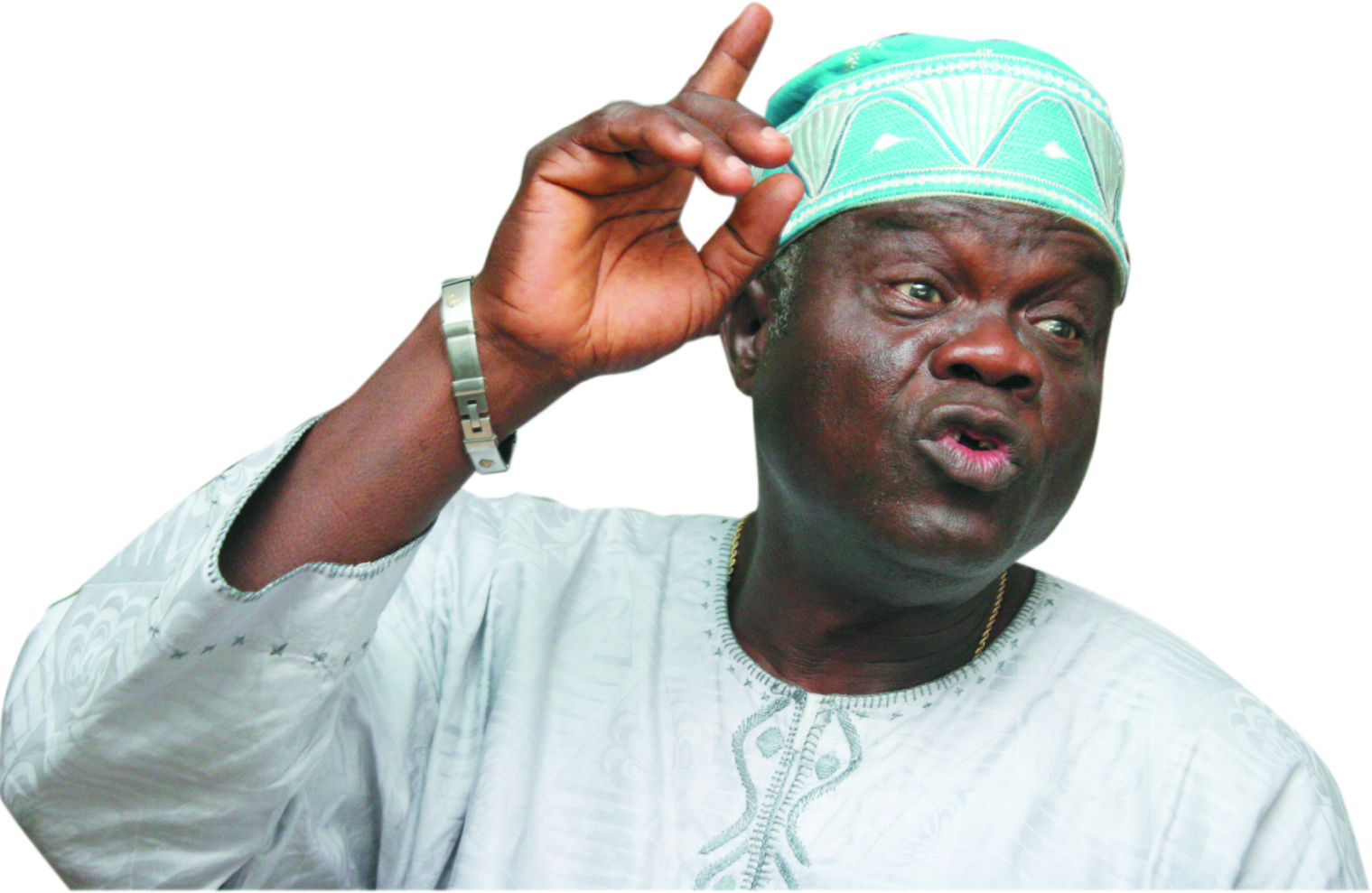
In 1989, a Lagos courtroom became the battleground for the Debo Bashorun court battle, a conflict that exposed deep fault lines within General Ibrahim Babangida’s military government.
This dramatic legal confrontation, heard before Justice Olusola Thomas at the Lagos High Court, pitted a former insider against the very establishment he once represented. Basorun’s actions brought to the surface the simmering tensions between military authority, individual integrity, and the rule of law during one of Nigeria’s most politically turbulent periods.
The Debo Bashorun court battle
The saga culminated in his eventual departure from Nigeria, but not before etching its mark on the nation’s history.
Major Debo Bashorun had been a key figure in the early days of General Ibrahim Babangida’s ascent to power. After Babangida’s military overthrow of Major-General Muhammadu Buhari on August 27, 1985, Bashorun occupied a crucial role, serving as Military Press Secretary and a vital conduit between the military presidency and the press. He was instrumental in shaping the administration’s public image.
Bashorun’s proximity to power was undeniable; he was even in the car with Babangida, editing the general’s first broadcast speech. This access afforded him a unique perspective on the inner workings of the government and a seemingly strong relationship with the military president. However, this close bond was destined for a dramatic and public rupture.
Dele Giwa’s assassination: a turning point
The turning point arrived on October 19, 1986, with the shocking assassination of Dele Giwa, the founding Editor-in-Chief of Newswatch magazine. Giwa was killed by a parcel bomb at his Ikeja residence, an event that remains one of Nigeria’s most notorious unsolved crimes. Bashorun himself was the individual Babangida chose to send with a condolence letter to Giwa’s widow, Funmi, a gesture she reportedly rejected.
Giwa’s death sparked a national outcry and intensified scrutiny on the military government. Bashorun, according to his later accounts, found himself increasingly at odds with the administration over questions surrounding the murder. His growing distrust of military intelligence officials, particularly Brigadier Haliru Akilu, Chief of Military Intelligence, began to erode his once-solid relationship with the presidency.
The deepening rift and a defiant stand
By 1988, the relationship between Bashorun and the Babangida administration had frayed significantly. A pivotal moment came in May when Bashorun was instructed by General Babangida to travel to the United States. His official assignment was to represent the Nigerian government at an event involving Ray Ekpu, Giwa’s successor at Newswatch.
However, Bashorun alleged that the assignment had a darker, undisclosed dimension. He claimed he was expected to monitor certain Nigerians at the event and make contact with public relations professionals to burnish the regime’s international image in the wake of the Giwa controversy.
Crucially, he also alleged he was given contact details for a specific individual he was expected to reach while abroad, an instruction he refused to carry out.
The Makurdi transfer and a bold resignation
Bashorun’s refusal to participate in what he viewed as an unethical part of the American assignment deepened his conflict with military intelligence. Brigadier Haliru Akilu reportedly labeled Bashorun a security risk, further widening the chasm between the former aide and the government. In November 1988, the military authorities transferred Basorun to the 31 Airborne Brigade in Makurdi, in present-day Benue State.
Bashorun vehemently resisted this posting, fearing for his life and believing it was a calculated move to place him in a dangerous position. He sought legal counsel from Alao Aka-Bashorun, then President of the Nigerian Bar Association, a prominent voice against military rule abuses.
On Aka-Bashorun’s advice, Major Bashorun submitted his resignation from the Nigerian Army on December 23, 1988. However, military authorities rejected his resignation, demanding he report to Makurdi and setting the stage for a dramatic legal confrontation. Around this time, Babangida’s regime faced other legal challenges from prominent figures.
A courtroom on edge
The dispute escalated into a full-blown legal battle in 1989 when Bashorun, having been declared Absent Without Official Leave (AWOL), approached the Lagos High Court. He sought an injunction to restrain the Army from harassing him, alleging threats and intimidation. Justice Olusola Thomas presided over the case, recorded as Suit No. M/23/89.
Alao Aka-Bashorun, with Femi Falana as a staff member of his legal team, represented Bashorun, vigorously challenging the military establishment. A procedural disagreement arose when Aka-Bashorun objected to the appearance of M. O. Adio, Director of Litigation in the Federal Ministry of Justice, for the defendants, arguing the previous lawyers had not formally withdrawn.
Justice Thomas initially dismissed this objection, but the matter quickly moved to the Court of Appeal.
The armed courtroom episode
One of the most extraordinary moments in this legal saga unfolded in the courtroom itself. Richard Akinnola, a chronicler of these events, recounted Bashorun’s decision to attend court armed, fearing soldiers might attempt to seize him. Dressed in a flowing agbada, Bashorun reportedly concealed two Israeli Uzi weapons and a pistol, prepared for a potential confrontation.
Bashorun warned his lawyer, Aka-Bashorun, to leave immediately after proceedings, anticipating an attempt to transport him to Makurdi by force. Armed soldiers were indeed present around the court. Yet, despite the palpable tension and Bashorun’s readiness for battle, the anticipated confrontation never materialized. He left the courtroom without incident, an episode that underscored the high stakes and genuine fear surrounding the case.
Exile and an enduring legacy
The pressure on Major Debo Bashorun remained relentless. He eventually made the difficult decision to leave Nigeria, fleeing the country on April 19, 1989, and arriving in the United States three days later.
His departure marked the effective end of his direct confrontation with the Babangida administration, though the Court of Appeal’s ruling in his case, CA/L/80M/89, was delivered on June 27, 1989, after he had already gone into exile.
Bashorun spent nearly two decades in America, eventually returning to Nigeria. His experiences within the military establishment, his troubled relationship with Babangida, and his suspicions surrounding Dele Giwa’s death formed the core of his 2013 memoir, Honour for Sale: An Insider Account of the Murder of Dele Giwa.
The book offered a detailed, insider perspective on the events that led to his dramatic exit and the lingering questions about the assassination.
Dele Giwa’s case: a continuing quest for justice
The assassination of Dele Giwa has remained a persistent stain on Nigeria’s history, transcending the Babangida era to become a symbol of impunity and the struggle for press freedom. Decades later, the call for justice continues.
On February 16, 2024, Justice Inyang Ekwo of the Federal High Court in Abuja ordered the Attorney-General of the Federation to reopen investigations into Giwa’s murder and other killings of Nigerian journalists.
This significant judicial directive stemmed from litigation by the Incorporated Trustees of Media Rights Agenda, advocating for the protection of journalists. In January 2026, the Federal Government moved to challenge this 2024 judgment, approaching the Court of Appeal in Abuja for an extension of time.
The ongoing legal maneuvers highlight how Giwa’s death, nearly forty years after the bomb explosion, still fuels debates about accountability and state power in Nigeria.
A ripple effect in military ranks
The saga of Major Debo Bashorun’s legal challenge was more than just a personal feud; it served as a vivid illustration of the deep-seated rifts that could tear through the highest echelons of Nigeria’s military government.
Bashorun’s transformation from a presidential confidant to a legal adversary of the Army revealed the immense pressures faced by those within the corridors of power, particularly when confronted with ethical dilemmas.
His case highlighted the delicate balance between military discipline and individual conscience, especially in a period marked by authoritarian rule. It underscored the courage required to defy the establishment and the heavy price such defiance could exact. This historical episode continues to resonate, offering critical insights into the dynamics of military governance and the enduring struggle for justice and transparency in Nigeria.
