




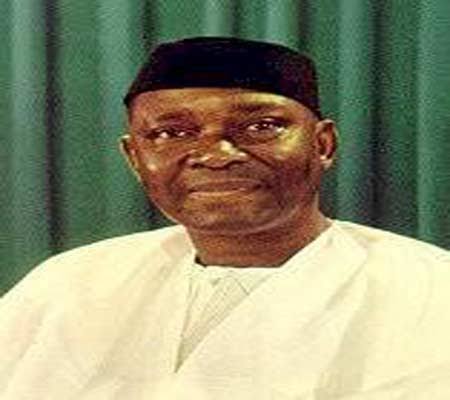
The Radical Nationalist Movement, later known as the Zikist Movement, was a youth-led organization founded in Lagos in 1946 that demanded immediate self-government from British colonial rule. C. K. Ajuluchukwu, a figure who later served in Chief Obafemi Awolowo’s Unity Party of Nigeria, first emerged as the radical Zikist Movement’s general secretary.
This youth-led organization, founded in Lagos, rejected the slow pace of constitutional reforms and demanded immediate self-government from British colonial rule.
His prominent role in such a militant anti-colonial group stands in stark contrast to his later association with mainstream politics. Ajuluchukwu, a prolific journalist, played a crucial part in shaping Nigeria’s political future from its earliest days.
Radical nationalist movement’s fiery genesis
The Zikist Movement formally started in Lagos on February 16, 1946. It drew significant inspiration from Dr. Nnamdi Azikiwe’s political influence, yet quickly forged its own identity. This was a youth-led force, impatient with the gradualist approach to achieving national independence.
While Kolawole Balogun became the movement’s first president, M. C. K. Ajuluchukwu took on the vital role of its first general secretary. Other notable figures, including Abiodun Aloba, Nduka Eze, Mokwugo Okoye, Raji Abdallah, and Osita Agwuna, joined their ranks. These young nationalists were not content to wait.
The Zikists represented a distinctly militant current within Nigerian nationalism. They openly criticised imperial rule, arguing that political freedom should not hinge indefinitely on reforms granted by colonial authorities. Their views were often shaped by broader anti-imperialist and socialist ideas circulating globally after the Second World War.
One pivotal moment for Zikist agitation came in October 1948, when Osita Agwuna delivered his famed lecture, A Call for Revolution, in Lagos. Anthony Enahoro chaired that provocative meeting. The colonial administration grew increasingly alarmed by this revolutionary rhetoric and the mounting militancy of young nationalists.
Government pressure intensified, and the Zikist Movement was ultimately banned in 1950. Ajuluchukwu’s leadership position within this original structure underscored his direct involvement in organised anti-colonial nationalism, far beyond mere journalistic commentary.
From Radicalism to Mainstream Influence
Journalism remained the unwavering foundation of Ajuluchukwu’s public career, even after the Zikist Movement was proscribed. He worked at the Daily Comet as an assistant editor in 1946, collaborating closely with figures like Anthony Enahoro. The Daily Comet was part of a dynamic political press that turned journalism into a tool for nationalist mobilisation.
He later became deeply associated with the West African Pilot, the influential newspaper founded by Dr. Nnamdi Azikiwe in 1937. The Pilot provided consistent criticism of colonial government, bringing nationalist arguments to a wide readership. Ajuluchukwu served as an editor, known for columns like Weekend Catechism, which blended political argument with public education.
The impact of newspapers such as the West African Pilot was paramount before independence. Political parties lacked modern communication infrastructure, so newspapers acted as vital channels for information, ideology, and mobilisation. Ajuluchukwu’s early experience in nationalist organisation significantly bolstered his journalistic prowess.
His career trajectory then took him to Enugu and the public information system of Eastern Nigeria. He joined the Nigerian Outlook, a newspaper published by the Government of Eastern Nigeria, ascending to senior editorial and managerial roles. This publication served as a crucial regional voice around Nigeria’s independence.
Ray Ekpu, a future renowned Nigerian journalist, recalled reading the Nigerian Outlook as a schoolboy, noting Ajuluchukwu among the writers who captured his attention. This highlights the broad reach of political journalism in that era. Editors became recognisable public intellectuals, influencing students, civil servants, and ordinary citizens.
By February 1965, Ajuluchukwu was the General Manager of the Eastern Nigeria Information Service, placing him at the heart of the regional government’s communication apparatus during the First Republic. This transition from anti-colonial agitator to government communicator mirrored a wider shift across Nigeria. Many early nationalist journalists eventually joined government or public institutions after colonial rule ended.
His career thus vividly illustrated the changing responsibilities of political communicators in Nigeria. They shifted from challenging colonial authority to promoting and debating policies enacted by Nigerian governments.
A surprising turn in Ajuluchukwu’s political journey occurred decades after his Zikist origins. Despite his early ties to Nnamdi Azikiwe, he became a senior figure in the Unity Party of Nigeria (UPN) during the Second Republic, which began in 1979 after years of military rule.
This party was led by Chief Obafemi Awolowo, one of Azikiwe’s greatest contemporaries and political rivals. Hannah Awolowo also played a significant role in her husband’s political endeavors.
Ajuluchukwu served as the UPN’s Director of Publicity and Research, putting an experienced journalist at the core of the party’s communication machinery. His presence within Awolowo’s organisation demonstrated the profound evolution of Nigerian political alliances since the nationalist struggles of the 1940s.
This shift underscored the intricate nature of Nigeria’s political history, proving that the nationalist generation was not confined to rigid ethnic or personal political camps.
Journalism remained central to this new phase. Political publicity demanded the same core abilities that defined his newspaper career: clear argumentation, public opinion insights, disciplined communication, and the skill to frame political ideas for a diverse national audience. Later, he joined the Concord Press, established by Chief M. K. O. Abiola.
Concord Press became a major privately owned newspaper organisation in the 1980s, attracting prominent journalists and shaping public debate during military rule. Another journalist, Godwin Babatunde Akran, also moved through different public roles, illustrating the versatility required in those times.
Ajuluchukwu served as a general manager within the Concord organisation, adding another institutional pillar to his extensive journalism career. He had traversed the nationalist press of the colonial era, regional government journalism, party communication during the Second Republic, and finally, senior management within one of the 1980s’ leading private newspaper groups. Few careers better illustrate the dramatic changes in Nigerian journalism throughout the twentieth century.
A Life Bridging Eras and Ideologies
Melie Chikelu Kafundu Ajuluchukwu, born around 1921, lived through some of Nigeria’s most significant political transformations. He experienced a country under British rule, participated in organised anti-colonial nationalism, and contributed to independence-era newspapers. He witnessed Nigeria achieve sovereignty on October 1, 1960, and subsequently lived through the First Republic, military rule, the Nigerian Civil War, and the Second Republic.
By 1999, when Nigeria entered the Fourth Republic, Ajuluchukwu was among the few surviving figures whose political experience spanned back to the colonial struggle. He passed away in October 2003 at approximately 82 years old, closing a career that encompassed more than half a century of Nigerian journalism and politics. His son, Mr.
Michael Chikelu Ajuluchukwu, confirmed his demise, citing a long-lingering, undisclosed ailment. His journey from radical youth leader to seasoned media executive showed how deep journalism was woven into Nigeria’s development. Gladys Tanimowo Ogunlesi also contributed significantly to the nation’s political future during this transformative period.
This remarkable life revealed the complex, often contradictory, and deeply personal evolution of Nigeria’s struggle for independence. It showed how individuals could bridge ideological divides as the nation itself matured, reflecting the pragmatic shifts and alliances that defined Nigerian political history.
