




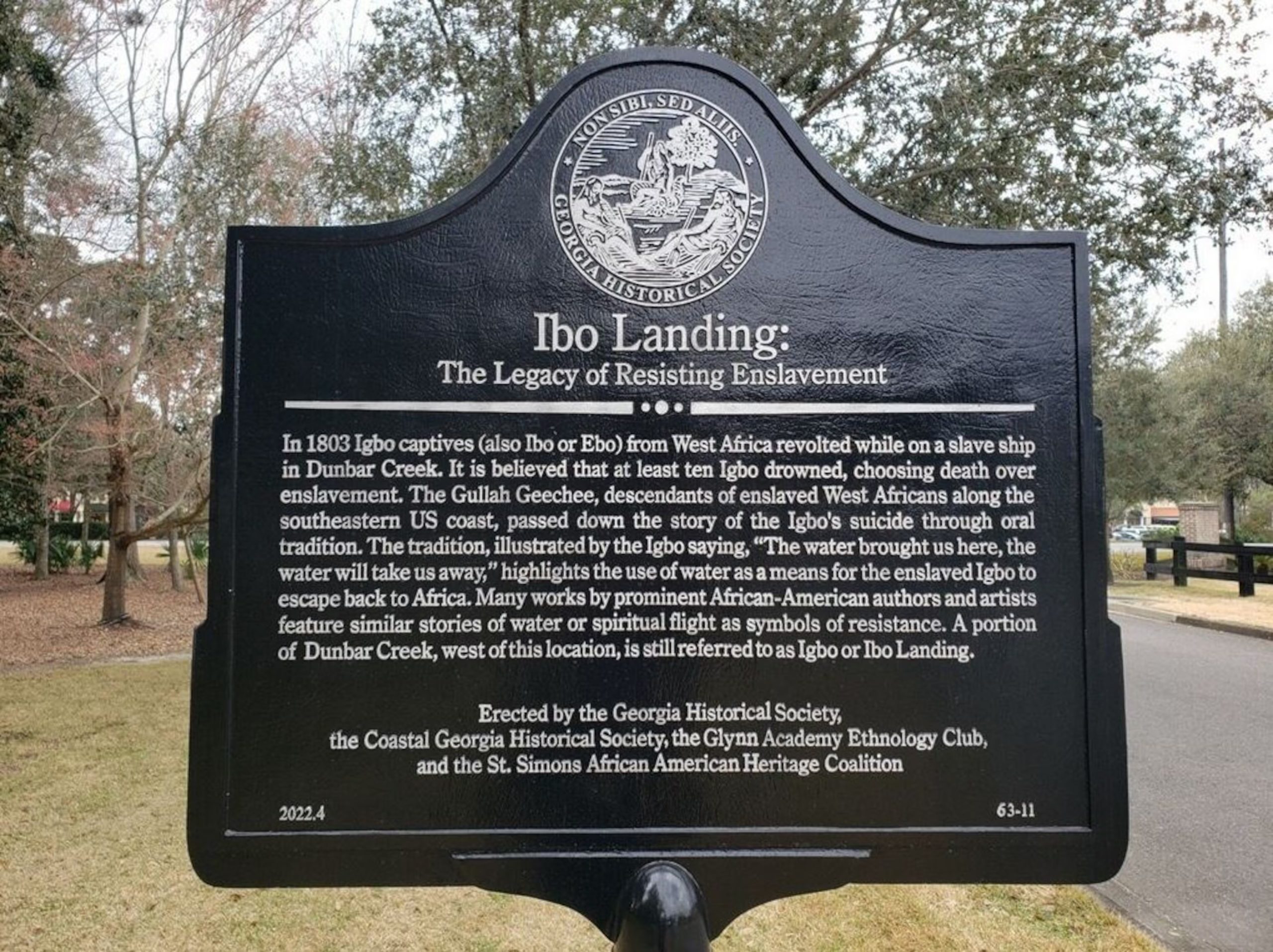
In 1803, nearly 75 Igbo captives, chained aboard a coastal vessel bound for Georgia plantations, executed a stunning revolt and then chose a devastating escape. Rather than face a life of forced labour, they marched into the waters of Dunbar Creek, near St. Simons Island, opting for death by drowning over further enslavement.
This extraordinary act of collective resistance created the legend of Igbo Landing, a site forever etched into the painful history of the transatlantic slave trade. It defied the brutal intentions of their captors, leaving behind a legacy of profound human defiance that resonates even today.
Igbo captives who chose freedom
The story of Igbo Landing begins with the violent machinery of the Atlantic slave trade. These particular captives were Igbo people, forcibly taken from their homes in what is now southeastern Nigeria. They endured the horrific Middle Passage, often on ships like the “Wanderer,” before arriving in Savannah, Georgia.
Upon reaching Savannah, these individuals were sold at auction, reportedly for an average of $100 each. They were then transported to St. Simons Island, destined for forced labour on plantations. Their identities were reduced to mere property, a fate they had already experienced across the treacherous ocean journey.
This final leg of their forced displacement would prove to be different. It was a journey meant to cement their enslavement, but instead, it became the stage for an uprising.
A Shipboard Rebellion on May 29, 1803
The Igbo captives were then loaded onto a smaller coastal vessel, identified by some accounts as the York or Myrtle, for their onward journey to the plantations. This short voyage, meant to cement their enslavement, instead became the stage for their uprising. On May 29, 1803, they overpowered their American captors, seizing control of the ship.
This act of rebellion marked a critical moment in their agonizing journey. People previously deemed mere cargo had reclaimed their agency, however fleetingly. They disrupted the meticulously planned transfer into permanent bondage, shifting the balance of power in that confined space.
Led by a high chief among them, the Igbo captives drowned their captors during the revolt. This decisive action ensured their immediate freedom from direct control. However, they remained in coastal Georgia, a land where slavery was deeply entrenched and escape was incredibly difficult.
Dunbar Creek: A Tragic Choice for Freedom
Their seized vessel eventually ran aground at Dunbar Creek. What happened next remains a testament to the captives’ unwavering refusal to be re-enslaved. Instead of dispersing or attempting an escape on land, which would almost certainly lead to swift recapture, all 75 captives reportedly walked into the creek’s murky waters.
Oral tradition, particularly strong among the Gullah Geechee people of coastal Georgia, preserves the memory of this collective decision. It describes how the captives chose death over continued dehumanisation, transforming tragedy into defiant agency. They committed mass suicide by drowning, choosing freedom in death.
The profound finality of their action ensured that they would never again be subjected to the horrors of the plantation system. It was a stark, brutal rejection of their imposed fate, turning a site of intended subjugation into a symbol of ultimate resistance. The story of a disappeared Nigerian town, for example, similarly preserves community memory against historical erasure.
Echoes in Oral Tradition and Culture
The story of Igbo Landing did not fade with the passage of time; it was meticulously kept alive through the oral traditions of the Gullah Geechee people. These descendants of enslaved Africans, who developed distinctive communities along the southeastern United States coast, integrated the event into their cultural heritage.
For generations, Igbo Landing served as a powerful narrative about resistance, suffering, and the refusal to accept enslavement. Versions of the story often included the belief that the spirits of the Igbo people “flew back to Africa” from this sacred site. This enduring narrative defied the historical records created solely by their oppressors.
The event’s powerful imagery and underlying themes of liberation have resonated across various artistic forms. It inspired works like Toni Morrison’s novel “Song of Solomon” and Alex Haley’s groundbreaking “Roots.” These literary contributions helped embed the legend of the Igbo captives into wider consciousness, extending its impact beyond local oral histories. Biafra’s wartime struggle also showed immense defiance.
Modern Recognition and Enduring Significance
For many years, the profound historical significance of Igbo Landing remained largely within Gullah Geechee communities. However, public recognition has grown substantially in recent decades. In 2002, a historical marker was erected at the site by the St. Simons African American Heritage Coalition, commemorating the incident.
This marker officially acknowledges the 1803 revolt at Dunbar Creek and the powerful tradition of resistance. The St. Simons African American Heritage Coalition was instrumental in bringing this recognition forward. This public recognition helped ensure the event was remembered beyond community memory.
Further cementing its place in public memory, a “Spirit of the Water” festival was held at Dunbar Creek in 2005. This event brought together Igbo elders from Nigeria and descendants of the Gullah Geechee people, forming a powerful bridge across centuries and continents. It highlighted the shared heritage and the deep historical connection.
This commitment to freedom, even in the face of overwhelming odds, echoes through other pivotal political events in Nigeria’s journey.
A Nigerian Insight into the Spirit of Liberty
Igbo Landing stands as one of the most potent symbols of resistance against slavery, not just in American history but globally. It reveals the profound human spirit that, even in the most dire circumstances, could choose dignity and defiance. Though the precise number who drowned and every detail of their final moments remain debated, the core act of collective suicide over enslavement is historically recognized.
For Nigerians, this tragic event is a powerful reminder of the resilience and spirit of their ancestors, even in the face of unimaginable horror. It underscores the deep-seated human desire for liberty, a desire that no chain or plantation could ever extinguish. The courage shown at Dunbar Creek resonates with the enduring spirit of defiance found throughout Nigerian history.
