




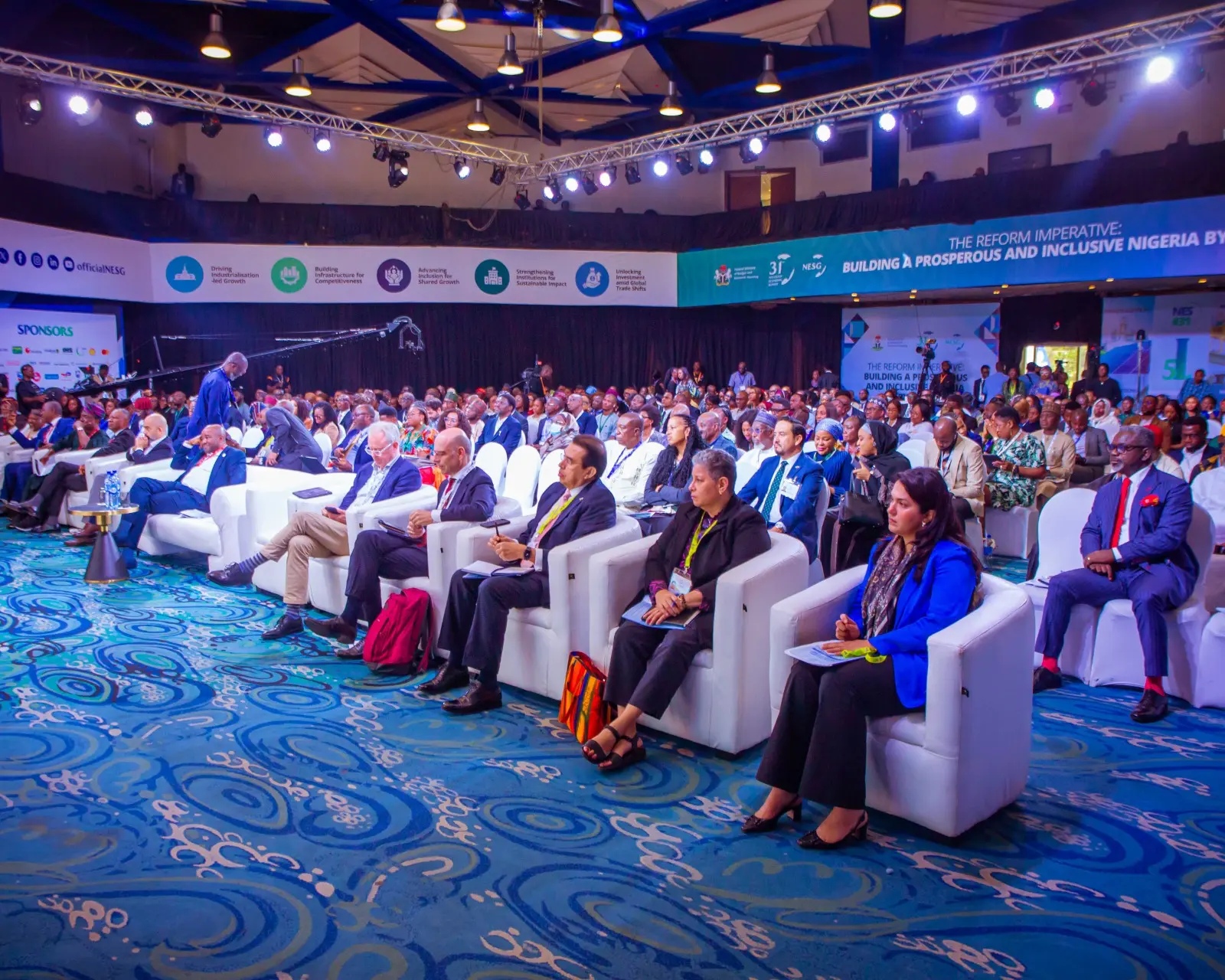
In 2026, Nigeria’s 32nd Economic Summit (NES #32) made a striking pivot, moving beyond decades of broad policy consensus to demand granular accountability from individual states. This shift, led by Dr. Tayo Adeloju, CEO of the Nigerian Economic Summit Group (NESG), aimed to drag subnational economies directly into Nigeria’s national growth story, challenging previous top-down approaches.
For over thirty years, the Nigerian Economic Summit served as a crucial forum for dialogue between government and private sector leaders. Yet, the 2026 summit distinguished itself by explicitly focusing on “implementation accountability” rather than just policy agreement. It signaled that the era of abstract economic plans was giving way to a demand for tangible results at the local level.
Nigerian Economic Summit 2026: A legacy of dialogue
The Nigerian Economic Summit, first conceived in 1993, provided a vital platform for public-private sector collaboration. Three years later, in 1996, the Nigerian Economic Summit Group (NESG) was formally established to champion economic reform. This non-profit body pushed for an open, private sector-led economy.
Over its long history, the NESG has influenced significant policy changes, including the liberalization of telecommunications and reforms in the pension sector. Each annual summit offered a space for reviewing economic progress and confronting implementation challenges. Government leaders engaged in discussions that often shaped national direction.
A New Era for Economic Transformation in 2026
The 2026 summit, held at the Transcorp Hilton Hotel in Abuja, signaled a clear departure from its predecessors. Organisers articulated a desire to move from simply achieving macroeconomic recovery to fostering broad-based economic transformation. This meant pushing beyond federal directives to ensure states were central to delivering jobs, productivity, and shared prosperity.
Dr. Adeloju emphasized this shift, underscoring the critical importance of integrating state-level economies into the broader national growth narrative. This approach suggested a recognition that economic progress needed to be felt in every corner of the nation, not just in federal statistics. Nigeria faced economic challenges that required widespread participation.
Driving the Shift: Dr. Tayo Adeloju’s Leadership
At the helm of NESG, Dr. Tayo Adeloju brought over two decades of experience as an economic reform strategist and policy entrepreneur. He previously served as the Chief Operating Officer, assuming the CEO role in January 2024. His deep understanding of Nigeria’s economic complexities informed the summit’s re-focused agenda.
Dr. Adeloju consistently advocated for productivity, industrialization, and robust state capacity as foundations for sustainable growth. His keynote address at the Lagos Economic Development Update in March 2026 highlighted these principles. He shaped NES #32 into a forum demanding tangible outcomes, not just discussions.
From Stabilization to Shared Prosperity: Nigeria’s Economic Imperative
Nigeria had undergone significant macroeconomic reforms in the preceding two years, driven by President Bola Tinubu’s administration. Measures like the removal of fuel subsidies and the unification of exchange rates aimed to restore fiscal stability. These reforms laid the groundwork for a more market-driven economy.
Despite these critical steps, the challenge remained in translating economic progress into tangible improvements for citizens. Inflation, though easing, continued to impact household budgets. Poverty levels remained high, with millions facing food insecurity in late 2025. The 2026 summit aimed to bridge this gap.
Fitch Ratings raised Nigeria’s outlook to positive in October 2026, citing a stronger naira and slowing inflation. This indicated growing confidence in the country’s economic trajectory. However, NES #32 acknowledged that this positive outlook needed to translate into real welfare gains for ordinary Nigerians.
Five Tracks for Tangible Outcomes
NES #32 introduced a performance-driven agenda structured around five actionable policy dialogue tracks. These included “Work Nigeria” for building a job-rich economy and “Produce Nigeria” for driving productivity, investment, and value creation. “Invest Nigeria” focused on delivering investment, shared prosperity, welfare, and social protection.
The “Secure Nigeria” track aimed to restore safety and confidence essential for economic activity across the nation. Crucially, the “Scale Nigeria” track specifically targeted expanding growth across states, sectors, and communities. Innovation required practical application, even in unusual circumstances.
Dr. Aisha Umar, Chair of the Central Organising Committee, firmly stated the necessity of moving from economic reforms to tangible outcomes. High-level plenary sessions would examine a new economic accord, regional growth corridors, and security’s role in resilience. They explored innovation and the connection between growth and household prosperity.
Beyond Consensus: The Demand for Accountability
This forceful shift toward state-level accountability and implementation marked an extraordinary moment in Nigeria’s ongoing economic dialogue. It reflected a growing national impatience with economic plans that often struggled to translate into improved living standards for ordinary citizens. The focus moved beyond what policies should be, to how they would actually be delivered.
The 2026 summit revealed a maturing understanding of Nigeria’s complex economic landscape. It acknowledged that genuine shared prosperity could not simply be decreed from the federal capital. Instead, it required a direct, ground-up approach, demanding that each state contribute actively and accountably to the nation’s overall economic health, a vital lesson for Nigeria’s future.
