




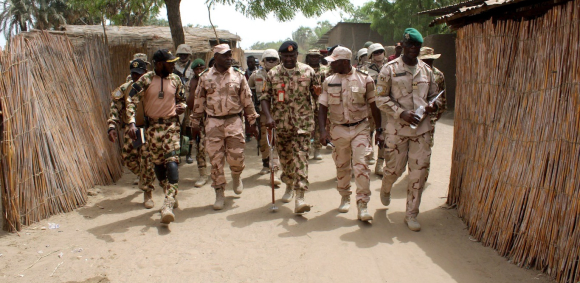
Many believed new army camps inaugurated in September 2026 in Cameroon would finally secure the troubled Lake Chad region against Boko Haram. But a recent analysis revealed these formidable military reinforcements alone cannot guarantee lasting peace, exposing the deeper truth about regional insecurity.
This military expansion, while a visible show of force, ultimately proved insufficient to secure the region. Its isolated nature and a profound lack of coordinated regional strategy meant the camps alone could not deliver lasting peace, a harsh reality that quickly emerged.
Understanding the Cameroon army camps 2026 initiative
Cameroon’s Defence Minister, Joseph Beti Assomo, announced the formation of a Rapid Intervention Battalion (BIR) Lake Chad military unit in September 2026. This new force directly responded to increasing jihadist violence in the Lake Chad region, particularly from the Islamic State West Africa Province (ISWAP) and Jama’tu Ahlis Sunna Lidda’awati wal-Jihad (JAS) factions.
Military bases at Bargaram and Hilé-Alifa were inaugurated that same month to house the new unit. Hilé-Alifa featured the second-largest barracks for rapid intervention battalions, complete with dormitories, a command post, kitchens, a fuel tank, a garage, a police station, a gymnasium, and a medical centre. Bargaram also received new dormitory blocks, a company command post, and an infirmary.
The BIR Lake Chad unit deployed with 1,000 personnel. This significantly reinforced the nearly 500 troops already stationed in key areas like Makary and Blangoua. Its primary goals included disrupting armed groups’ logistical networks and preventing ISWAP from expanding its stronghold from northeast Nigeria into northern Cameroon.
The Reality on the Ground
Despite this apparent escalation of military presence, the security situation remained precarious. Remote and under-resourced military outposts had long been a critical weak point in counter-terrorism efforts. The new camps, despite their amenities, did not fully address that systemic issue, nor did they assure comprehensive territorial control.
The promise of enhanced protection for civilians often fell short. Over 11,300 residents reportedly fled their homes due to recent assaults in Darak, Bargaram, and Hilé-Alifa, even after the new camps were established. This highlighted the persistent vulnerability of local communities to the agile and brutal tactics of the insurgents.
Experts, like Senior Researcher Raoul Sumo Tayo of the Institute for Security Studies (ISS), cautioned about the limitations. Tayo wrote that the success of the BIR Lake Chad unit “will depend on securing genuine territorial control and fostering close collaboration with neighbouring security forces.” A purely military approach, it became clear, was insufficient against a multifaceted insurgency.
Fragmented Efforts and Regional Disunity
A significant hurdle lay in the fragmented command structure among the various actors countering terrorism. Media outlets described a “cacophony on the battlefield” due to a lack of coordinated action by Cameroonian forces against Boko Haram. This internal disunity mirrored broader regional challenges.
The Multinational Joint Task Force (MNJTF), comprising troops from Nigeria, Cameroon, Chad, and Niger, struggled with divisions and a lack of cooperation. Chad’s interim President Mahamat Idriss Deby even threatened to withdraw from the MNJTF, citing its failure to tackle insurgent groups effectively. This constant friction undermined operational effectiveness.
Tactical alignment with commanders on the ground was desperately needed to prevent misunderstandings and avoid friendly fire incidents. Beyond human factors, the challenging terrain of flood zones, swamps, islands, and informal waterways also demanded specific solutions, such as suitable naval resources to counter groups using covert approaches like papyrus tei-tei rafts.
Beyond Combat: The Enduring Humanitarian Crisis
While Cameroon’s military response unfolded in 2026, it confronted a region already ravaged by a severe humanitarian crisis that military camps alone could not address. Between 2009 and 2016, nearly 30,000 people were killed due to violence from Boko Haram and counter-insurgency campaigns in the Lake Chad Basin. This immense human cost underscored the depth of the conflict.
By 2016, approximately 2.4 million people were displaced across Nigeria, Cameroon, Chad, and Niger. A UNICEF report revealed that 1.4 million children were displaced, with one million still trapped in hard-to-reach areas. The crisis extended to food security; 6.6 million people were affected by a severe food crisis that year, with 475,000 children projected to suffer from severe acute malnutrition.
The African Union Peace and Security Council (PSC) stressed in May 2022 that a purely military approach was insufficient. They called for sustained political will and scaled-up funding to address the root causes of insecurity, emphasizing development and stabilization. The regional strategy for stabilization, recovery, and resilience has an estimated budget of $12 billion, highlighting the scale of non-military intervention required.
Lessons in Comprehensive Security
The recent analysis of the Lake Chad situation in 2026 revealed a critical lesson: military might, while necessary, is rarely sufficient for lasting peace. Even with 1,000 new personnel and expanded bases, the lack of seamless regional coordination and a focus on broader socio-economic issues limited the impact of Cameroon’s efforts. The conflict demanded a strategy that extended beyond physical camps, tackling the underlying conditions that fuel insurgency and directly impacting Nigeria’s own border security concerns.
