




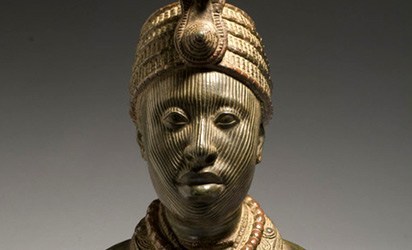
For centuries, the Ooni throne of Ile-Ife was occupied exclusively by men, establishing a long-held tradition. But around 1100 CE, Ooni Luwo Gbagida emerged as the only female paramount ruler of Ile-Ife, a reign so impactful it paradoxically ensured no other woman would ever follow her.
Her time on the throne shattered expectations, revealing a forgotten chapter where female leadership was not only possible but realised with immense authority. Yet, the story of her stern rule became the very catalyst for solidifying male-only succession for generations to come.
Ooni Luwo Gbagida: when the throne wasn’t always male
Many assume the Ooni institution always barred women, but early Ife history tells a different story. The system of succession was still evolving, not rigidly fixed from its inception. Royal descendants, both men and women, were eligible for authority.
Luwo Gbagida didn’t challenge an existing ban; she simply belonged to a royal lineage at a time when gender wasn’t an automatic disqualifier. Her royal ancestry, tracing back through figures like Ooni Otaataa from Owode compound, provided her with the legitimacy needed to ascend. Some historical accounts even connect her descent to Merogijan Owodo, a child of Lajamisan.
This fluidity of early tradition meant that a woman could, by right of birth and divine authority, occupy the highest stool. Elders believed she carried “ashe,” the divine authority to rule and speak with power. Her coronation was a radical acknowledgement of female leadership, demonstrating that royal women possessed the necessary legitimacy to rule Ile-Ife.
This dynamic resembles other struggles over traditional authority that shaped communities across Nigeria.
A Reign of Order and Severity
Ooni Luwo Gbagida quickly established a reputation for strict discipline and an obsession with order. Described as a woman of immense physical beauty, she took pride in her appearance. She also abhorred dirt, demanding pristine streets throughout Ife.
She commissioned the famous potsherd pavements, transforming muddy paths into clean, hard surfaces using broken pottery and quartz pebbles. This public work became an enduring symbol of her reign, showcasing her determination to improve the city, turning discarded vessels into material for civic improvement.
However, her methods were often harsh. Known for her intelligence, sharp tongue, and unafraid demeanor, she was particularly severe towards lazy men and lawbreakers. Those who displeased her were reportedly forced to bake and break clay, then lay the fragments for her to walk upon, as she refused bare floors. Her severity extended to sending many people to their deaths, making her a feared monarch.
During the Ara War, she also demanded military participation from the people and enforced compliance with harsh punishments for those who resisted. This added another dimension to her rule; she maintained absolute control even amid conflict.
Her governance style was one of absolute control, ensuring her will was carried out without question, mirroring the resolute spirit found in figures like Chief Oshodi Tapa in later Lagos history.
Her Firm Hand and Ife’s Resistance
Luwo’s reputation wasn’t just for strictness; traditions described her as an extremely cruel ruler. Her authority became terrifying. While she was remembered as an organiser of clean streets and productive citizens, she was equally known for deadly punishments.
The story of Luwo must be placed within a broader struggle for power in ancient Ife. The Ooni institution held immense authority, and the chiefs and people had a strong interest in preventing it from becoming oppressive. Luwo was not the only Ooni remembered for such tyranny.
For example, Ogboru, another powerful Ooni, was also deposed after accusations of murder. Luwo’s case, however, carried an additional, crucial element: her gender. Her reign thus became a powerful example, associating female succession with the possibility of oppressive rule in later traditions.
The Paradox of Her Legacy
Luwo Gbagida’s rule, while proving a woman’s capacity for leadership, ultimately cemented the exclusion of women from the throne. Her high-handedness and severity led the council of Obas to convene after her reign, resolving that no woman should ever again become Ooni of Ife.
This decision effectively closed a door that had once been open. The institution that had previously allowed female succession now codified a male-only tradition, all because of the memory of Luwo’s powerful, yet terrifying, rule. Her story became a cautionary tale about unchecked royal power and its consequences.
While some traditions mention a figure named Debooye, her role remains debated and uncertain. Debooye was either a daughter or younger sister of Ooni Giesi, but accounts vary wildly on whether she actually reigned, solidifying Luwo Gbagida’s unique position as the undisputed female Ooni.
Luwo’s influence even extended to her son, Adekola Telu, who later founded the Iwo Kingdom, demonstrating her lasting royal impact beyond Ife, much like the mysterious Oronna who left an indelible mark on Ilaro.
An Enduring Mark on Succession
Luwo’s greatest historical significance isn’t merely that she was a woman who became king; her reign was a critical turning point in Ife’s succession history. She unequivocally demonstrated that the early Ooni institution did not always adhere to an absolute male-only rule. Royal women could indeed possess the legitimacy to occupy the highest stool.
She also proved that a woman could exercise the full authority of an Ooni, rather than merely influencing from behind the throne. More profoundly, her story preserves the exact tradition through which female succession was ultimately rejected. The question shifted from whether a woman could become Ooni to whether another woman should ever be allowed to do so.
The answer, enshrined in tradition, became a resounding “no.” This paradox ensures her unique place: she was both evidence that women could rule and the reason the institution later rejected any future female Oonis. Her reign opened a door that later generations deliberately closed.
What Her Story Reveals About Nigeria
The story of Ooni Luwo Gbagida is far more than just a historical anomaly. It profoundly illuminates the complex evolution of power, succession, and gender roles within ancient Nigerian kingdoms. Her reign proved that women could indeed hold the highest office, wielding both political and sacred authority.
Yet, her legacy shows how collective memory and experience can fundamentally reshape institutional norms. The people of Ife, driven by a desire for more humane governance, used her reign as the pivotal argument to prevent future female Oonis. This highlights the dynamic interplay between ruler and ruled, and how a leader’s actions can inadvertently alter the very fabric of tradition for centuries to come.
