




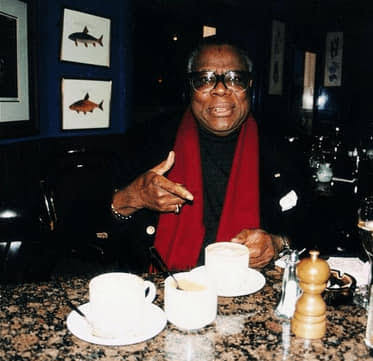
On September 1, 2015, in a private hospital in Brussels, Belgium, Chief Antonio Deinde Fernandez drew his last breath at the age of 86.
Fernandez was not merely a rich man; he was a bridge between commerce and continental politics, a man who represented sovereign African nations at the United Nations while simultaneously building a vast business empire stretching from Angolan oil fields to Central African diamond mines.
From colonial Lagos to the global ambitions of Antonio Deinde Fernandez
His story offers a unique lens through which to view the evolution of African influence on the global stage in the late 20th century.
Antonio Deinde Fernandez was born in Lagos on August 12, 1929, though some accounts, including his daughter Abimbola’s French birth certificate, list the year as 1936. His heritage was a rich blend of Portuguese-Brazilian and Yoruba ancestry, stemming from a Portuguese-Brazilian slave trader who settled in Lagos in the early 19th century.
His mother, Juliana Durojaiye Fernandez (née Palomeras), belonged to the noble Olumegbon line of Isale-Eko, Lagos.
Growing up in colonial Lagos, a bustling hub of commerce and nascent political organisation, Fernandez received his education at prominent local institutions such as Holy Cross School, CMS Grammar School, and St Gregory’s College.
By the 1950s, his gaze had already extended beyond Nigeria’s shores, seeking commercial opportunities in minerals like columbite and galena, laying the groundwork for an international business career that would span decades and continents.
His early ventures established a pattern that would define his life: cultivating relationships and interests that took him to Europe, the United States, and numerous African nations. He was building not just a fortune, but a network of influence, long before he ever considered a diplomatic passport.
The uncommon path to African diplomacy
Fernandez’s transition from a shrewd businessman to an accredited diplomat was profoundly unusual, defying traditional career paths. His entry into diplomatic circles reportedly began in 1966, when he served as a consul for the Republic of Dahomey, which would later be renamed the Republic of Benin.
This initial role proved to be just the beginning. By 1982, he had become an economic adviser to the Angolan government, a nation newly independent from Portugal and embroiled in a civil war heavily influenced by Cold War dynamics.
Here, Fernandez found himself at the nexus of petroleum revenues, international diplomacy, and armed conflict, a volatile environment where his business acumen and political connections were equally valuable.
His engagement with Mozambique deepened further in the 1980s. He was appointed as an Ambassador and Deputy Permanent Representative of Mozambique to the United Nations, a remarkable achievement for a Nigerian private citizen representing another sovereign African state. This role solidified his unique position, blending the worlds of international commerce and high-level governmental relations.
An ambassador-at-large and UN representative
The early 1990s marked a significant expansion of Fernandez’s diplomatic portfolio. On May 14, 1993, Togolese President Gnassingbé Eyadéma issued a decree appointing Antonio Deinde Fernandez as an Ambassador-at-Large of the Togolese Republic. Weeks later, on June 2, 1993, another decree granted him Togolese nationality, confirming his birth in Lagos on August 12, 1936, and identifying him as Togo’s ambassador-at-large resident in New York.
But it was his tenure representing the Central African Republic (CAR) that perhaps defined the most critical chapter of his diplomatic career. During the 1990s, CAR was wracked by severe political instability, including three army mutinies in 1996. As African governments intervened diplomatically, deploying the Inter-African Mission to Monitor the Implementation of the Bangui Agreements (MISAB), Fernandez stepped into a pivotal role.
On November 3, 1997, he presented his credentials as CAR’s Ambassador Extraordinary and Plenipotentiary and Permanent Representative to the United Nations. Within days, he was at the heart of UN proceedings concerning CAR, speaking for the nation on political reconciliation, security, and international peacekeeping, a responsibility he continued as the UN Mission in the Central African Republic (MINURCA) took over in 1998.
His stature culminated on October 1, 1998, when he addressed the fifty-third session of the United Nations General Assembly in New York as Chief Antonio Deinde Fernandez, Deputy Minister for Foreign Affairs of the Central African Republic.
Standing before the world’s foremost diplomatic forum, he discussed human rights, conflict prevention, African peacekeeping, and his country’s internal struggles, acknowledging the contributions of nations like Gabon, Chad, and Togo in restoring stability. His journey from a Lagos marketplace to the UN podium was complete.
Petro-Inett and the nexus of oil and influence
Throughout his extensive diplomatic career, Fernandez never truly separated himself from his business interests. His petroleum company, Petro-Inett Corporation, stood as a testament to his continued commercial ambition. In April 1996, Petro-Inett secured a significant 50% share in Angola’s offshore Block 7, a 4,700 square-kilometer area in the Kwanza Basin, partnering with South Africa-based Energy Africa Limited and Angola’s state petroleum company, Sonangol.
This concession placed Fernandez at the core of one of Africa’s most strategically vital petroleum industries. His involvement in Angola was multifaceted; he had served as an economic adviser to the Angolan government years before the Block 7 agreement, illustrating how his commercial and political connections were deeply intertwined. This dual role allowed him to exert influence in both boardrooms and diplomatic chambers, often simultaneously.
Beyond oil, Fernandez held extensive mining interests, including diamond and gold mines in CAR, Angola, and Equatorial Guinea. He reportedly owned a 340 square-kilometer diamond plant in Angola, solidifying his status as a key player in the continent’s natural resource sector.
This intricate web of business and state relations positioned him as a unique figure in African political economy, where wealth often translated into diplomatic access and vice-versa.
This fusion of private enterprise with governmental affairs was a hallmark of his career, enabling him to participate in vital economic decisions that shaped the trajectory of nations. It’s a dynamic that has long defined aspects of African development, and Fernandez was a master of it.
For another perspective on how private enterprise can impact national destinies, one might consider how a Saudi billionaire’s Ethiopian dream became a field of dust, highlighting the complexities of such large-scale ventures.
The Mandela controversy and immense wealth
Fernandez’s expansive network even reached Nelson Mandela, South Africa’s revered first democratically elected president. This association drew international attention in May 1999 when correspondence concerning two cheques totaling almost £170,000 and a Petro-Inett petroleum transaction was leaked to British newspapers.
Mandela’s representatives firmly rejected allegations of improper payments, asserting the money was intended as contributions to the Nelson Mandela Children’s Fund. While the controversy, emerging just before South Africa’s June 1999 general election, was widely seen as an attempt to tarnish Mandela’s reputation, no corrupt payment was ever established. The episode, however, vividly underscored the extraordinary political echelons in which Fernandez operated.
His legendary wealth frequently made headlines. Often described as one of Africa’s richest men, Fernandez owned a vast portfolio of properties globally, including the Chateau de Bois Feuillette in France, once owned by Napoleon Bonaparte, a seven-story Georgian townhouse in Edinburgh, Scotland, and a sprawling New York estate.
He reportedly commanded a net worth of $8.7 billion, with daily revenues from his oil, gold, and diamond interests flowing through various international accounts. His lifestyle, complete with private jets and a luxury yacht, was a testament to his immense fortune.
Yet, his historical significance extended beyond mere riches. What truly distinguished Fernandez was his unparalleled ability to meld private commercial influence with formal diplomatic appointments, serving governments far beyond his native Nigeria and participating directly in international discussions that shaped conflict resolution, peacekeeping efforts, and economic stability across Africa.
A distinctive Nigerian legacy
Chief Antonio Deinde Fernandez died at 6:05 PM UTC on September 1, 2015, in Brussels, Belgium, following an undisclosed illness. His burial took place on September 18, 2015, at Ixelles Cemetery in Brussels.
His passing prompted numerous tributes, including a condolence message from then-Lagos State Governor Akinwunmi Ambode, who recognized him as both a formidable businessman and an experienced diplomat whose career spanned the African continent.
His life traces a remarkable geographical arc, connecting Nigeria with Benin, Angola, Mozambique, Togo, the Central African Republic, South Africa, the United States, and Belgium. Fernandez’s story is a compelling narrative of how individual enterprise can intersect with global politics, demonstrating a unique form of Pan-African influence.
He was a pioneer in navigating the complex currents of post-colonial African development, wielding both economic power and diplomatic credentials to shape outcomes.
Ultimately, Chief Antonio Deinde Fernandez forged a path few others have trodden. He moved seamlessly between the intricate dealings of international finance and the sensitive negotiations of global diplomacy, leaving behind a legacy that challenges conventional notions of power and influence in the 20th and early 21st centuries.
His life stands as a testament to the individual capacity to bridge divides and shape history, an enduring question mark for future generations on the nature of African agency.
