




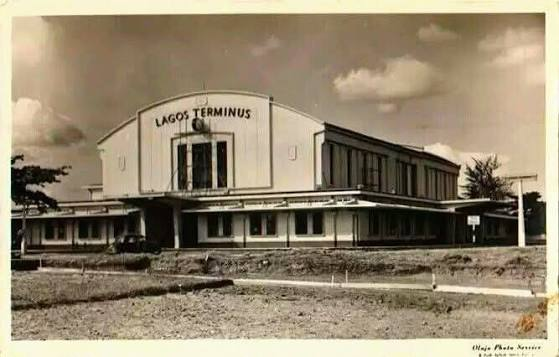
In 1957, a World Bank photograph captured the newly constructed Lagos Terminus, a bustling gateway on Iddo Island that was becoming the heartbeat of Nigeria’s transport system.
The terminus marked a significant upgrade to a railway system that had been serving Nigeria for over half a century. While its roots stretched back to the late 19th century, the 1957 snapshot shows a system operating at peak efficiency and relevance, even as the political landscape around it was undergoing profound transformation.
Lagos Terminus 1957 and the nation’s railway backbone
The Lagos Terminus in 1957 stood as a crossroads, connecting Nigeria’s past to its then-unfolding future.
The genesis of Nigeria’s railway system, with construction commencing in the 1890s, set in motion a transformation that would redefine the country’s landscape. The inaugural line, extending from Lagos towards Ibadan, was driven by colonial ambitions to efficiently move resources from the interior to coastal ports for export. This strategic undertaking saw its first trains arrive in Ibadan by 1901.
From this foundational route, the network gradually fanned out across the vast territory. It connected vital commercial and administrative hubs like Ilorin, Minna, Kaduna, Zaria, and Kano, forming a central artery for the emerging colonial economy. Other crucial lines, originating from Port Harcourt, pushed inland to Enugu and Makurdi, effectively knitting together the eastern and northern regions of Nigeria.
While primarily conceived for colonial economic objectives, this expansive system quickly became indispensable for everyday Nigerian life. It facilitated passenger travel, enabled commerce across vast distances, and supported internal migration. The railway system became deeply embedded in the social and economic fabric of the country, far beyond its initial purpose, contributing significantly to a nascent broader rail network.
A modern marvel for a growing nation
The Lagos Terminus visible in the 1957 photograph was not Nigeria’s original railway station at Iddo; it was a state-of-the-art replacement, signaling a commitment to modernization. By 1950, official reports had already flagged the old terminus as severely inadequate for the burgeoning railway operations. Financial constraints had caused delays, but the need for a contemporary facility was undeniable as demand soared.
Construction advanced steadily, and by 1954, the new Lagos Terminus was already handling traffic, even though work wasn’t fully completed. Its formal inauguration took place on May 25, 1955, marking a new chapter for rail transport in the nation.
Just two years later, when the World Bank photograph was captured, the station stood as a testament not to the beginning of Nigeria’s railway story but to a major upgrade of a system already more than half a century old.
The administrative change in its designation followed swiftly to reflect its renewed status. A Nigerian government railway tariff notice in 1954 officially changed the designation from “Iddo (Lagos)” to “Lagos Terminus,” with the change taking effect from September 15, 1954. This rebranding coincided precisely with the new terminal’s operational readiness, streamlining its identity.
By its official opening in May 1955, “Lagos Terminus” had become the established and recognized name for this crucial Iddo facility. It solidified its identity as the country’s primary rail gateway, embodying the ambition for a modern, independent Nigeria capable of managing complex national infrastructure.
Millions on the move: the railway’s economic engine
In 1957, the Nigerian Railway Corporation (NRC) commanded an impressive network spanning 1,780 route-miles of 3 ft 6 in gauge railway.
Until late September that year, the system also included 133 route-miles of the narrower 2 ft 6 in Jos to Zaria line, which was later decommissioned due to financial losses, reflecting the dynamic nature of infrastructure management. This vast infrastructure underpinned a thriving transport system essential for national life.
“Limited” passenger trains departed Lagos five days a week, providing vital connections to distant cities like Kano, Port Harcourt, and Jos. A separate direct service linked Port Harcourt and Kano twice weekly, underscoring the extensive reach and reliability of rail travel across the country. These services were fundamental for national cohesion, commerce, and internal movement, enabling both economic activity and social connection.
The financial year ending March 31, 1957, brought particularly strong figures for the NRC, highlighting its central economic role. The railway transported an astonishing 7.271 million passengers, with each journey averaging 61 miles. This volume unequivocally demonstrates the sheer scale of public reliance on the rail network in the pre-independence era, making it an indispensable part of daily life for millions.
Freight traffic proved even more vital economically, setting a record of 2.808 million tons, a significant increase from 2.653 million tons the previous year. Gross railway receipts soared to approximately £14.296 million, while expenditure amounted to about £12.319 million. These figures reveal the railway’s substantial contribution to the national economy and its critical role in facilitating trade and development.
Investing in the passenger experience
Despite the fast-approaching political shifts towards self-governance, investment in railway equipment continued robustly through 1957, signaling enduring confidence in the system’s future capabilities. Contemporary records show the Nigerian Railway Corporation added 26 passenger vehicles, eight baggage vans, and three restaurant cars to its fleet that year alone, reflecting a commitment to service quality.
This commitment aimed to improve the journey for a growing number of passengers and enhance operational capacity.
For freight services, the corporation also made significant additions, introducing 213 goods wagons and 35 tank wagons. These expansions were critical for increasing capacity to move essential commodities and raw materials across the country. New third-class coaches were rolled out on the “Limited” trains, indicating a deliberate focus on enhancing comfort and accessibility across all passenger categories, recognizing the diverse needs of its users.
The new Lagos Terminus itself was meticulously designed to handle substantial daily passenger flow with efficiency and convenience. A 1955 government tender, for instance, actively sought caterers to provide food and refreshments in the third-class waiting room, anticipating extensive service hours from 5 a.m. to 10 p.m., with provisions for extensions based on train schedules.
Such meticulous details paint a vivid picture of the station’s bustling daily life and comprehensive service provision.
This infrastructure provided crucial waiting facilities, diverse catering options, and differentiated passenger accommodation, ranging from first to third class. While the varied experiences reflected the class structure of the time, the system served as a common, vital artery for millions of Nigerians, demonstrating a significant national economic development strategy.
The political currents of 1957
The year 1957 was more than just a period of railway expansion and modernization; it represented a watershed moment in Nigeria’s political evolution towards full independence. Although the nation remained under British colonial rule, intense constitutional negotiations were rapidly accelerating the transfer of authority into Nigerian hands, setting the stage for monumental change.
The London Constitutional Conference, convened in May and June 1957, brought forth significant constitutional changes that reshaped the federal structure. Notably, the Eastern and Western Regions achieved internal self-government later that very year, gaining greater autonomy in their affairs. This landmark constitutional settlement also formally paved the way for the creation of the office of federal Prime Minister, a pivotal step in establishing indigenous governance.
It was within this dynamic and hopeful political environment that Sir Abubakar Tafawa Balewa stepped into history, becoming Nigeria’s first federal Prime Minister in 1957. While the Northern Region would follow suit, gaining internal self-government in 1959, the path was clearly illuminated for Nigeria’s complete independence, which eventually arrived on October 1, 1960.
Lagos Terminus, therefore, wasn’t just a bustling transport hub; it was a silent but significant witness to this profound political shift. It anchored a sophisticated system inherited from colonial powers, now increasingly under Nigerian stewardship, reflecting the nation’s determined journey to self-determination and sovereign control over its vital infrastructure and political leadership.
Colonial origins, Nigerian integration
The inception of Nigeria’s railway system, with its very first line from Iddo in 1898, was undeniably a strategic instrument of British imperial design. Its primary purpose was to facilitate the efficient movement of bulk goods, including agricultural produce, minerals, and other raw materials, from the vast hinterland to coastal ports for export.
This served the economic interests of the colonial government directly, shaping trade routes and resource extraction.
By 1957, however, the railway had transcended its initial colonial purpose and become something far more deeply ingrained. Decades of continuous operation had woven it into the very fabric of Nigerian life, transforming it into an established, essential means of internal movement for the populace.
The sheer volume of over seven million passenger journeys recorded by 1957 speaks volumes about its undeniable societal integration and widespread public reliance.
Across the country, new markets, urban centers, and commercial routes sprang up organically along these critical rail corridors, fundamentally altering Nigeria’s human geography. The infrastructure, while initially created under colonial rule, had become fully integrated into Nigeria’s economic and social landscape, profoundly shaping where and how people lived, worked, and conducted business, becoming a truly national asset.
The Nigerian Railway Corporation (NRC), which formally assumed control on October 1, 1955, further solidified this transition of ownership and purpose. Granted monopoly powers by the Nigerian Railway Corporation Ordinance of 1955, the NRC quickly grew to become the largest employer of labor in the colony, underscoring the railway’s vital role in the socio-economic life of pre-independence Nigeria.
The growing shadow of road transport
While the railway system remained undeniably crucial in 1957, the broader transport landscape in Nigeria was undergoing a significant and transformative shift. The Federal Annual Report of that year specifically highlighted the emergence of serious road traffic pressures in Lagos, indicating a new challenge to the railway’s dominance. This was compounded by a notable increase in both motor vehicles and licensed drivers across the nation.
Records show that Nigeria had a substantial 59,892 motor vehicles registered in 1957 alone, signaling a rapidly expanding automotive sector. Road transport was quickly becoming a formidable competitor to rail, particularly as the country’s road network expanded and individual vehicles offered greater flexibility and directness for many types of journeys, especially for shorter hauls and personal travel.
This competitive pressure from road transport lends further significance to the 1957 photograph of Lagos Terminus. It captures the railway at a fascinating crossroads: still carrying record freight volumes and benefiting from fresh investments in new equipment, yet simultaneously facing increasing challenges from the burgeoning road sector. The future of transport in Nigeria was beginning to diverge, with new modes of movement gaining traction.
The railway, a foundational system for Nigeria’s development, was entering an era where its role, while still central, would no longer be unchallenged. This moment underscores the continuous evolution of infrastructure in response to technological advancements and changing societal needs, even as Nigeria prepared to govern itself.
Iddo’s enduring operational presence
The physical geography and patterns of railway travel in Lagos have indeed undergone dramatic changes since the mid-20th century. Today, modern standard-gauge passenger services, such as the crucial Lagos to Ibadan route, typically originate from the Mobolaji Johnson Station at Ebute Metta, a notable departure from the historic Iddo terminus that once dominated the scene.
Yet, Iddo itself hasn’t faded into complete obsolescence or become a mere relic of the past. The Nigerian Railway Corporation (NRC) continues to actively recognize the Iddo corridor as an integral part of the Lagos District’s narrow-gauge network.
Lagos Mass Transit Train services still diligently connect Ijoko and Kajola with Iddo on weekdays, demonstrating its persistent and important operational relevance within the city’s daily commuting patterns.
Recent activities further underscore this continued utility and vitality. In March 2026, for instance, the NRC collaborated successfully with the Osun State Government to operate an Imole Special Train on the narrow-gauge line from Iddo to Osogbo during the Eid el Fitr period.
Just this June 2026, the NRC released updated weekday timetables showing morning services arriving at Iddo and evening departures from Iddo, reaffirming its ongoing functional role.
Institutional interest in Iddo has also seen a significant resurgence, highlighting its historical value and future potential. In 2025, NRC Managing Director Dr Kayode Opeifa explicitly prioritized the terminal’s transformation, focusing on essential infrastructure upgrades and improved passenger facilities. Later that year, the corporation unveiled broader facelift plans and engaged in vital discussions with local traders operating around the railway property.
Therefore, Iddo is far more than just a surviving colonial landmark; it stands as a historic railway complex that steadfastly maintains a dynamic operational role within Nigeria’s contemporary transport system. Its rich past continuously informs its present, shaping the movement of people and goods in metropolitan Lagos and beyond, bridging eras of national development.
