




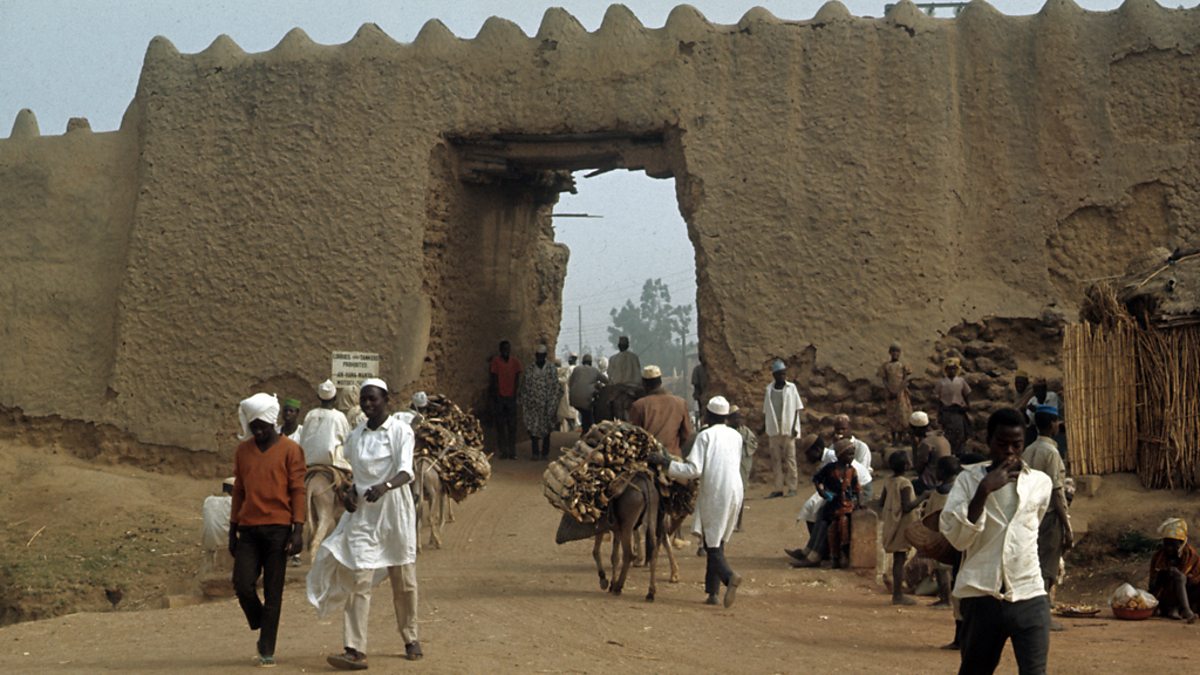
On Thursday, December 18, 1980, police units converged on the Shahuci playground near the Kano Central Mosque. Their mission was to arrest followers of Muhammadu Marwa, an Islamic preacher known as Maitatsine, for public disorder. This seemingly routine operation rapidly escalated, leading to what became known as the Maitatsine uprising in Kano, claiming an estimated 4,500 lives.
It spiraled into an 11-day religious revolt, known as the Kano Disturbances, that ultimately claimed approximately 4,500 lives based on mortuary estimates. This event left a permanent scar on Nigeria’s post-independence history, forcing the deployment of the Nigerian Army.
Understanding the Maitatsine Uprising in Kano
Muhammadu Marwa, a Cameroonian by birth, established himself in Kano and became notorious for teachings outside mainstream Islamic orthodoxy. His followers, often called Yan Tatsine, revered him as a prophet. This claim directly conflicted with the finality of Prophet Muhammad’s prophethood—a cornerstone of Islam.
The name “Maitatsine” itself speaks volumes about his confrontational style. It developed from the Hausa expression associated with his frequent curses against people who rejected his preaching. Historian Elizabeth Isichei records that Marwa repeatedly invoked divine condemnation, earning him a name commonly translated as “the one who curses” or “the one who damns.”
Rejecting Modernity, Claiming Prophecy
Marwa’s doctrines were intensely personal and heterodox. He elevated his own interpretations of the Qur’an, rejecting important elements of established Islamic authority and condemning aspects of modern material life. He also rejected Hadith, traditional jurisprudence, and the authority of recognized Islamic scholars.
Radios, watches, bicycles, cars, and other manufactured goods were among the objects associated with the modern society he attacked. His followers were reportedly discouraged from reading any book other than the Qur’an, rejecting secular education entirely. This blend of religious extremism and social rebellion resonated with a specific segment of Kano’s population.
Kano’s Violent Decisive Confrontation Unfolds
The flashpoint on December 18, 1980, was no accident. The Kano state government had delivered a final warning to Maitatsine on November 26, 1980. They demanded he cease his activities and vacate his autonomous enclave in Yan Awaki within fourteen days.
Marwa and his followers, incensed by this ultimatum, rejected the order and prepared for a confrontation. When four police units arrived at Shahuci playground, they met fierce resistance. Yan Tatsine members, armed with knives, clubs, and petrol bombs, fought back, quickly overwhelming the initial police response.
The violence spread rapidly from Yan Awaki into surrounding areas of Kano, a major commercial and religious center. This pushed the security situation beyond the capacity of ordinary policing. The Nigerian Army was eventually deployed.
The Nigerian Army Intervenes
As the conflict escalated, it became clear that local law enforcement couldn’t contain the uprising. The Nigerian Army, commanded by then-Colonel Yohanna Yerima Kure, intervened. Kano’s streets transformed into battlegrounds, trapping civilians in the crossfire as security forces fought to suppress the well-organized and cohesive religious community.
Elizabeth Isichei later described the scale of the fighting as approaching civil war. This crisis became one of Nigeria’s most devastating episodes of internal violence since the end of the Nigerian Civil War in 1970. It deeply questioned the capacity of Nigeria’s military system to handle internal unrest.
The Devastating Human Cost
The Maitatsine uprising in Kano extracted a horrific toll. The figure most firmly established in the literature for the uprising is 4,177 deaths, which includes Marwa himself. Other estimates have placed the number of dead at approximately 5,000 or 6,000.
The live research also notes approximately 4,500 deaths based on mortuary estimates, including over 4,177 civilians, about 100 policemen, and roughly 35 military personnel killed. Thousands more were injured. This scale of loss reflected the intensity of several days of fighting across a densely populated urban environment.
The Kano state government eventually paid N8.1 million as compensation to some of the victims. This was a somber acknowledgment of the widespread property damage and human suffering. Maitatsine died shortly after sustaining injuries in the clashes, either from his wounds or a heart attack, as Mervyn Hiskett records.
A Movement Spreads Beyond its Charismatic Founder
While Muhammadu Marwa did not survive the Kano uprising, his death didn’t extinguish the movement entirely. His followers buried him, but authorities later recovered and identified his body. His remains were reportedly cremated by the Nigerian military and are kept at a police laboratory in Kano.
The phenomenon of Maitatsine had taken root, extending far beyond the personality of its original leader. Networks of followers and underlying social grievances ensured that disturbances associated with Yan Tatsine groups continued to erupt across northern Nigeria in the years that followed.
Successive Waves of Violence Across the North
Further disturbances associated with Maitatsine followers erupted across northern Nigeria during the following years. In October 1982, major fighting occurred at Bulumkutu near Maiduguri in Borno State. Violence also occurred around Rigasa in Kaduna during the same year.
Another serious uprising broke out in Jimeta-Yola in 1984, when the area formed part of Gongola State. The bloodshed continued into April 1985 with an outbreak in Gombe, then part of Bauchi State. Musa Makaniki emerged as an important figure associated with the post-Marwa phase of the movement, particularly during the Jimeta-Yola violence.
Casualty totals from these later uprisings vary considerably between historical sources. Elizabeth Isichei recorded approximately 3,350 deaths at Bulumkutu, while B. J. Takaya’s compilation of official figures listed 118 deaths there and 53 deaths around Rigasa and Tudun Wada in Kaduna.
For the 1984 Jimeta-Yola disturbances, Isichei discussed estimates running into several hundred and as high as about 1,000 deaths, while Takaya recorded an official figure of 568. At Gombe in April 1985, the figures are much closer. Isichei recorded just over 100 deaths, while Takaya’s compilation gave a total of 105.
Poverty, Migration, and Radical Religious Authority
Historians and social scientists have offered several explanations for Maitatsine’s ability to attract followers. Paul Lubeck placed considerable emphasis on Kano’s changing political economy. Nigeria’s oil boom in the 1970s transformed urban life, employment, and migration.
Large numbers of people moved into expanding northern cities, while many remained economically insecure and socially marginal. Traditional arrangements through which poor migrants and Qur’anic students survived were also changing. In this environment, Marwa’s denunciation of materialism and wealthy elites could appeal to people who felt excluded from the social and economic order.
His movement offered not only a religious doctrine but also a community that rejected many established institutions. It provided a sense of belonging for the dispossessed.
Mervyn Hiskett placed greater emphasis on the social and cultural identity of Marwa’s followers, pointing to migrant backgrounds, cultural alienation, and the distinctive religious character of the movement as important roles. This dynamic continues to shape economic stability and social cohesion.
The Interplay of Multiple Factors
No single factor fully explains the Maitatsine phenomenon. Instead, a complex interplay of economic insecurity, migration, rapid urbanization, cultural alienation, religious heterodoxy, charismatic leadership, and ineffective state responses converged. These conditions created fertile ground for the movement’s growth.
The crisis was years in the making, marked by multiple confrontations between Marwa and authorities. He was imprisoned and deported in 1962, his followers had clashed at mosques as early as 1972, and police were increasingly concerned about his community’s growing autonomy in Yan Awaki. Yet, these tensions were allowed to deepen, eventually leading to urban warfare.
Maitatsine and the Long Shadow of Boko Haram
The Maitatsine uprising often draws comparisons with Boko Haram. There are genuine similarities. Both movements challenged established Muslim authorities and rejected important features of the existing social order. Both developed among communities affected by political, social, and economic tensions.
Both eventually entered violent confrontation with the Nigerian state. Scholars including Abimbola Adesoji, Iro Aghedo, and Akali Omeni have explored these similarities. They discuss the longer history of religious radicalism and political violence in northern Nigeria, drawing parallels without conflating the movements.
Distinct Contexts, Different Trajectories
The similarities do not make the two organizations identical. No established historical record demonstrates an unbroken organizational structure linking Marwa’s Yan Tatsine directly to the movement that later developed around Mohammed Yusuf. Their religious and international contexts were also different.
Boko Haram emerged decades after the Maitatsine uprisings and later developed into a jihadist insurgency connected to transnational militant organizations. In March 2015, Abubakar Shekau pledged allegiance to Islamic State leader Abu Bakr al-Baghdadi. Islamic State accepted the pledge, and the organization became associated with the designation Islamic State West Africa Province.
A major leadership rupture followed in 2016 when Islamic State recognized Abu Musab al-Barnawi as the leader of its West African province instead of Shekau. Shekau’s faction continued separately, while the al-Barnawi aligned faction retained the ISWAP identity. Maitatsine belonged to an earlier period and was centered heavily on Marwa’s personal authority and prophetic claims.
The relationship between the two movements is therefore best understood through historical parallels rather than a direct organizational succession.
The Enduring Legacy of the Kano Uprising in 2026
More than four decades after Marwa’s death, northern Nigeria’s security environment has changed considerably. The Maitatsine movement itself is not identified as a contemporary operational insurgent organization. However, Boko Haram and ISWAP remain active in the Lake Chad region.
United Nations reporting in 2026 recorded continued operations by Islamic State West Africa Province and Jama’atu Ahlis Sunna Lidda’awati Wal-Jihad, commonly identified as Boko Haram. These modern insurgencies operate in a regional and international jihadist environment very different from that of Marwa’s movement in 1980.
The enduring connection lies instead in recurring questions about radical leadership, social exclusion, religious authority, institutional weakness, and the capacity of governments to respond to escalating movements before they develop into organized violence. The events of December 1980 serve as a powerful historical precedent.
The Maitatsine tragedy shows that major episodes of political and religious violence rarely begin at the moment the fighting starts. Muhammadu Marwa had preached for years, his followers had clashed with authorities before 1980, and tensions around his community had steadily intensified.
The events in Kano and the later uprisings across northern Nigeria demonstrate the dangers that can emerge when charismatic leadership, social dislocation, religious confrontation, and weak institutional responses reinforce one another. Understanding this historical context is crucial for nation building.
