



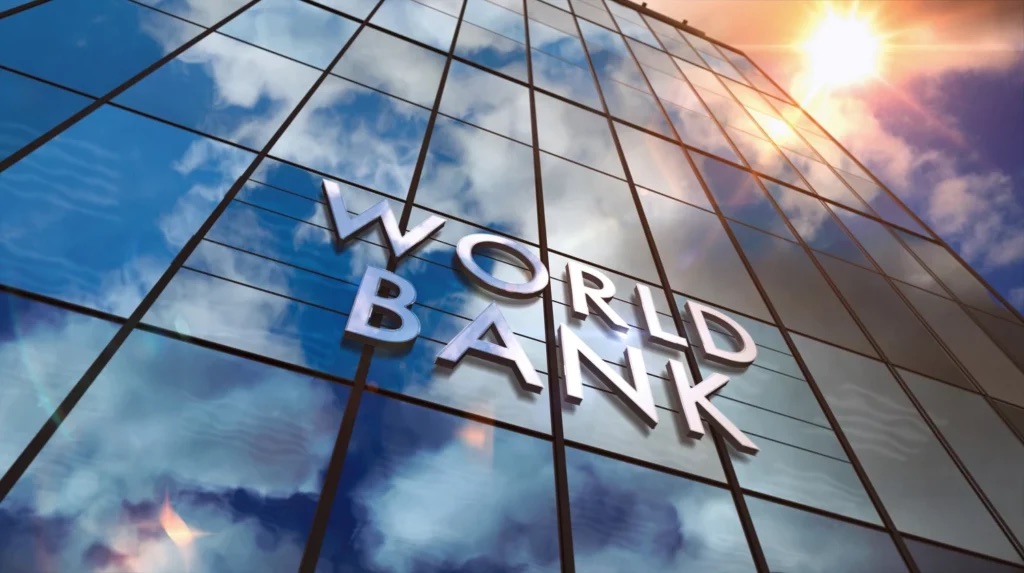
On 28 August 1970, in the District of Columbia, United States, a pivotal agreement was signed. The International Bank for Reconstruction and Development, known as the World Bank, committed a US$10 million loan to the Nigerian Industrial Development Bank Limited (NIDB). This second NIDB project arrived just over seven months after the Nigerian Civil War ended.
World Bank Vice President Siem Aldewereld signed for the international lender, while NIDB General Manager Silas B. Daniyan represented Nigeria’s emerging industrial future. Mr. Christopher Kahangi, Executive Director of World Bank for Nigeria, and His Excellency Joe Iyalla, Ambassador of Nigeria to the United States, also attended the ceremony.
The 1970 NIDB World Bank Loan and industrial recovery
This deal, officially designated Loan 705-UNI, was a crucial lifeline. Nigeria was grappling with post-war reconstruction and desperate for foreign exchange to rebuild its industries.
This US$10 million commitment wasn’t a direct cash injection to the Nigerian federal government. Instead, it was specifically channelled through NIDB, with the Federal Republic of Nigeria acting as guarantor. The goal was to provide essential foreign currency for importing machinery, equipment, and other industrial inputs.
Nigeria had just emerged from a brutal civil war that lasted from 1967 until January 1970. This conflict left its economy strained and its industrial base in urgent need of revitalisation. The agreement marked a strategic effort to expand Nigerian industry and fortify institutions.
It was intended to provide long-term investment finance that conventional commercial banks weren’t well placed to supply. The importance of this agreement stretched far beyond its headline value. It aimed to support a wider effort to rebuild Nigeria.
NIDB’s foundation and its post-independence mission
The Nigerian Industrial Development Bank itself was established in 1964. This creation came through the reorganisation of the Investment Company of Nigeria, also known as ICON. Its very establishment underscored Nigeria’s post-independence ambition.
The aim was to nurture a specialised institution. This body would funnel critical medium and long-term capital into industrial enterprises. The World Bank Group, particularly the International Finance Corporation (IFC), played a formative role in NIDB’s early days.
IFC offered technical assistance and subscribed to approximately 25 per cent of NIDB’s ordinary share capital. This mixed ownership structure involved the Central Bank of Nigeria, IFC, local, and international investors. It allowed NIDB to align with national development strategies.
NIDB could also tap into global expertise and capital. By the close of the 1960s, NIDB had solidified its position. It became a key conduit for industrial finance across the nation.
structuring development through loan mechanics
The 1970 NIDB World Bank Loan, known internally as Loan 705-UNI, set up a special account. From this account, NIDB could draw funds to finance approved investment projects across Nigeria. The agreement stipulated that the World Bank would disburse the US$10 million equivalent in various currencies.
NIDB itself bore a commitment charge of three-quarters of one per cent annually on undrawn portions. A 7 per cent interest rate applied to funds actually utilised. This arrangement positioned NIDB as the crucial intermediary for investments.
It was responsible for identifying viable investment opportunities. NIDB also appraised companies, structured finance, and diligently monitored subsequent investments. This ensured proper oversight of the funds.
funding projects and diversifying investments
The loan agreement mandated that projects exceeding certain financial thresholds would require direct World Bank approval. Smaller, qualifying projects could proceed under agreed procedures without individual prior consent. These were subject to pre-defined limits, balancing oversight and efficiency.
Notably, the agreement also recognised the diverse nature of Nigeria’s industrial landscape. Up to 25 per cent of the total loan could be directed towards enterprises not classified as private investments. This reflected the growing importance of both private sector and government participation in national industrial development.
foreign exchange: a post-war imperative
Nigeria’s pressing need for industrial foreign exchange in 1970 was a direct consequence of the Civil War. This conflict raged from 1967 until January 1970. Industrial businesses relied heavily on imported equipment, specialised machinery, spare parts, and critical technical components.
These imports became incredibly difficult to secure during the conflict due to severe foreign exchange shortages. Securing foreign exchange was vital during the war. Its importance only intensified in the immediate aftermath as the country embarked on extensive reconstruction efforts.
Establishing new industrial enterprises also depended on this scarce resource. Nigeria’s post-war economic recovery wasn’t just about repairing physical damage. It was equally about restoring productive capacity and stimulating fresh investment.
NIDB occupied an important position in this complex, multi-faceted process. The institution’s role became even more critical. This period of national development required strategic financial support.
strengthening NIDB: diversification and local ownership
Beyond simply providing capital, Loan 705-UNI had a dual purpose: to bolster NIDB’s institutional capacity. There was a clear need for improved economic analysis in project appraisal. More robust supervision mechanisms and a more diversified investment portfolio were also priorities.
One significant concern was NIDB’s heavy concentration of investments in the textile industry. In 1969, textiles accounted for approximately 68 per cent of its total approvals. This second loan actively pushed NIDB to expand its reach into a wider array of industrial sectors.
Moreover, the loan addressed concerns about ownership. In the late 1960s, much of NIDB’s financing went to foreign-controlled enterprises. The 1970 operation explicitly encouraged greater participation by Nigerian-controlled companies.
The aim was to reduce the dominance of foreign interests or individual corporate groups. The impact of this shift was profound and swift. By 1974, the proportion of NIDB’s approved funds directed to Nigerian-controlled companies had surged to 92.2 per cent.
This was a significant rise from just 14.3 per cent in 1968. These Nigerian-controlled firms also made up 69.8 per cent of all approved investments that year. Industrial diversification also saw significant progress.
By the end of 1974, NIDB’s portfolio spanned food and beverages, metal products, chemicals, wood products, and footwear. Textiles remained important, but their dominance had been significantly reduced. This demonstrated a successful push towards a broader industrial base.
the unused portion: a shifting financial landscape
Despite the ambitious US$10 million agreement, not the entire sum was disbursed on signing day. The facility was designed for NIDB to draw funds as eligible investment projects came online. Loan 705-UNI officially became effective on 26 February 1971.
This initiated a complex process of appraisal, authorisation, procurement, and implementation. The original deadline for the loan was 31 March 1974. Implementation, however, proceeded slower than anticipated, leading to an extension.
The loan eventually closed on 31 October 1975. These delays stemmed partly from limited experience among some Nigerian project promoters in establishing industrial enterprises. This often extended project timelines beyond initial projections.
Ultimately, about US$6.2 million of the original US$10 million facility was disbursed. The remaining US$3.8 million was cancelled. This cancellation wasn’t a sign of failure, but rather a reflection of a significant change in Nigeria’s financial environment.
By the mid-1970s, NIDB gained access to substantially cheaper funds from the Nigerian government. These government funds carried an interest cost of roughly 2.5 per cent. This was a stark contrast to the World Bank loan’s 7 per cent.
This economic shift meant NIDB had a compelling financial incentive. It prioritised lower-cost domestic funding over more expensive international borrowing. The unused portion of the loan tells a compelling story of Nigeria’s rapidly evolving financial self-reliance.
oil revenues reshape development finance
The early 1970s brought a seismic shift to Nigeria’s public finances. This fundamentally altered its development trajectory. Burgeoning petroleum production, coupled with a dramatic surge in international oil prices, endowed the Federal Government with financial muscle.
This far exceeded what it possessed when NIDB first sought foreign exchange from the World Bank. This newfound wealth changed the very dynamic between NIDB and its international partners. A proposed third World Bank loan to NIDB, appraised in 1973, never materialised.
Nigeria’s growing revenues allowed it to channel substantial domestic resources into NIDB. This was at a significantly lower cost than external borrowing. The direct lending relationship between the World Bank and NIDB consequently dwindled after this second loan.
This pivot was embodied by Loan 705-UNI. Nigeria began the decade dependent on scarce external foreign exchange for industrial finance. Yet, within a few short years, expanding government revenues dramatically broadened the country’s capacity to fund its own development domestically.
This diminished the necessity for such external facilities. This period of rapid change shows how external dependencies can quickly shift. Internal economic transformation played a key role.
from NIDB to the Bank of Industry: a legacy continues
The Nigerian Industrial Development Bank continued its operations for decades after the 1970 agreement. Nigeria’s broader development finance system, however, underwent considerable evolution. In October 2001, the Bank of Industry Limited (BOI) emerged.
BOI was formed through the consolidation of NIDB, the Nigerian Bank for Commerce and Industry, and the National Economic Reconstruction Fund. This established a direct institutional lineage from NIDB to BOI. The mandate of providing financial assistance for Nigerian enterprises continued.
This included the creation, expansion, modernisation, and rehabilitation of enterprises. The historical thread connecting the 1970 NIDB World Bank Loan to Nigeria’s modern Bank of Industry highlights a continuous quest. It seeks long-term capital to drive productive industry.
The contrast today is remarkable. In August 2026, BOI announced an oversubscription of its ₦250 billion Series 1 Fixed Rate Bond within just five working days. This bond was part of a US$1 billion multi-currency instruments programme.
More than half a century after NIDB relied heavily on foreign-exchange financing from the World Bank, its successor now raises substantial long-term development capital. This happens directly within Nigeria’s domestic capital market. This journey reflects Nigeria’s evolving financial independence and institutional growth.
The 1970 NIDB World Bank Loan was more than a US$10 million financial transaction. It was a snapshot of Nigeria’s post-Civil War aspirations and its burgeoning economic potential. It represented a determined effort to reconstruct and expand an industrial economy severely impacted by conflict.
This was at a moment when foreign exchange for vital imports was scarce. The agreement not only provided crucial capital but also drove significant institutional strengthening within NIDB. It fostered greater diversification and a marked increase in support for Nigerian-controlled enterprises.
The story of the US$3.8 million that went undisbursed tells its own powerful tale. It reflects Nigeria’s rapid transition from reliance on external finance to a period where its own expanding oil revenues offered cheaper, domestic alternatives for development. A nation’s financial journey is rarely linear, often mirroring its broader struggles and triumphs.
