




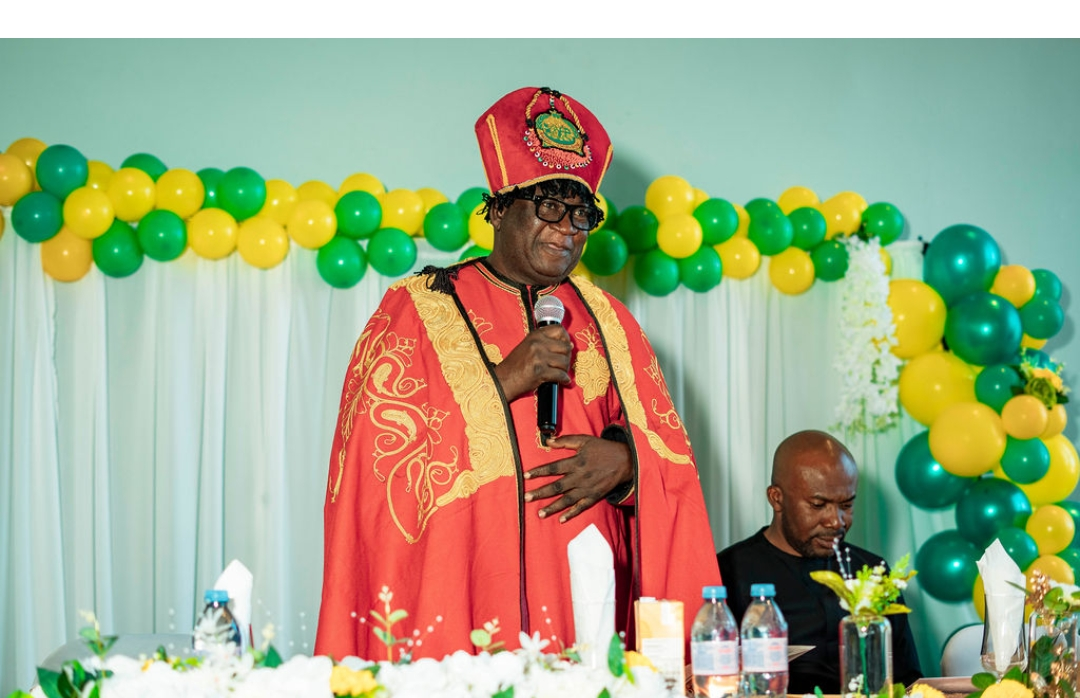
Agwam Bajju seeks to strengthen ties with the diaspora and encourage investment, as highlighted during the Bajju UK and Europe Association launch. Agwam Bajju seeks to strengthen these ties and encourage investment.
The monarch’s engagement focused on actionable strategies, from completing an ambitious palace project to tackling pressing security concerns. He stressed that a unified diaspora, even those far from home, remains deeply connected to the progress and well-being of the Bajju people. His discussions covered strengthening traditional institutions and charting a path for the next ten years.
Agwam Bajju Seeks Diaspora Investment
Agwam Bajju II‘s recent journey to the United Kingdom underscored a clear message: the Bajju diaspora represents an invaluable asset for economic and social upliftment. His visit, culminating in his witnessing the launch of the Bajju UK and Europe Association, served as a direct appeal for collective action and financial commitment. He believes their involvement is key to overcoming many local challenges.
The paramount ruler noted that the community abroad has already been a significant force, particularly in the ongoing palace project. This existing support demonstrates a foundational goodwill he aims to cultivate further. He sees the diaspora not just as benefactors, but as leaders in development initiatives.
“To be sincere, that is why, when they invited me to come down, I was so happy that I was coming to meet my people, my subjects in Britain and Europe,” His Highness Luka Kogi Yabwat told PREMIUM TIMES. “They have been very strong supporters of the chiefdom down there.”
He added that the community’s enthusiasm during his European tour, which included Britain, France, the Netherlands, and Germany, confirmed their commitment. This unity across nations bodes well for future collective endeavors, according to the monarch. Their shared identity proved stronger than any geographic distance.
Securing the king’s residence
The Agwam Bajju II has made securing a permanent residence for the paramount ruler a defining priority of his reign. This ambitious palace project relies heavily on community contributions rather than government funding. It represents a tangible symbol of Bajju self-reliance.
This initiative builds on the efforts of his predecessor, who laid the foundation for the palace before his passing. The current monarch is pushing for its completion within the next “one or two years.” It will serve as both a home and a central point for traditional leadership.
He noted the Kaduna State Government has not provided any financial support for the palace construction. This lack of government assistance, he said, is a common issue for many chiefdoms in the southern part of the state. It highlights the often-stark reliance on internal community efforts and diaspora funding for such vital projects.
Bridging the gap with the diaspora
The formation of the Bajju UK and Europe Association during the Agwam Bajju II’s visit marks a significant step. It formalizes a network capable of channeling resources and expertise directly to the chiefdom. This organizational structure is designed to maximize the impact of diaspora community engagement.
This structured engagement offers a powerful model for other Nigerian communities with significant populations abroad. It demonstrates how traditional institutions can proactively reach out and leverage global ties. The monarch’s personal presence underscored the importance of these relationships.
Traditional leaders and security at the grassroots
One of the most immediate concerns for the Bajju Chiefdom remains insecurity, an issue Agwam Bajju II addressed directly in the interview. He emphasized that traditional institutions, when properly empowered, can play a crucial role in maintaining peace and order at the grassroots level. They often possess intimate knowledge of local terrains and community dynamics.
He cited a recent incident where local hunters, acting on intelligence, rescued three young girls who had been kidnapped. This successful operation involved cooperation between traditional structures, local security, and government agencies like the police and DSS. It underscores the effectiveness of local intelligence gathering and rapid response, particularly in rural settings.
“It may amaze you to know that just this week, we had local hunters who were told that they saw some people in a certain location, unknown to the communities, and they were armed,” Agwam Bajju II recounted. “They passed the intelligence report to us. We passed it to the government, the police, the DSS, and the rest — and we mobilised local security.”
This coordinated effort resulted in the successful rescue. The monarch, drawing on his background from the correctional service, actively coordinates these activities. He insists that he doesn’t “joke with any security issue” and acts swiftly on reports to protect his people, prioritizing their safety above all else.
Local hunters rescue kidnapped girls
The incident where local hunters secured the release of three kidnapped girls exemplifies this community-led security approach. It wasn’t a state-led operation alone, but a powerful collaboration. This localized response model is one that many in Nigeria advocate for, given the challenges of centralized security forces.
The success of the operation was, in large part, due to the hunters’ familiarity with the local environment. They knew the terrain and understood potential hiding spots, knowledge that external forces often lack. This incident offers a compelling argument for empowering community security outfits.
Sustaining peace across communities
The traditional leadership also fosters peace through regular meetings with district, village, and ward heads, alongside security agents. These forums allow for intelligence sharing and proactive problem-solving to mitigate conflicts before they escalate. Such meetings are vital for sustaining stability and understanding between neighboring groups.
Agwam Bajju II also expects the Bajju diaspora to contribute to security efforts by sharing information they gather online. Their access to global networks could provide valuable intelligence that complements local efforts. This demonstrates a practical way the diaspora can remain engaged from afar, becoming eyes and ears for their homeland.
Education, agriculture and youth development priorities
Beyond immediate security, the monarch laid out a comprehensive vision for socio-economic development, with education and agriculture at its core. He underscored that a society lacking educational development is inherently disadvantaged. This perspective drives his strong support for diaspora-led initiatives, viewing them as catalysts for change.
The Bajju UK and Europe Association plans to establish an educational trust for less privileged children, a move highly praised by Agwam Bajju II. This fund aims to equip Bajju youth with the necessary tools to navigate life’s challenges, fostering a literate and progressive community. He views it as a significant step forward in breaking cycles of poverty and enhancing opportunity.
“Their thought of establishing a fund for educational development is a welcome one,” he said. “It will enable my people to rise. It will enable my people to meet the challenges of life.”
Proposed educational trust fund
The planned educational trust is more than just financial aid; it’s an investment in human capital. By targeting less privileged children, the association aims to level the playing field and ensure broader access to quality education. This initiative could reshape the future prospects for hundreds, if not thousands, of young Bajju individuals.
Such funds can bridge critical gaps where government provision falls short, offering scholarships, learning materials, and infrastructure support. The long-term impact on literacy rates and skill development could be profound, building a more educated and competitive workforce. This aligns perfectly with the broader goals of Bajju diaspora development.
Value-added processing in agriculture
He also highlighted agriculture as a cornerstone of the local economy, urging government support through provisions like fertilizer and herbicides. This assistance would empower farmers, reduce food insecurity, and significantly boost economic activity within the chiefdom. The focus remains on sustainable growth that directly benefits local producers.
The monarch further encouraged diaspora investment in cottage industries, particularly those that add value to agricultural products like ginger and soybeans. This processing capability would create employment for the youth, reducing crime and fostering local economic self-sufficiency. Local leadership is often key to driving these kinds of community-focused initiatives.
Programmes are also in place to shield young people from radicalisation and drug abuse. Committees formed by district heads, working with police and DSS, actively check drug sales and usage. This concerted effort has yielded “remarkable success” in reducing crime linked to substance abuse, according to Agwam Bajju II.
Unlocking Bajju land’s cultural and economic promise
Agwam Bajju II envisions Bajju land as a hub for cultural tourism and economic activity, inviting both international communities and researchers to explore its unique offerings. He wants to leverage the rich heritage and natural beauty of the region to attract investment and visitors. The annual festival organized by the Bajju Development Association serves as a key platform.
The yearly festival showcases traditional crafts and historical artifacts, offering a window into the Bajju past. Increased diaspora involvement, he believes, could elevate its international profile. Such cultural events are not just celebrations; they are also economic engines that can draw attention and resources, creating a positive feedback loop.
He noted the distinct air and vegetation when traveling from Kaduna down south, highlighting the fertile land ideal for unique crops. The area also boasts “very beautiful granite rocks,” presenting untapped tourism potential. Security remains the primary barrier to fully realizing these prospects, a challenge that needs collective resolution.
Promoting cultural festivals
The Bajju Development Association’s annual festival is a critical anchor for cultural identity and community cohesion. By promoting it internationally, the chiefdom hopes to attract cultural tourists and researchers, fostering a deeper understanding of Bajju traditions. The monarch sees this as a way to project their rich history onto a global stage.
Such cultural showcases can also inspire pride among younger generations, helping them connect with their heritage. The festival provides a tangible link to the past, reminding everyone of the unique qualities that define the Bajju people. It becomes a living record of their identity.
The untapped tourism potential
Beyond festivals, the natural landscape of Bajju land, with its fertile plains and granite formations, offers significant potential for eco-tourism. Developing this sector could create sustainable livelihoods and attract foreign exchange. The challenge lies in creating the necessary infrastructure and, crucially, ensuring visitor safety.
But the Agwam Bajju II remains optimistic, believing that once security issues are adequately addressed, the region’s natural beauty will draw considerable interest. He implicitly suggests that Bajju diaspora development efforts could also target these untapped tourism avenues. It’s an opportunity waiting to be seized.
A unified vision for the next decade
Reflecting on his UK visit, Agwam Bajju II expressed profound pride and optimism regarding the unity displayed by the Bajju diaspora. He observed a powerful sense of collective identity, transcending geographical divisions. Individuals from Britain, France, the Netherlands, and Germany converged, not as representatives of specific villages, but as a unified front to meet their king.
“I’ve seen unity. I’ve seen how they love the people back home,” the monarch shared with PREMIUM TIMES. “What I saw here is something that hasn’t been done before.”
This unprecedented show of solidarity, he believes, will be transformative. He hopes this “spirit” continues, projecting “much more than what I am seeing today” in Bajju land within the next ten years. The diaspora’s commitment, he feels, is enough to catalyse significant change, provided it is consistently channeled.
The Agwam Bajju II’s efforts aim to harness this collective spirit into tangible development. He envisions a future where traditional institutions, supported by an engaged diaspora and responsive government, collaboratively build a secure, educated, and economically vibrant chiefdom. Cultural preservation often requires conscious effort across generations, especially in the diaspora.
He encourages Bajju communities abroad to actively preserve their language and culture, much like the Yoruba people do. This includes teaching children the language and acquiring relevant textbooks from home. This dedication ensures that the next generation remains connected to their roots, even across continents.
The interview closes on a note of deep connection and mutual expectation. The monarch’s journey to the UK was not merely ceremonial; it was a strategic outreach to activate a powerful network of “sons and daughters” dedicated to their ancestral home. It’s a compelling model for Bajju diaspora development, proving that distance doesn’t diminish loyalty.
