



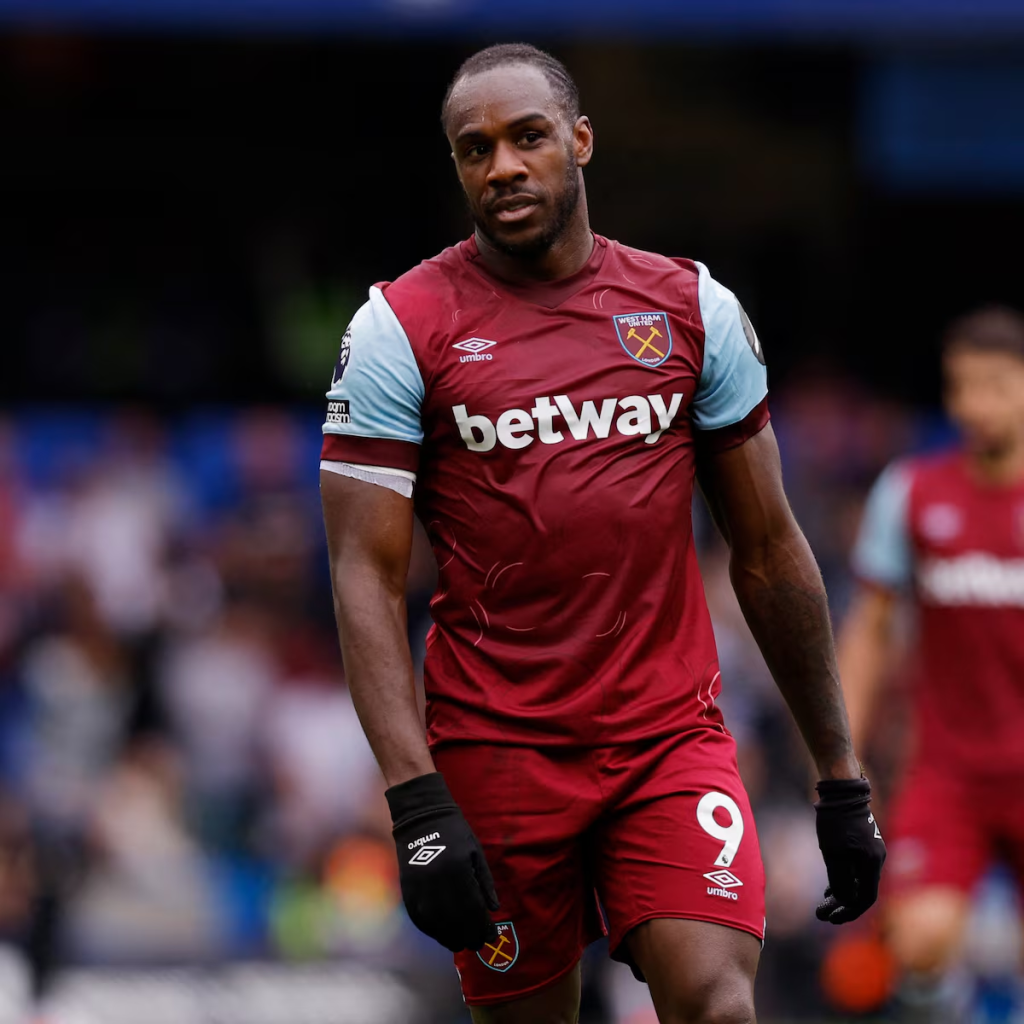
The hotel room shook as missiles rained down on the building where Michail Gregory Antonio was staying.
Antonio’s shocking account of seeing rockets intercepted and feeling the concussive force of explosions pulls back the curtain on the harsh realities of geopolitical conflict. It shows how global events, seemingly distant, can abruptly collide with personal and professional ambitions, even for those in the seemingly insulated world of professional sports.
A chilling debut under Qatari skies
March 2026 marked Michail Antonio’s arrival at Qatari club Al Sailiya, a fresh start after a decade with West Ham United. His impressive tenure in England saw him become the club’s all-time top Premier League scorer and a UEFA Conference League winner in the 2022–23 season. But the transition proved far more dramatic than any on-pitch challenge.
His first night felt like a scene from a war film. “I was looking out of my hotel room, seeing rockets fly past,” Antonio recounted, the memory still raw. “The hotel would shake when they were getting blocked – that was scary, but it was fine other than that day.”
A frightening day of bombs and shaking
Antonio described his debut day as particularly frightening, marked by “hearing bombs and the hotel was shaking, that was terrifying.” He looked out the window and saw “flames from the bombs flying,” an image etched in his memory. It was an experience that starkly contrasted with the usual fanfare surrounding a professional athlete’s debut.
These unsettling moments were a direct consequence of the 2026 Iran War, which began on February 28, 2026. US and Israeli forces had conducted joint strikes on Iran, leading to swift Iranian retaliatory missile attacks across the Middle East. Qatar, home to a significant US military presence, found itself caught in the crossfire.
Matches halted as missile strikes intensified
The conflict’s immediate fallout wasn’t confined to Antonio’s hotel room. The escalating geopolitical turmoil cast a long shadow over the local football scene, forcing abrupt interruptions to games. A Qatar Stars League match later that month, involving Al Sailiya against Al Shahaniya, had to be paused for 19 minutes.
Players were escorted off the pitch following warning sirens that blared across Doha, signaling an imminent threat. This disruption was not an isolated incident; two other matches that evening were also halted. The widespread nature of the threat underlined the precarious situation faced by those living and working in Qatar during this volatile period.
Qatar caught in a wider conflict
Michail Antonio’s unnerving experience unfolded against the backdrop of the wider 2026 Iran War, a conflict that quickly escalated after its February 28, 2026, commencement. Iran launched a barrage of missile and drone attacks targeting various sites across Qatar. The state found itself embroiled in a volatile regional confrontation.
Between February 28 and March 1, 2026, initial Iranian strikes involved 92 ballistic missiles and 17 drones aimed at Qatar. Qatari air defenses bravely intercepted 81 missiles and 11 drones. However, not all were stopped.
Damage and human cost in Doha
Two ballistic missiles managed to strike Qatar’s Al Udeid Air Base, and one drone targeted an early warning radar station. The human cost was immediate, with 16 people suffering shrapnel injuries. Four of those injured required ongoing hospitalization, one seriously, while four others were treated and discharged.
The Ministry of Interior received 114 reports of debris falling in various parts of the country, a chilling reminder of the aerial battle taking place above. On March 3, an Iranian missile struck Al Udeid Air Base again, though fortunately without casualties, highlighting the persistent danger.
Targeting crucial infrastructure
The Iranian aggression continued throughout March, with further interceptions reported on March 11. But a particularly damaging blow came on March 18, when Iran specifically targeted and hit Qatar’s massive natural gas facility in Ras Laffan. This direct attack had severe economic repercussions.
The strike significantly hampered Qatar’s liquefied natural gas (LNG) export capacity, reducing it by nearly 17 percent for an estimated three to five years. It was a strategic blow with global economic implications. Later, on April 1, Iran fired three cruise missiles at Qatar; two were intercepted, but one hit an oil tanker, with no casualties reported.
Qatar condemns aggression
Qatar unequivocally condemned the attacks, sending identical messages to UN Secretary-General Antonio Guterres and the Permanent Representative of the United States to the UN and President of the UN Security Council Michael Waltz on March 2, 2026. The State of Qatar affirmed its right to respond, underscoring the severity of the unprovoked aggression.
The country’s airspace was also closed on February 28, 2026, the day of the first US-Israeli strikes on Iran. This disruption further impacted daily life, forcing the rerouting of flights from Hamad International Airport in Doha and demonstrating the widespread reach of the conflict.
Michail Antonio’s winding path to Al Sailiya
For Michail Gregory Antonio, the move to Qatar in March 2026 represented a crucial, if unexpected, chapter in a career that had seen its share of highs and lows. Born on March 28, 1990, he rose through non-League football to become a respected Premier League forward. His decade at West Ham United cemented his legacy.
His departure from West Ham was bittersweet. In December 2024, a devastating car crash left him with a lower limb fracture, requiring surgery and effectively ending his time with the London club. After his contract expired on June 30, 2025, he declined an offer to play for their U21 team, opting instead to seek a new challenge abroad.
from London’s pitches to Doha’s wartime nights
Al Sailiya offered that opportunity, a chance to rekindle his career in a different footballing landscape, far from the familiar pitches of England. The journey from serious injury to a new continent would have been challenging enough for any athlete. But for Antonio, it meant stepping into an environment dramatically altered by regional conflict.
His new life in Qatar, a country renowned for its modern infrastructure and ambition, was suddenly overshadowed by the constant threat of missile strikes. This stark contrast between the expectation of a fresh start and the reality of an active warzone paints a poignant picture of sport and life in an unstable world.
finding normalcy in the shadow of conflict
Antonio admits that despite the initial terror, the situation has largely stabilized, allowing him to feel safe. “Since I’ve been here, you do hear loud bangs and stuff, but you never really get to see anything,” he noted.
“So, I’ve not had the experience of anything crazy going on here, so that’s the reason I do feel quite safe here… it reassures me that I’m okay here and I’m safe here.”
His debut for Al Sailiya, a 4-0 defeat to Al Duhail, occurred amidst these tumultuous circumstances. It shows how professional athletes, like many others, learn to adapt to incredibly challenging environments. This sense of adaptive normalcy in a precarious situation is a testament to human resilience and the enduring desire for life to continue, even when danger looms.
sport and the inescapable reality of conflict
Michail Antonio’s personal brush with the 2026 Iran War offers a stark reminder that sport, often seen as an escape, is never truly isolated from the geopolitical currents of its time. History is replete with examples of conflicts intruding on sporting arenas, altering lives and careers in their wake.
From the interruption of the Olympic Games during World Wars to the cancellation of leagues in war-torn regions, athletes frequently find themselves navigating larger struggles.
Antonio’s experience, though a brief moment of terror, underscores the fragility of stability in a world where conflict can erupt unexpectedly, forcing individuals to adapt or flee.
It serves as a powerful reminder that while the fields of play offer a temporary reprieve, they exist within the same world where geopolitical tensions can suddenly redefine daily life for millions. CENTCOM’s actions against Iran further illustrate the pervasive reach of this modern conflict.
The quest for normalcy, whether on the pitch or in everyday life, persists even when the skies above are fraught with peril, proving that the human story of perseverance continues to be written in every headline.
