




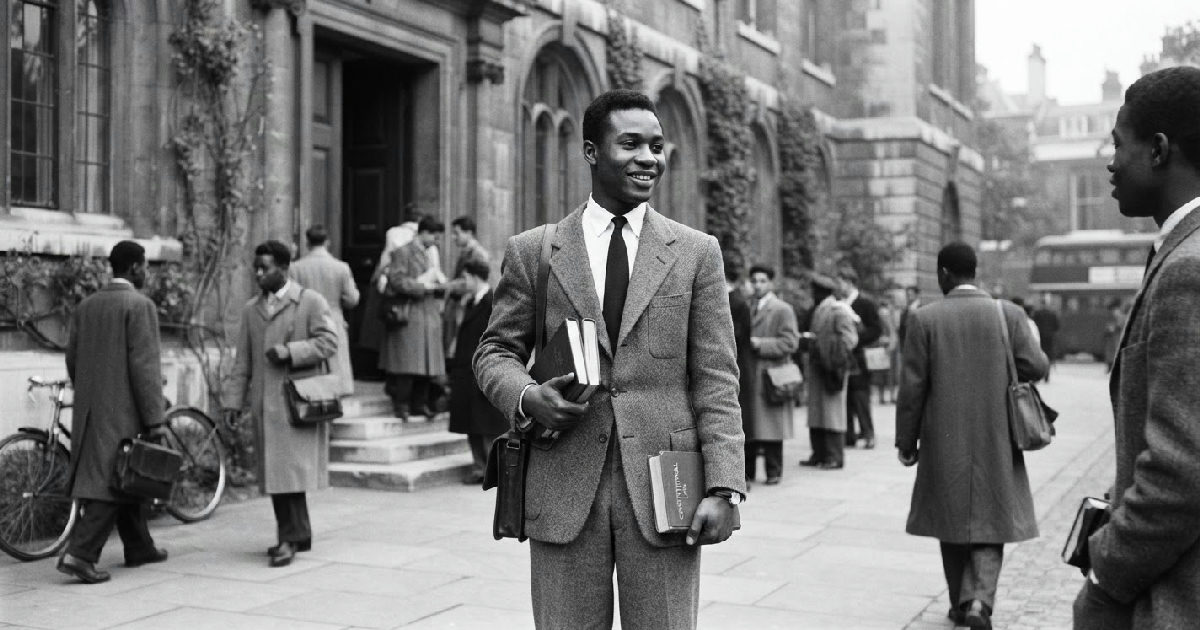
Olufemi Jibowu, an 18-year-old Nigerian student, was captured in a series of striking photographs in London in 1950, offering a glimpse into a transformative era for Nigerians abroad.
These images did more than just document a young woman’s student life. They highlighted the rich legacy of her father, Justice Sir Olumuyiwa Jibowu, a distinguished jurist who etched his name into Nigeria’s legal history.
The Olufemi Jibowu 1950 Legacy: A Pioneering Jurist
He was the first African to serve on the Supreme Court of Nigeria, making Olufemi’s presence in Britain part of a larger narrative of educational pursuit and national development during late colonial rule.
Sir Olumuyiwa Jibowu’s career served as a powerful testament to the breaking of racial barriers within the British colonial legal system. His professional ascent demonstrated that capability and merit could, even within a colonial framework, challenge the entrenched biases that typically excluded Africans from high office.
This trailblazing path paved the way for future generations of Nigerian legal professionals to aspire to and attain positions previously reserved for Europeans.
Born in Abeokuta, present-day Ogun State, on August 26, 1899, Jibowu hailed from a family already prominent in Egba public life. This familial legacy of leadership and engagement in public affairs provided a unique foundation for his own distinguished career. It underscored a tradition where individuals contributed significantly to the socio-political development of their community, extending from local governance to the broader colonial legal structure.
His own father, Samuel Alexander Adebowale Jibowu, had served as the first secretary of the Egba United Government, a role that positioned him at the nexus of traditional authority and modern administration. This early exposure to governance and public service undoubtedly influenced the young Olumuyiwa, instilling in him a deep commitment to justice and nation-building that would define his professional life.
Early education and legal training abroad
Jibowu’s educational journey began at Abeokuta Grammar School, where he later taught. But his aspirations extended beyond Nigeria’s shores. In 1919, he embarked on a pivotal journey to London, enrolling at the University of Oxford. There, he pursued and obtained a degree in Civil Law, arming himself with the knowledge needed to challenge the colonial status quo.
His formal entry into the legal profession followed at Middle Temple, one of London’s four Inns of Court. By August 8, 1923, he was called to the Bar, a critical step that marked the beginning of a remarkable legal career.
This overseas training placed him among the earliest generation of Nigerian lawyers fluent in the intricacies of English legal tradition, a crucial advantage upon his return home.
Breaking colonial barriers in the judiciary
The 1930s saw Jibowu making history. In 1931, he was appointed a police magistrate in Lagos, an unprecedented achievement as he became the first African to hold such a position in Nigeria. This appointment was deeply significant, coming at a time when senior judicial and administrative roles were almost exclusively reserved for European officials.
His ascendancy continued into the 1940s. By 1942, Jibowu was appointed a High Court judge, again shattering precedents as the first Nigerian to occupy that esteemed position. His work took him to various judicial capacities, including the High Court in Benin City. Each appointment chipped away at the colonial hierarchy, expanding African participation in justice administration.
Key Judicial Appointments of Sir Olumuyiwa Jibowu
Education and empowerment for Nigerian women
Olufemi Jibowu’s presence in London in 1950, despite the limited information about her later life, forms a crucial part of the evolving narrative of Nigerian women’s education. At the time, access to advanced schooling within Nigeria was severely constrained. Economic factors, geographical disparities, and a scarcity of higher learning institutions meant that opportunities for women were particularly scant.
Women like Olufemi, who traveled abroad for their studies, represented a smaller but significant cohort. They navigated unfamiliar educational and social landscapes, often carrying the hopes and aspirations of their families. These families recognized that formal education was a vital pathway for the next generation’s advancement, even if it meant venturing far from home.
The International Students Club: a hub of connection
The International Students Club in Croydon, where Olufemi was photographed, symbolized a vital support network for overseas students. Such organizations provided crucial spaces for social interaction and cultural exchange. They fostered a sense of community among young people living thousands of miles from their homes, enabling them to connect with fellow Nigerians and students from across the globe.
These clubs were more than just social venues. They became crucibles of identity and solidarity, where students could share experiences, discuss their homelands, and collectively prepare for future leadership roles. The photographs of Olufemi, both in traditional attire and reading, capture not just personal moments but also the collective spirit of resilience and intellectual ambition that defined these student communities.
The path to Nigeria’s judicial independence
Justice Jibowu’s career peaked as Nigeria edged closer to independence, a period of intense transition for its institutions from colonial administration to self-governance. His continued elevation to senior judicial roles during this critical juncture underscored the growing confidence in Nigerian jurists to manage the complexities of a modern legal system. These appointments were not merely personal achievements but symbolic acts of nascent national sovereignty.
His appointment in 1957 as Chief Justice of the Lagos High Courts and Southern Cameroons solidified his standing as a leading legal authority. This dual role reflected the administrative landscape of the time, placing significant judicial responsibility on his shoulders for different regions that would soon determine their own future.
Such positions were crucial in demonstrating Nigerian capacity for leadership on the legal stage before full independence.
Furthermore, his service on the West African Court of Appeal, a critical regional body handling appeals from various British West African territories, broadened his influence beyond Nigeria’s borders. This exposure to diverse legal challenges and cross-territorial jurisprudence prepared him and the judicial system for the broader regional and international responsibilities that an independent Nigeria would inevitably face.
Reaching the apex of the Supreme Court
His most significant achievement came when he became the first African to serve on the Supreme Court of Nigeria. This milestone placed him among the earliest Nigerian jurists to reach the pinnacle of the country’s judicial system.
While he did not become Chief Justice of the Federation – that role went to Sir Adetokunbo Ademola in April 1958 – his appointment as Chief Justice of the Western Region in March 1958 was a testament to his immense standing within the regional judiciary.
His tenure there, though tragically cut short by his death in 1959 at age 59, demonstrated African capability in high office. His advancements were foundational to establishing a credible, independent judiciary in post-colonial Nigeria. Abubakar oversaw 1999 Nigeria Constitution, a document shaped by decades of evolving legal thought.
Beyond the photograph: a legacy intertwined
The image of Olufemi Jibowu reading in London offers a powerful lens into a family’s intertwined legacy and a nation’s aspirations. Her father, Sir Olumuyiwa Jibowu, profoundly influenced Nigeria’s legal landscape, laying groundwork that endures today. But Olufemi’s presence abroad highlights another crucial aspect: the importance of individual educational pursuits in building national capacity.
Her story, even with its sparse details, symbolizes the wider history of Nigerians who sought knowledge beyond their borders. Many of these students returned to become leaders, professionals, and nation-builders, contributing significantly to a newly independent Nigeria. The photographs serve as a poignant reminder of this generational migration, driven by a thirst for learning and a commitment to national development.
Cultural identity and global ambition
The September 14, 1950 photograph of Olufemi in traditional attire at a London garden party underscores another facet of this historical period. It speaks to the cultural confidence and dignity that many Nigerian students carried with them abroad.
They were not just learners; they were informal cultural ambassadors, presenting a proud image of their homeland to the world, even as they absorbed new knowledge and perspectives.
These experiences forged a powerful connection between Nigeria and Britain, one rooted in education and professional development. For aspiring Nigerians, British institutions offered unparalleled opportunities, shaping their intellectual growth and professional networks. This educational migration became a cornerstone of Nigeria’s post-independence trajectory, influencing various sectors from law to medicine. Akintola’s pioneering ambition also highlighted how individual drive shaped the nation’s leadership.
Enduring influence on Nigeria’s professional class
The impact of figures like Sir Olumuyiwa Jibowu, and the hundreds of Nigerian students like Olufemi who studied overseas, resonates deeply in the present structure of Nigeria’s professional classes. Their foresight in seeking advanced education, often against significant colonial-era hurdles, created a cadre of highly skilled individuals ready to assume leadership roles.
This phenomenon was vital for a nation on the cusp of self-governance, needing its own experts in law, administration, and public service. The investment in human capital made during this period paid dividends for decades following independence.
This commitment to education abroad fostered a global outlook among Nigerian professionals. They returned not only with academic credentials but also with international networks and diverse perspectives. This exposure proved crucial in navigating the complexities of post-colonial nation-building and establishing Nigeria’s place on the world stage. It shaped the very ethos of Nigerian ambition, where striving for excellence often involved looking beyond local horizons.
Reflecting on beginnings and aspirations
Ultimately, the archival photographs of Olufemi Jibowu, an 18-year-old Nigerian student in 1950 London, offer more than just a historical snapshot. They provide a window into the profound aspirations of a generation. Her story, intricately linked to her father’s monumental legal career, exemplifies how individual pursuits contributed to a broader national awakening.
It shows that the foundations of modern Nigeria were not just built on political movements, but also on countless personal decisions to seek knowledge, overcome obstacles, and lay the groundwork for a self-determined future. The 1967 Nigerian Civil War also tested the mettle of a young nation shaped by such pioneering figures.
Frequently Asked Questions
- Who was Sir Olumuyiwa Jibowu?
- Sir Olumuyiwa Jibowu was a pioneering Nigerian jurist, born in 1899, who became the first African to serve as a Police Magistrate, High Court Judge, and on the Supreme Court of Nigeria. His career significantly broke racial barriers within the British colonial legal system.
- What is the significance of Olufemi Jibowu’s 1950 London photographs?
- Olufemi Jibowu’s photographs capture a unique moment in history, representing a generation of Nigerian students seeking advanced education abroad. They highlight the ambitions of a burgeoning professional class and symbolize the pursuit of knowledge vital for Nigeria’s development towards independence.
- What was the International Students Club in Croydon?
- The International Students Club in Croydon was a crucial hub for overseas students in London, providing a vital support network, social interaction, and cultural exchange. It fostered community and solidarity among young people studying far from their homes, preparing them for future leadership roles.
- What was Sir Olumuyiwa Jibowu’s most significant judicial achievement?
- Sir Olumuyiwa Jibowu’s most significant judicial achievement was becoming the first African to serve on the Supreme Court of Nigeria. This milestone placed him at the pinnacle of the country’s judicial system and was foundational to establishing a credible, independent judiciary in post-colonial Nigeria.
