




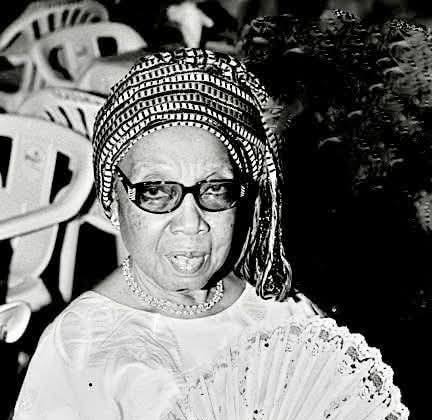
Egbinola Bolarinwa Alafia Institute was founded by Egbinola Bolarinwa, also known as Mrs. J. E. Bolarinwa, in Ibadan during the mid-20th century. J. E. Bolarinwa, left a lasting imprint on Ibadan’s educational landscape in the mid-20th century. She was the driving force behind Alafia Nursery and Primary School in Mokola. Simultaneously, she rose as a prominent leader within the National Council of Women’s Societies.
Alafia Institute took root in a dynamic Ibadan, a city where diverse groups actively established schools. Historians like Moshood A. Tomori credited Mrs. Bolarinwa among the pioneering founders of private schools in the city. However, the precise year of its opening has long remained a point of historical debate.
Egbinola Bolarinwa Alafia Institute’s Ibadan roots
Tomori’s scholarly works, specifically his 2022 book, presented conflicting dates, citing both 1947 and 1955 as potential founding years. His earlier 2018 publication also indicated 1955. Adding to the historical puzzle, Oyo State’s school directory recorded 1955 for Alaafia Institute Primary School, Mokola.
This eight-year discrepancy highlights the inherent challenges of chronicling early educational ventures in Nigeria. It reflects the often-fragmented record-keeping of the era. Nonetheless, Mrs. Bolarinwa’s foundational role in establishing Alafia remained consistently acknowledged across these accounts.
Ibadan in the mid-20th century was a hub of educational expansion, a period when local communities profoundly understood the value of schooling. Churches, public bodies, and individuals like Mrs. Bolarinwa actively contributed to this growth. Private institutions, therefore, filled crucial gaps.
The city’s educational landscape was not uniform; it was a patchwork of efforts. These schools aimed to serve a burgeoning population eager for access to learning. Alafia emerged within this competitive yet collaborative environment, contributing to the city’s vibrant educational fabric.
The establishment of private schools often reflected local initiatives to meet demand. They provided alternatives and complements to government or missionary-run institutions. Mrs. Bolarinwa’s venture into this sphere was a significant undertaking.
Her school contributed to a broader movement that laid the groundwork for modern Nigerian education. It offered accessible primary instruction, helping shape educational pathways in the region.
Dual Pillars of Public Life
Mrs. Bolarinwa’s public life was uniquely defined by her dual commitments to education and women’s advocacy. As a devoted schoolteacher, she directly influenced countless young minds, shaping their formative years. Founding Alafia cemented her enduring legacy within Ibadan’s developing school system.
Her active leadership extended far beyond the classroom, reaching into the National Council of Women’s Societies (NCWS). This pivotal role seamlessly connected her educational endeavors to broader social and national aspirations. It exemplified a pioneering spirit for recognized public figures.
The NCWS, officially founded in 1958, served as an umbrella organization. It united numerous women’s groups, primarily from Nigeria’s Western region. Its core mission was to significantly improve women’s standing across all facets of national life.
This council provided an essential shared platform for collective action. It allowed disparate groups to amplify their influence far beyond their immediate towns or professions. Mrs. Bolarinwa’s involvement placed her at the forefront of this crucial social movement.
While specific details of her office or service dates within the NCWS remained undocumented, her participation was undeniably substantial. It considerably broadened her historical footprint. Her work in education and women’s advocacy showcased the varied ways individuals contributed to national development.
Alafia’s Early National Recognition
By July 1959, Alafia Institute had firmly established itself within the national educational framework. Federal school examination notices, published in the Official Gazette, prominently featured the school. This marked a significant milestone for the young institution.
Candidates from Alafia Institute, located at Ago Ilorin, Mokola, Ibadan, were specifically invited for interviews. These were for the highly prestigious King’s College in Lagos. This connection underscored Alafia’s academic credibility and reach.
The October 1959 gazette further solidified Alafia’s standing. It printed the King’s College results, once again listing Alafia Institute School, Mokola, Ibadan, alongside successful candidates’ names. These entries placed the school directly within the final years of British colonial rule.
Such appearances in national records highlighted Alafia’s crucial role in providing pathways to coveted secondary education. It demonstrated how a local primary school could become a vital stepping stone. This integration showed a maturing educational system connecting local effort to national opportunity.
Alafia’s Enduring Institutional Footprint
Alafia Institute’s name resonated through the decades following its inception. Its influence was evident in later historical accounts and the lives of former pupils. This continuity spoke to its foundational strength and community integration, echoing the complexity of centuries of conflict in Nigeria’s history.
A 2019 report in ThisDay notably referenced police officer Godwin Nwobodo. It stated he completed primary school at Alafia Institute’s Free Section in 1973. This detail extended the school’s narrative well beyond the colonial era into independent Nigeria.
The mention of a “Free Section” also hints at the school’s adaptability and perhaps its commitment to wider access. While details of its funding or commencement are not specified, it suggests an evolving mission. The school’s long-term presence cemented its impact.
Today, the Oyo State directory lists Alaafia Institute Primary School under Ibadan North. This inclusion signifies its ongoing formal recognition as part of the state’s educational infrastructure. Its enduring presence underscores the lasting legacy of its founder.
Egbinola Bolarinwa’s journey from dedicated teacher to pioneering school founder and women’s leader revealed much about ambition in Nigeria. Her story underscored how individual initiative and sustained effort built foundational institutions. It provided essential educational and social reforms that shaped a generation.
Her ability to navigate both the academic world and the emerging women’s movement marked her as a true visionary. It offered a compelling glimpse into the transformative power of committed individuals. This duality of purpose continues to inspire new generations in Nigeria.
