




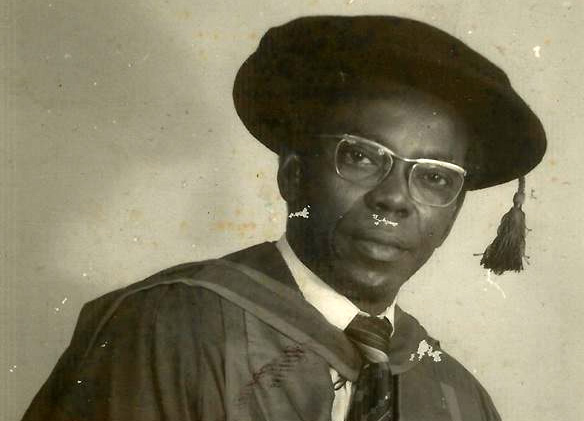
Professor Onigu Otite became a professor at the University of Ibadan in 1978 and continued his impactful research until his passing on March 14, 2019, at the age of 80.
Onigu Otite’s Early Career in Government and Education
While known for his profound academic contributions, Otite’s path to scholarly eminence began in an unexpected sphere: public service. Long before he was lecturing on social anthropology, he was navigating the intricate corridors of government in the late 1950s.
Otite’s professional life started with teaching after his training at St. Thomas’ Teacher Training College in Ibusa. He served as headmaster at St. Francis Catholic School in Sapele. But his ambitions stretched beyond the classroom, even taking on roles as a tutor in several schools before entering public service.
He soon moved into government roles. He worked as an Assistant Executive Officer in the Ministry of Health and later as Private Secretary on Defence matters within the Prime Minister’s Office in Lagos. These pivotal roles in the late 1950s provided him with an insider’s view of national administration, much like other military officer’s role in national development.
This period of public service was crucial. It exposed him to the practical realities of governing a diverse nation. This firsthand experience would later inform his academic inquiries into how communities functioned and power was shared in Nigeria, offering a ground-level perspective that few academics possessed.
His stint in government offered a unique foundation for his later scholarly pursuits. It gave him a distinct understanding of the complexities of national life, a realism that distinguished his subsequent academic work. This blend of practical governance and theoretical inquiry became a hallmark of his approach.
Pioneer student to anthropology scholar
The 1960s marked a significant pivot for Onigu Otite. In 1960, he joined the inaugural class at the University of Nigeria, Nsukka, where he also became the institution’s first Public Relations Officer of its Student Union. This period immersed him in the burgeoning intellectual landscape of post-independence Nigeria.
After graduating, he briefly returned to public service, working with the Western Region’s Ministry of Lands and Housing, and then the Mid-Western Region’s Ministry of Works and Public Service Commission. These assignments offered further insights into regional governance and intricate political maneuvers of the era. But the call of academia proved stronger; he moved to Britain in 1965 to pursue further studies.
Otite enrolled at the School of Oriental and African Studies (SOAS) at the University of London. There, he delved into social anthropology, a field dedicated to understanding human societies and their intricate social bonds. By 1969, he earned his Ph.D.
His doctoral thesis, titled “The Political Organisation of the Urhobo of the Midwestern State of Nigeria,” became a foundational text. This detailed examination of Urhobo political life laid the groundwork for a lifetime of research into local governance and cultural dynamics, making him the first Urhobo man to hold a PhD in Anthropology in 1969.
His academic journey demonstrated a determined pursuit of knowledge. He transitioned from practical administration to rigorous scholarly inquiry, bringing a unique perspective to his chosen field.
This early academic focus on the Urhobo people would prove to be a defining characteristic of his career, anchoring his work in specific Nigerian contexts. His meticulous research at SOAS set a high standard for future Nigerian scholars.
Establishing a sociological powerhouse at Ibadan
In October 1969, Professor Onigu Otite began his distinguished career at the University of Ibadan as a lecturer in social anthropology and sociology. He quickly rose through the ranks, becoming a Senior Lecturer in 1974 and earning his full professorship in 1978. He served as Head of the Department of Sociology from 1980 to 1986, extending his academic leadership.
At Ibadan, Otite played a pivotal role in shaping the sociology curriculum. He was instrumental in pioneering courses on African Social Thought, encouraging students to analyze societal concepts through indigenous African experiences.
This initiative helped contextualize global sociological theories within a Nigerian framework, fostering a more relevant academic discourse. He was a key member in establishing the Social Science Department at the University of Ibadan as early as 1967.
Beyond his roles in Ibadan, Otite also fostered international academic ties. He held a visiting research professorship at the University of Bergen, Norway, from 1986 to 1987. The following year, he served as a visiting professor of sociology at the University of Pennsylvania, expanding his influence globally.
His international engagements continued into the early 1990s with a senior research fellowship in Tripoli, Libya, at the African Centre for Applied Research and Training in Social Development. These appointments allowed him to bring diverse perspectives back to his work in Nigeria and project African scholarship abroad.
He facilitated the founding of the Michael and Cecilia Ibru University in Delta State, a testament to his enduring commitment to education.
Pioneering Urhobo studies and identity
Central to Professor Otite’s scholarly output was his deep engagement with Urhobo society and culture. His doctoral research had already established him as an authority, and he continued to produce seminal works that meticulously documented the history, customs, and political structures of the Urhobo people.
This focus provided a detailed lens through which to view broader Nigerian social dynamics.
In 1973, he published Autonomy and Dependence: The Urhobo Kingdom of Okpe in Modern Nigeria. This book, based on his thesis, explored the intricate balance between traditional systems of power within the Okpe kingdom and the wider changes occurring in post-colonial Nigeria. It became a foundational text for regional studies.
Later, Otite edited The Urhobo People in 1982, a comprehensive volume that consolidated research on Urhobo history and society. This work made their rich heritage more accessible to both students and fellow researchers.
Through such efforts, Otite significantly advanced the understanding of indigenous Nigerian communities. His dedication to these studies earned him the title of Olorogun of Olomu and Chief of the Agbon Kingdom, highlighting the lasting impact of such post-detention activities by national figures.
Analysing ethnic pluralism and conflict
Professor Otite’s work extended beyond single ethnic groups, embracing the complexities of Nigeria’s diverse cultural landscape. He became a leading voice in understanding ethnic pluralism, examining how various groups coexist and interact within a single national framework. His insights remain critical for comprehending the nation’s social fabric.
His 1990 book, Ethnic Pluralism and Ethnicity in Nigeria: With Comparative Materials, was a landmark publication. It explored how ethnicity shaped identity, political ties, and access to resources, moving beyond simplistic labels to analyze the dynamic formation and expression of group identities. Otite understood that a truly cohesive nation required a nuanced understanding of its constituent parts.
Recognising that ethnic diversity often intersected with conflict, Otite also focused on dispute resolution. He co-edited Community Conflicts in Nigeria: Management, Resolution and Transformation in 1999 with Isaac Olawale Albert.
This volume delved into the conditions that fueled disputes and explored local systems for managing and resolving them, offering practical pathways to peace. His framework for understanding conflict remains relevant for addressing disputes rooted in resources, power, or historical grievances within Nigeria.
A lasting academic and national legacy
Professor Onigu Otite left an indelible mark on Nigerian academia and national discourse. His career spanned the formative years of several major universities, and he played a crucial role in shaping the disciplines of sociology and anthropology. He ensured these fields were rooted in African realities, not merely imported Western theories.
His influence was evident in his leadership roles, including serving as President of the Nigerian Anthropological and Sociological Association from 1979 to 1982. He also held positions as an associate editor for key journals and a member of international scientific unions.
This wide engagement demonstrated his commitment to integrating Nigerian scholarship into global academic conversations and fostering institutional growth.
Otite’s body of work continues to provide frameworks for analyzing how people live together, share power, and adapt to social and political pressures. He was not just an academic; he was a builder of knowledge, ensuring that Nigerian experiences informed global understanding of human societies.
His legacy ensures that the detailed study of communities remains vital for national development. His commitment to applied research brought academic theories into direct engagement with the challenges facing Nigerian society.
His vision helped to establish a robust tradition of sociological inquiry in Nigeria that continues to thrive, bridging theoretical concepts with the lived realities of its people.
Professor Otite’s journey, from a young teacher and public servant to a distinguished academic, reveals a profound dedication to understanding the intricacies of Nigerian life. His surprising origin in government administration gave him a unique, grounded perspective that enriched his scholarly contributions. It highlights how diverse experiences can converge to forge an intellectual path of lasting national significance.
