




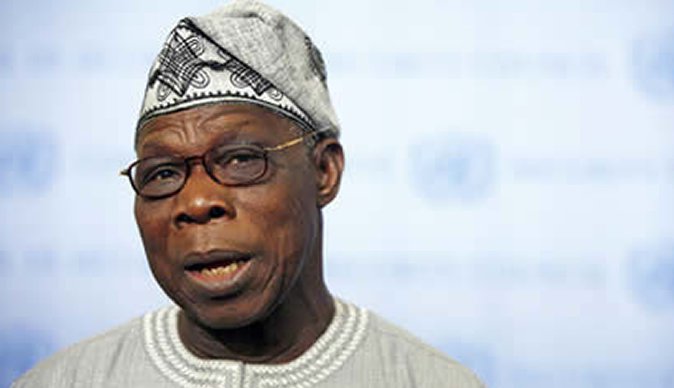
Nigerians knew Olusegun Obasanjo as a former military Head of State, but he faced profound financial distress after his release from prison in June 1998.
He publicly recounted in July 2017 how he wrestled with paying his children’s university fees, a stark contrast to his public image. American businessman Ted Turner and the Ford Foundation provided crucial financial assistance that helped him settle outstanding expenses. This aid became a pivotal moment in rebuilding his life and family affairs.
Life after Olusegun Obasanjo’s prison release
Obasanjo’s imprisonment began in March 1995, a turbulent period under General Sani Abacha’s military government. He was accused of participating in an alleged coup plot, an accusation he consistently denied. His former deputy, General Shehu Musa Yar’Adua, was also detained.
A military tribunal sentenced Obasanjo to life imprisonment in July 1995, sparking widespread criticism from human rights organisations and international observers. He was held in various facilities, including Kirikiri, Jos, and Yola Prisons, separating him from his family and severely disrupting his professional life.
The years in prison had a devastating effect on his finances, particularly his ability to provide for his children. Many of them were studying in the United States, and their education became a primary concern upon his release. One child reportedly stopped studying due to unpaid tuition fees.
Abacha’s death and Obasanjo’s unexpected freedom
The sudden death of General Sani Abacha on June 8, 1998, dramatically shifted Nigeria’s political landscape. General Abdulsalami Abubakar succeeded Abacha and initiated steps towards a transition to civilian rule, which included the release of prominent political detainees.
Obasanjo walked out of Yola Prison on June 16, 1998, his freedom celebrated by international bodies like Transparency International, which he had chaired. Despite the joyous end to his incarceration, Obasanjo faced the grim reality of returning to civilian life with almost no financial resources.
He remembered feeling troubled about his children’s financial struggles, specifically their university fees. His priority was reuniting with his family and encouraging them after their prolonged separation. He had planned a trip to the United States for two reasons: to see his children and to thank those who had campaigned for his release.
During this period, the Nigerian government extended unexpected courtesies to Obasanjo. He recalled finding a presidential aircraft waiting to transport him after leaving Yola Prison. This surprised him, as he anticipated a quieter return, but it signaled a significant shift in his circumstances.
International support bridges the financial gap
In the United States, Obasanjo met with former American president Jimmy Carter, a prominent advocate for human rights. Carter encouraged him to meet American media entrepreneur Ted Turner, who had also championed his release. Turner, a personal friend, had been asking about Obasanjo.
During their meeting, Turner asked Obasanjo if he needed money. Obasanjo confirmed his dire financial situation. Turner initially instructed his secretary to provide $50,000, but Obasanjo’s reaction prompted a further inquiry. When asked why he seemed unhappy, Obasanjo explained that the sum would not adequately address his post-prison financial difficulties.
This period saw many navigating the aftermath of military rule, with personal circumstances often intertwined with broader political shifts.
Turner then instructed his secretary to add another $50,000, bringing the total to $100,000. This substantial amount offered considerable relief, particularly for settling his children’s outstanding university fees and other personal expenses. It marked a crucial moment in his efforts to restore his family’s stability.
After his visit with Turner, Obasanjo proceeded to the Ford Foundation in New York. Before his imprisonment, he served as the only African member of the foundation’s Board of Trustees. He sought to reconnect with the organisation and express his gratitude for their support during his difficult years.
Foundation members encouraged Obasanjo to check his bank account, despite his belief that it would be empty. To his surprise, he discovered that the Ford Foundation had continued to pay him honoraria associated with his position. These payments had accumulated during his incarceration, resulting in a balance of approximately $50,000.
Combined with the $100,000 from Ted Turner, the total financial assistance and funds he uncovered during this trip amounted to $150,000. This enabled Obasanjo to resolve his children’s outstanding tuition fees and other financial obligations. Such financial relief was significant, especially considering the economic realities in Nigeria during that decade.
Reuniting family and charting a new path
With the financial burden eased, Obasanjo was able to fully focus on reuniting with his children. The imprisonment had caused immense uncertainty for his family, placing their education at risk. His ability to settle their fees brought immense relief and joy to them all. He recalled how happy his children were to see him again.
He used the opportunity to share his experiences, emphasizing perseverance and faith in the face of adversity. This visit was vital for restoring the family bonds that years of detention had strained. His journey from prisoner to presidential candidate began shortly after, propelled by a combination of public pressure and his renewed personal stability.
Obasanjo, initially aiming for a quiet life, was urged by political leaders across Nigeria to contest the 1999 presidential election. His previous experience as military head of state from 1976 to 1979, combined with his international standing and recent imprisonment, made him a compelling figure in the political transition.
He eventually accepted the Peoples Democratic Party (PDP) nomination, winning the election and becoming president in 1999.
The story of Olusegun Obasanjo’s post-prison finances reveals more than just personal hardship; it underscores the intricate web of international connections and goodwill that often shape individual trajectories. His unexpected return to civilian life, bolstered by a $150,000 international lifeline, set the stage for his improbable journey back to Nigeria’s highest office.
The paths of many Nigerian political figures often involve unexpected turns, much like Obasanjo’s.
