




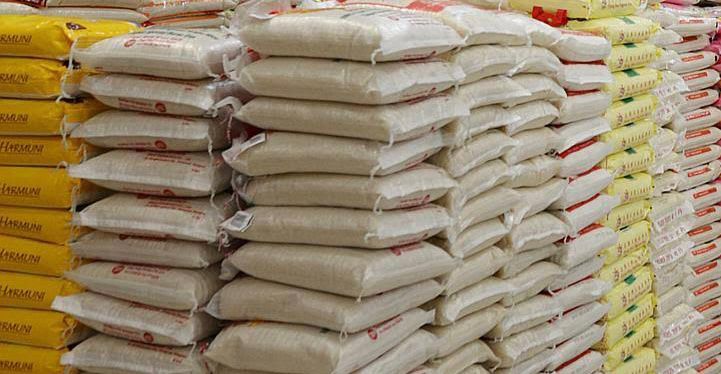
In 1981, a Nigerian worker earning the national minimum wage of ₦125 could buy 25 bags of rice with their monthly salary. This striking economic reality from four decades ago, when a N125 wage bought so much, presents a stark contrast to the financial struggles many faced in the present day.
This historical snapshot reveals a vastly different economic landscape, where a worker’s earnings stretched considerably further, providing a level of financial security that has since eroded. The story of the ₦125 wage is not merely about numbers; it reflects a fundamental shift in the Nigerian worker’s ability to meet basic needs.
The 1981 national minimum wage bought
Nigeria’s labour history saw a pivotal moment in 1981 with the formal establishment of a national minimum wage. This legislation followed years of intense advocacy by organized labour, pushing for improved working conditions and fairer earnings across the nation.
The government of President Shehu Shagari introduced the ₦125 per month minimum wage, marking a significant milestone. It was a compromise, however, borne out of robust negotiations between unions and the government.
Labour’s Decades-Long Battle
Before 1981, Nigeria lacked a formal, structured national minimum wage. While some adjustments occurred, notably the Udoji pay package of 1975, it did not serve as a universally negotiated minimum.
The Nigeria Labour Congress (NLC), formed in 1978, became the primary voice for workers’ rights. Under the leadership of its pioneer President, Comrade Alhaji Hassan Adebayo Sunmonu, the NLC aggressively championed the cause for a national minimum wage.
President Shehu Shagari’s Agreement
Workers initially demanded a much higher monthly minimum wage of ₦300. The NLC even threatened a nationwide strike to press their demands, highlighting the gravity of the situation.
President Shehu Shagari’s administration ultimately reached an agreement with labour leaders. The National Minimum Wage Act was officially enacted on September 3, 1981, legally establishing the ₦125 wage as the statutory minimum for a large segment of the Nigerian workforce.
Unpacking the Naira’s 1981 Purchasing Power
The true value of any currency is measured by what it can acquire, not just its numerical denomination. In 1981, the ₦125 minimum wage represented a substantial capacity to purchase essential goods, particularly a staple like rice.
This period allowed ordinary households to stretch their earnings, covering food, shelter, and other family responsibilities with greater ease. The financial security experienced by workers then stands in sharp contrast to later decades.
The ₦5 Bag of Rice Benchmark
Rice, being a fundamental component of the Nigerian diet, served as a crucial economic benchmark. In 1981, a single bag of rice cost just ₦5.
This price point, combined with the ₦125 monthly minimum wage, meant a worker could purchase a remarkable 25 bags of rice. This comparison vividly illustrates the immense purchasing power of the naira at that time.
A Worker’s Monthly Bounty
Beyond rice, a monthly income of ₦125 provided a foundation for a comfortable life for many working families. It was enough to contribute significantly towards feeding a household, paying rent, clothing family members, and meeting various other responsibilities.
The ability to provide for these basic needs imparted a sense of dignity and economic stability. Money in the bank held real, tangible value for everyday living.
The Shrinking Value of Nigerian Wages
The decades following 1981 witnessed profound transformations in Nigeria’s economic landscape. Factors like persistent inflation, currency depreciation, and escalating food prices gradually eroded the buying power of the average Nigerian worker.
While nominal minimum wages increased over time, the rising cost of essential goods and services often outpaced these adjustments. This created a widening gap between earnings and the actual cost of living.
Spiralling Rice Prices Through the Years
The price of rice offers a stark illustration of this economic shift. By 1990, a bag of rice had climbed to ₦350. Just four years later, in 1994, it spiked dramatically to ₦1,800, influenced by new government duties aimed at boosting local production.
The naira’s devaluation in 1999 pushed a 50kg bag of rice to ₦2,500. By 2008, global food crises and import duties further inflated prices to ₦9,000. These figures underscore the relentless march of inflation against stagnant wages. The future of Nigerian banks also faced significant challenges in navigating these turbulent economic waters.
Erosion of the Cost of Living
The trend continued relentlessly. In 2015, a 50kg bag of rice averaged ₦8,500, soaring to ₦26,000 by 2020, and further to ₦32,000 in November 2021. By December 2023, the price had reached ₦47,000.
Early 2024 saw prices for a 50kg bag between ₦95,000 and ₦105,000, with a 25kg bag costing ₦35,000. As of October 2026, an imported 50kg bag of long-grain rice retailed for ₦53,000 in Lagos, while local varieties were even higher. The consistent rise in prices made providing for a family incredibly difficult.
Many also worried about the Nigerian sovereign investment capacity to buffer against these economic shocks.
Transport, accommodation, electricity, healthcare, and education also placed increasing demands on family incomes. The ability to meet these essential bills while maintaining a reasonable standard of living became an ever-present challenge for many.
Reflections on Nigeria’s Economic Evolution
The comparison between Nigeria’s 1981 economic reality and its present-day situation offers more than just a historical anecdote. It provides a critical lens through which to understand the nation’s economic development and the evolving security of its workforce.
The experience of the ₦125 minimum wage period prompts crucial questions about economic policy, inflation management, and the social contract between the state and its citizens. It is a reminder that nominal wage increases often fail to keep pace with the real cost of living.
Beyond Just a Paycheck
A salary, historically, was expected to provide more than mere subsistence. It was designed to enable workers to feed their families, secure decent accommodation, fulfill personal responsibilities, and even save for the future.
The 1981 period exemplified this ideal, where a worker’s earnings truly underpinned a comfortable and dignified existence. This standard became increasingly difficult to maintain in subsequent decades.
A Sobering Modern Comparison
For today’s Nigerian worker, this historical comparison serves as a sobering reminder of the profound changes in economic realities. A modern payslip might carry a higher figure than its 1981 counterpart, but its purchasing power has significantly diminished.
The challenge for policymakers remains ensuring that wages offer a genuine pathway to a comfortable life, echoing the relative stability once provided by the Lagos coastal corridor and other development opportunities in earlier eras. The true measure of an economy ultimately rests on what its citizens can genuinely afford.
