




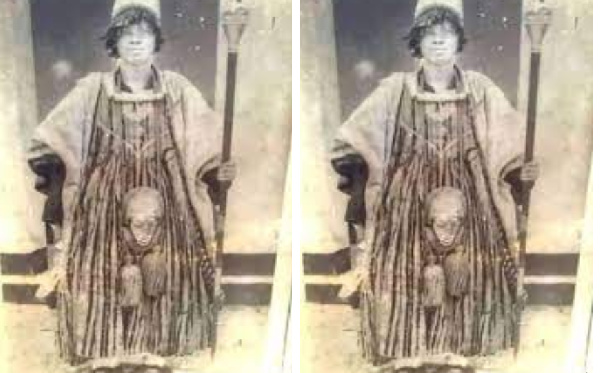
Attah Ameh Oboni I, ruler of the Igala Kingdom, defied British colonial administrators and chose death in 1956.
His reign, a mere decade, was defined by an unyielding refusal to cede the ancient power of his throne to foreign officials. This profound stand in 1956 underscored the deep cultural significance of traditional institutions amidst colonial encroachment.
Attah Ameh Oboni’s fight for royal independence
The British colonial administration, implementing its Indirect Rule system, aimed to integrate the Attah’s office into their administrative framework. This system required traditional rulers to work through councils and operate under British supervision. For the Igala people, however, the Attah was far more than a political leader.
He served as the custodian of their traditions, customs, and ancestral heritage. His position carried immense cultural and spiritual weight, intertwining the throne’s authority with the very identity of the Igala Kingdom. These changes posed a direct threat to that sacred bond.
Ameh Oboni inherited an institution whose traditional independence was already curtailed. His insistence on maintaining the Attah’s inherent authority brought him into direct conflict with the evolving colonial structure. This struggle became a defining feature of his leadership.
Colonial expectations demanded compliance with the Native Authority system. They wanted him to consult local councils in administering the kingdom. But Attah Ameh Oboni viewed this as an unacceptable erosion of his traditional prerogatives.
Tradition versus colonial decree
The conflict intensified with the prohibition of the Ocho Festival, a crucial cultural celebration for the Igala people. This festival was deeply rooted in traditional hunting practices and the Attah’s cultural responsibilities. It held a central place in Igala society.
In 1954, the colonial administration banned Ocho and four other traditional festivals. This decision stemmed from allegations of human sacrifice associated with the festival. However, a later analysis of blood samples from the Ocho venue confirmed they were animal blood, not human.
For Attah Ameh Oboni, restricting established cultural practices was a direct challenge to his office’s authority. His role explicitly included protecting these very traditions. The ban highlighted the clashing values between colonial rule and indigenous customs, a theme explored in Igbo captives choosing death over slavery in Georgia.
Beyond the festival, accusations of insubordination mounted against the Attah. Colonial officials demanded his abdication. They reportedly pressured him to produce a human head for a ritual, an act he saw as an attempt to deliberately undermine his spiritual authority and tradition.
The royal cap and a legendary defiance
One of the most enduring stories about Attah Ameh Oboni involves an encounter with Queen Elizabeth II during her 1956 visit to Nigeria. During a gathering in Kaduna, the Queen was present with various traditional rulers. Attah Ameh Oboni was asked to remove his royal cap as a sign of respect.
For the Attah, removing his cap in public was a profound taboo. It symbolized his divine authority and connection to his ancestors, a direct affront to Igala tradition. He initially refused, upholding the dignity of his office.
Legend states that when he eventually removed the cap under pressure, a swarm of bees erupted from it, causing chaos and abruptly ending the meeting. This story, though unverified by official accounts of the Queen’s visit, became part of Igala folklore. It cemented his reputation as a king who prioritized tradition over external demands.
The Queen’s visit spanned from January 28 to February 16, 1956. While the royal visit was real, the dramatic details of the bee incident remain a testament to the Attah’s symbolic resistance. Such stories often reveal deeper truths about historical figures.
Exile and ultimate sacrifice
The relentless conflict eventually made Attah Ameh Oboni’s position on the throne untenable. His resistance to colonial directives and alleged autocratic conduct led to accusations from both colonial powers and internal rivals. He was ultimately dethroned.
He was ordered to leave Idah, the sacred traditional headquarters of the Igala Kingdom. For an Attah, separation from the palace meant severing ties with the very core of his identity and responsibilities. It was an unbearable disgrace, cutting him off from the institution he embodied.
In 1956, Attah Ameh Oboni left Idah. He traveled towards Kaduna, where he made his final, tragic decision. On October 27, 1956, he took his own life by hanging. His death was a direct choice over the humiliation of deposition and the perceived loss of his royal authority.
His final act became deeply embedded in the collective memory of the Igala people. It solidified his image as a monarch who valued the dignity of his throne above his own life. This sacrifice echoed the broader struggle for self-determination.
A legacy of defiance and cultural pride
Attah Ameh Oboni’s death did not diminish his influence; instead, it amplified it. His name became synonymous with unyielding resistance against colonial oppression. The Igala people remembered him as a king who fiercely defended his cultural heritage.
His story serves as a powerful reminder of the lengths to which Nigerian leaders went to protect their sovereignty and traditions. His personal tragedy became a symbol of national defiance. It continues to inspire discussions on national identity and historical preservation.
Decades later, his legacy saw a significant revival. The Ocho Festival, which had been banned during his reign, was officially unbanned in 2018. It was celebrated again in Idah under Attah Idakwo Michael Ameh Oboni II, his son, who ascended the throne in 2013.
This revival brought renewed attention to Igala traditions and cultural institutions. It showed how enduring these practices were, surviving generations of political and administrative change. Ameh Oboni’s commitment to protecting these traditions found its vindication.
Today, Attah Ameh Oboni remains a pivotal figure in Igala history. His reign encapsulates the tension between traditional kingship and colonial administration. His death stands as one of the most poignant tragedies associated with the Attah’s institution, reflecting a deeper narrative about Nigeria’s past struggles. The enduring impact of such historical events is often highlighted in institutions like the National War Museum.
He is remembered not just as a king, but as a symbol. His final years became inseparable from the fundamental question of preserving the authority, dignity, and identity of the Igala throne against overwhelming odds. His story continues to teach Nigerians about their inherent strength and cultural resilience.
