




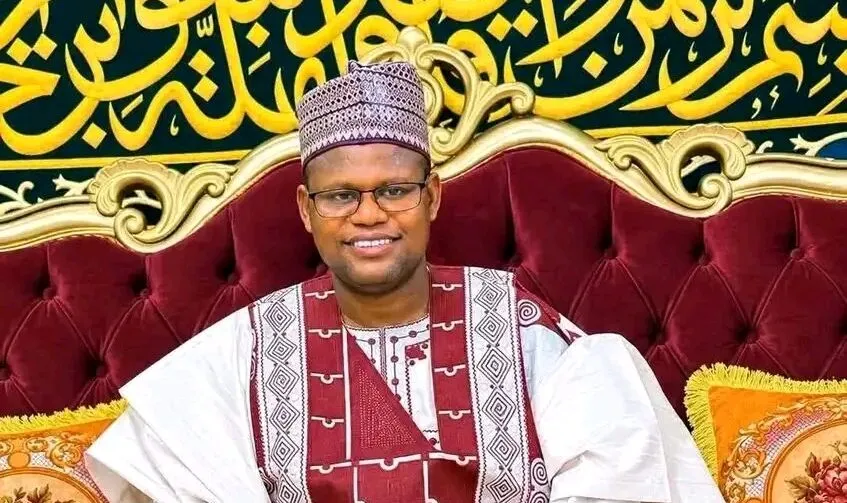
On October 26, 2026, the killing of Islamic cleric Sheikh Yahaya Ibrahim Masussuka in Dutsin-Ma, Katsina State, raised fresh questions about religious tensions and security in the region. The controversial scholar had stepped out of his residence when his wife, Hajiya Fatima Masussuka, returned inside to retrieve his forgotten bag. Moments later, four gunshots shattered the evening calm. The attack claimed the lives of Masussuka and his friend, Adamu Abubakar.
Masussuka, aged 47, was a powerful, often divisive, figure. His teachings focused on the Quran, challenging established religious norms and advocating for coexistence between Muslims and Christians. This stance drew both devoted followers and powerful adversaries, ultimately leading to a brutal end for a life dedicated to intellectual and spiritual boundaries.
Katsina Sheikh why justice delayed
The evening began routinely. Sheikh Masussuka prepared to leave his residence in the Bakin Kasuwa area of Dutsin-Ma to teach his students. His wife, Hajiya Fatima Masussuka, walked him out. She later recalled, “I accompanied him outside the house so he could go to where he teaches his students, the Almajirai, but I returned inside because he had forgotten his bag.”
That simple act saved her life, but sealed his fate. “Before I knew what was happening, I heard four gunshots,” she recounted. When she emerged, she discovered her husband and his friend, Adamu Abubakar, gravely wounded. Two unknown assailants sped away on a motorcycle. Both men were rushed to a hospital but were pronounced dead on arrival.
The brazen attack, directly outside the cleric’s home, sent shockwaves through the community. Neighbor Aliyu Ladan remembered the chaos of that night. The swift, professional assault was clearly meant to send a message. The perpetrators vanished without a trace, leaving a terrified community and a shattered family. “He was indeed a caring husband,” Hajiya Fatima Masussuka mourned.
A history of threats
While his murder shocked many, it did not surprise those familiar with Sheikh Masussuka. His Quran-centered teachings often put him at odds with conservative elements. He advocated for peaceful coexistence and challenged Hadith traditions. He had founded Qur’an TV/Radio and Masussuka International School in April 2024, providing both religious and conventional education.
The cleric’s ideological stances were not without consequence. In June 2025, the Network for Good Governance and Transparency honored him with a Peace Ambassador award. However, by November 2025, the Katsina State Government summoned him following complaints that his teachings contravened Islamic principles.
Masussuka himself complained that members of Jama’atu Izalatul Bidia were insulting and threatening him. The dispute was referred to the Katsina Emirate Council, but no public resolution followed. The state’s acknowledgment of threats, yet apparent inability to guarantee his safety, foreshadowed a tragic outcome.
The killings spurred a swift rhetorical response.
The killings spurred a swift rhetorical response. Katsina State Police Command, under Commissioner Ali Umar Fage, pledged to bring the culprits to justice. Governor Dikko Umaru Radda condemned the “heinous act,” urging security agencies to investigate thoroughly and ensure the perpetrators faced the law’s full force. DSP Abubakar Sadiq, the police spokesperson, noted the rumor of Ansaru’s claim, stating it was unverified but under investigation.
However, those strong words were not met with corresponding action. The investigation stalled swiftly. No arrests were ever publicly announced. Rumors persisted, linking the assassination to the Ansaru terrorist group, which reportedly claimed responsibility in an audio message. They accused Masussuka of being an “infidel” without offering any evidence.
Police were said to be investigating the claim, but it remained unverified, and the trail quickly went cold. This lack of clear resolution reflected a pattern in the region, a challenge in Nigeria’s complex policy landscape.
The failure to solve the murder left a deep, unaddressed wound. Many speculated that the inaction was not due to incompetence, but convenience. Sheikh Masussuka represented a disruptive influence, and his silencing potentially served powerful interests. These groups preferred a more rigid, less tolerant interpretation of Islam. His death became a stark example of justice’s limitations in a society grappling with escalating religious extremism.
A legacy of peaceful advocacy
Despite the persistent controversies, Sheikh Masussuka’s allies consistently remembered him as a man dedicated to peace and dialogue. His engagement was never about provocation, but rather about fostering understanding. His commitment to open discourse was evident in his teachings and his efforts to bridge divides.
Former Minister of Youth and Sports, Solomon Dalung, a personal friend, openly described the cleric’s death as a “painful blow to the cause of peace, religious tolerance, ideological dialogue, and peaceful coexistence.” Dalung lamented the brutal end of a man who pursued ideas and convictions. He added, “Faith must never become a licence to kill, and religious disagreement must never become a death sentence.”
What the cold case reveals about Nigeria
The assassination of Sheikh Masussuka on October 26, 2026, became more than a murder investigation; it raised questions about religious tensions, freedom of religious expression and the protection of controversial religious figures in Nigeria. The widely understood narrative suggests a tragic, mysterious murder. The actual story, however, reveals a man killed for his progressive ideas, and a justice system that ultimately failed him.
This failure permitted a dangerous narrative to take root: that violence, not intellectual discourse, could be the final arbiter of religious truth.
His death marks a historical point where dialogue and intellectual courage were violently suppressed. This tragic event mirrors a recurring pattern in Nigeria’s past, where those who challenge the status quo often face extreme opposition.
The state’s apparent inability or unwillingness to protect him, and later to apprehend his killers, highlighted the precarious position of progressive figures then, and perhaps still. This also echoed the challenges faced during the 2023 elections where complex political claims emerged.
The forgotten bag his wife went to retrieve is a poignant detail, a symbol of a normal life violently interrupted. But the real story is in the ideas Sheikh Masussuka carried, which proved too heavy for some to bear. His killing and the unanswered questions surrounding the investigation offer a sobering reminder of how religious disagreements, violence and accountability intersect in Nigeria.
