




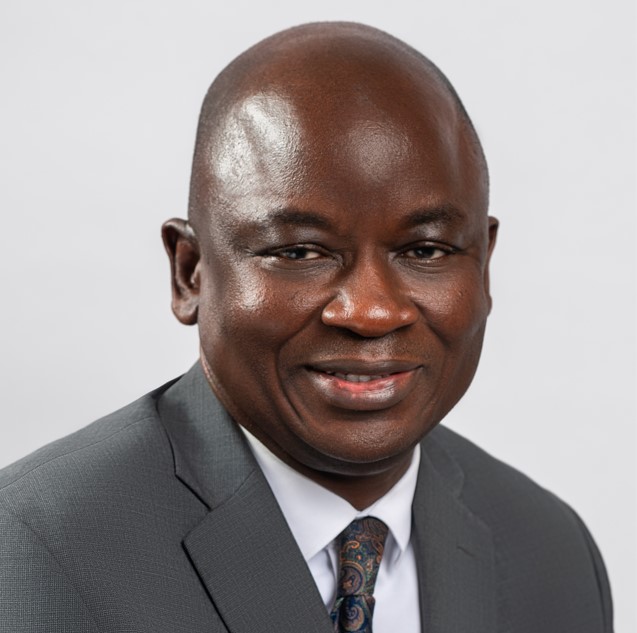
Everyone knows Kelina Hospital for its cutting-edge advanced surgery in Nigeria, a formidable bulwark against the tide of medical tourism. Yet, before its modern facilities and robotic prowess defined a new era of local healthcare, its journey began modestly in Abuja in 2008 with Dr. Celsus Ukelina Undie’s singular vision.
Dr. Undie, a distinguished consultant urological surgeon who earned his MBBS from the University of Nigeria Medical School in 1990, founded Kelina in February 2008. His goal was clear and ambitious: to bring advanced minimal access surgery directly to Nigerian patients, a specialized field then barely explored within the country’s borders.
The early ambition of Dr. Undie and Kelina Hospital surgery
Before establishing Kelina, Dr. Celsus Ukelina Undie honed his expertise, serving as a Consultant Urologist and Head of Urology at National Hospital, Abuja, from December 2005 to July 2016. That tenure solidified his commitment to elevating local medical care. His ambition was to establish a facility that would not just treat but redefine surgical possibilities in Nigeria.
He envisioned a hospital capable of performing procedures previously only available abroad. This foresight was critical at a time when many Nigerians sought overseas medical treatment. Kelina Hospital was built as a direct response to this growing challenge.
Pioneering advanced surgical techniques
Kelina Hospital quickly carved out its pioneering status through a series of significant firsts in the late 2000s and early 2010s. It became the first institution in West Africa to successfully perform Holmium Laser Enucleation of the Prostate (HoLEP), a minimally invasive treatment for benign prostatic hyperplasia. This marked a profound shift in regional urological care.
By 2012, the hospital had also achieved Nigeria’s first Laparoscopic Radical Prostatectomy and Percutaneous Nephrolithotomy (PCNL). These were not just medical procedures; they were groundbreaking statements about emerging local capability in complex surgical disciplines. Such accomplishments dramatically expanded the scope of local treatment options.
Addressing Nigeria’s medical tourism challenge
Nigeria faced a significant outflow of patients and capital due to a lack of advanced local medical facilities. Between 2008 and the mid-2020s, medical tourism cost Nigeria between $1 billion and $2 billion annually, with approximately 30,000 Nigerians traveling abroad for care each year. Kelina Hospital sought to stem this tide, offering world-class care domestically.
The hospital’s emergence provided a tangible alternative for patients who once felt compelled to travel to India, Europe, or America. By performing complex surgeries within Nigeria, Kelina reduced the financial and logistical burdens on families. Its success proved that high-quality, specialized medical care could thrive locally, a narrative that parallels Dr. Stella Adadevoh’s critical intervention in public health.
Strategic investment in technology and local expertise
This early success was meticulously built upon continuous, strategic investment in both advanced technology and specialized expertise. The hospital acquired advanced diagnostic tools and automated laboratory analyzers, including the Abbott ArchitectPlus i1000SR and Cobas analyzers. These were the same technologies used in leading global hospitals.
The hospital’s recognition by the Nigerian Investment Promotion Council (NIPC) in 2012 formally affirmed its role as a national trailblazer. Kelina steadily expanded its service specialties beyond urology, incorporating Ear, Nose & Throat (ENT), Obstetrics & Gynaecology, Family Medicine, and Nephrology. This demonstrated a broad commitment to comprehensive advanced care.
Building a skilled Nigerian surgical team
A core part of Kelina’s strategy involved cultivating local talent. The hospital committed to training and empowering Nigerian medical professionals to handle sophisticated equipment and procedures. This focus ensured long-term sustainability for advanced surgical services, contributing to the broader local content drive that reshaped even Nigerian oil firms’ tech pivot.
By investing in its staff, Kelina fostered a self-sufficient ecosystem of expertise. This approach directly contrasted with the brain drain plaguing the healthcare sector. It created a model for retaining skilled professionals within Nigeria, enhancing the overall capacity of the nation’s medical system.
The robotic surgery era begins
Kelina Hospital solidified its legacy of innovation by pioneering Robot-Assisted Radical Prostatectomy (RARP) in 2025. This marked another significant leap forward in Nigerian surgical capabilities. The hospital began performing these complex procedures using cutting-edge robotic platforms.
By June 2026, Kelina had independently performed over 50 robotic procedures with an all-Nigerian team. This achievement underscored the hospital’s self-reliance and the high skill level of its local surgeons. It positioned Kelina at the forefront of a new surgical era in Nigeria.
Overcoming high costs and complexity
The introduction of robotic surgery carried substantial challenges, primarily its high cost. Robotic surgical platforms could exceed $1 million, with additional expenses for instruments, consumables, and annual maintenance. Training surgeons in these advanced techniques also represented a considerable investment.
Despite these barriers, Kelina prioritized accessibility and excellence. The hospital’s commitment to these expensive yet transformative technologies demonstrated its dedication to providing Nigerians with the best possible care, even as wider economic reforms yielded mixed results across the nation.
A lasting legacy for Nigerian healthcare
Kelina Hospital’s journey from a nascent specialist clinic in 2008 to a leading surgical center today vividly reveals the potent force of focused ambition. It powerfully demonstrates that with persistent vision and strategic, long-term investment, Nigerian institutions can not only meet but often exceed international medical standards.
The hospital’s continuous drive for excellence highlights a viable path for Nigeria’s healthcare sector to reclaim its citizens from foreign hospitals. Its ongoing contributions continue to inspire confidence in local medical capabilities. Kelina Hospital set a high benchmark, proving that local excellence can indeed thrive, changing the landscape of advanced surgery for future generations.
