




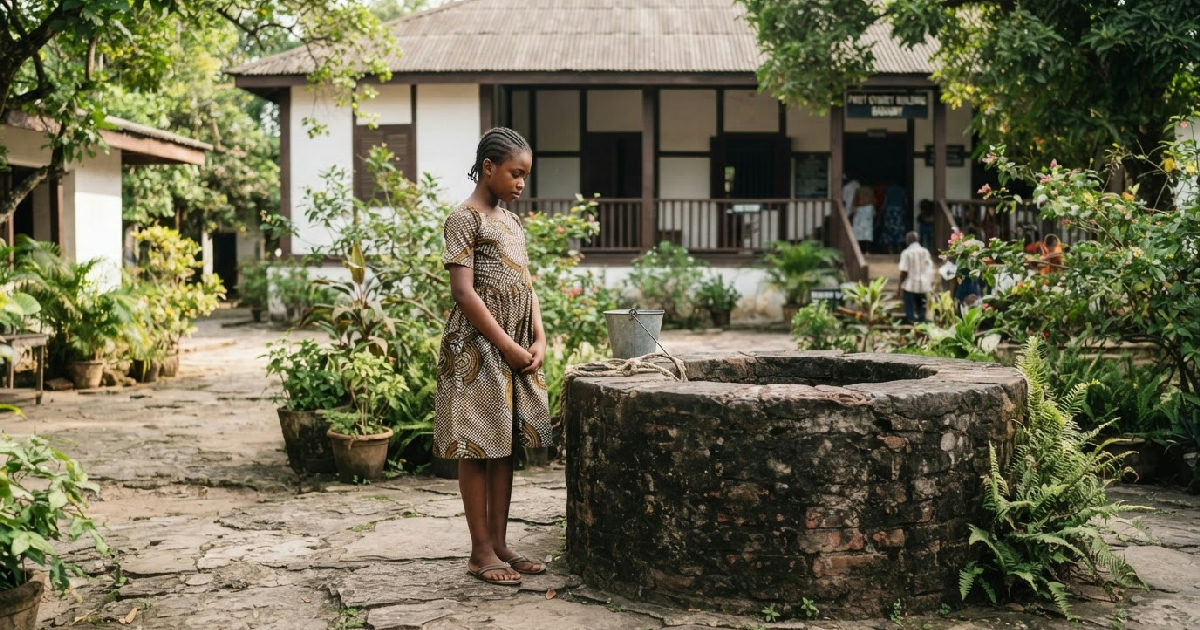
The Miracle Well in Badagry, a fixture since 1842, only gained its ‘miraculous’ reputation in 1988. This unexpected transformation occurred after a 12-year-old girl’s vision. The well, located within Nigeria’s first storey building compound, shifted from a practical water source to a spiritual focal point.
Missionaries from the Church Missionary Society first dug the well in 1842. This provided essential water for the people living and working at their new permanent residence in Badagry, established on September 24 of that year. That residence, later known as Nigeria’s first storey building, was completed in 1845 under Reverend Charles Andrew Gollmer’s supervision.
Miracle Well Badagry, a 1842 necessity
This construction marked a significant milestone for early Christianity in Nigeria. Figures like Samuel Ajayi Crowther, who later became the first African Anglican bishop, worked within this very compound. It solidified the site’s historical importance for generations to come.
The well’s initial role was purely practical, serving a critical need in a nascent missionary settlement. In the 1840s, a consistent and reliable water supply dictated daily life and the long-term sustainability of any compound in the region.
Its water was reportedly clear, fresh, and odourless, and it never ran dry, even during severe dry seasons. This consistency underscored its value. Local accounts describe it as the first cemented well in Badagry, and possibly the first of its kind in Lagos State.
This innovation provided a crucial resource for the expanding Christian community and its activities. Such foundational infrastructure was vital for early foreign missions, much like the architectural planning behind Irefin Palace Ibadan.
The 1988 revelation and its profound impact
Decades later, in 1988, a profound shift occurred during a religious revival program held at the compound. A 12-year-old girl reportedly received a spiritual revelation that the well’s water possessed healing properties. This singular event transformed a practical water source into the revered “Miracle Well.”
The program was organized by the St Thomas (Church of Nigeria) Anglican Communion, Diocese of Badagry. The girl’s vision specifically indicated that the mission house should be used for prayers. This guidance ignited widespread belief.
The story quickly spread beyond Badagry, drawing people from diverse religious backgrounds, including Christians and Muslims. Visitors flocked to the site seeking cures for illnesses, fertility, good fortune, and answers to personal prayers. This marked a new spiritual chapter for the well, embedding it deeply within Nigeria’s faith landscape.
Faith, water, and enduring belief
For countless Nigerians, drinking from the Miracle Well became an act of profound faith. It was a tangible conduit for divine intervention, a place where the physical and spiritual converged. Testimonies of answered prayers and unexpected blessings fueled its growing fame.
The well’s reported longevity also bolstered its mystical reputation. It had continued to provide water for 184 years without interruption, a fact that contributed significantly to its allure as a symbol of hope and divine favor for many visitors.
This continuous flow reinforced the belief that the well harbored unique properties. The blending of historical endurance with spiritual claims created a powerful, lasting attraction, connecting with deep-seated cultural reverence for sacred sites.
Badagry’s layered historical identity
The Miracle Well and the First Storey Building form essential parts of Badagry’s rich, layered historical identity. Badagry itself stood as a critical junction, simultaneously a hub for the transatlantic slave trade and a primary gateway for Christian missionaries into Nigeria.
This duality is starkly visible in its landmarks, such as the “Well of Memory Loss” on Gberefu Island, believed to make enslaved people forget their past. This contrasts sharply with the Miracle Well, which now offers hope and renewed memory of faith for pilgrims.
Badagry thus functions as a living museum, preserving structures associated with both immense human suffering and profound spiritual awakening. The town’s heritage offers a complex narrative of Nigeria’s formation and enduring spirit.
A living legacy for Nigerian pilgrims
The Miracle Well continues to attract thousands of visitors annually, transforming into a significant site for religious tourism. Its allure mirrors that of other revered places in Nigeria, such as the Awhum Waterfall in Enugu State, also believed to possess healing properties.
Testimonies of miraculous occurrences, including a vehicle engine reportedly restarting after water from the well was poured on it, circulate among pilgrims. This ongoing stream of personal stories keeps the well’s spiritual significance alive and vibrant for a new generation. This blend of historical importance and contemporary belief highlights how such sites maintain their relevance.
The First Storey Building itself, completed in 1845, housed notable figures like Claudius Philips, Nigeria’s first teacher, from 1845 to 1868. Its architecture, featuring burnt bricks from Sheffield, England, and a durable corrugated iron roof, speaks to the aspirations of its builders. The well, nestled within this historic complex, links visitors directly to these past figures and their daily lives.
This transformation of the well from a functional water source to a spiritual destination speaks to a uniquely Nigerian insight. It demonstrates the powerful interplay between historical events and evolving belief systems. The well connects visitors to Badagry’s nineteenth-century past and its ongoing spiritual understanding, a fusion of history and faith that remains central to the town’s identity.
