




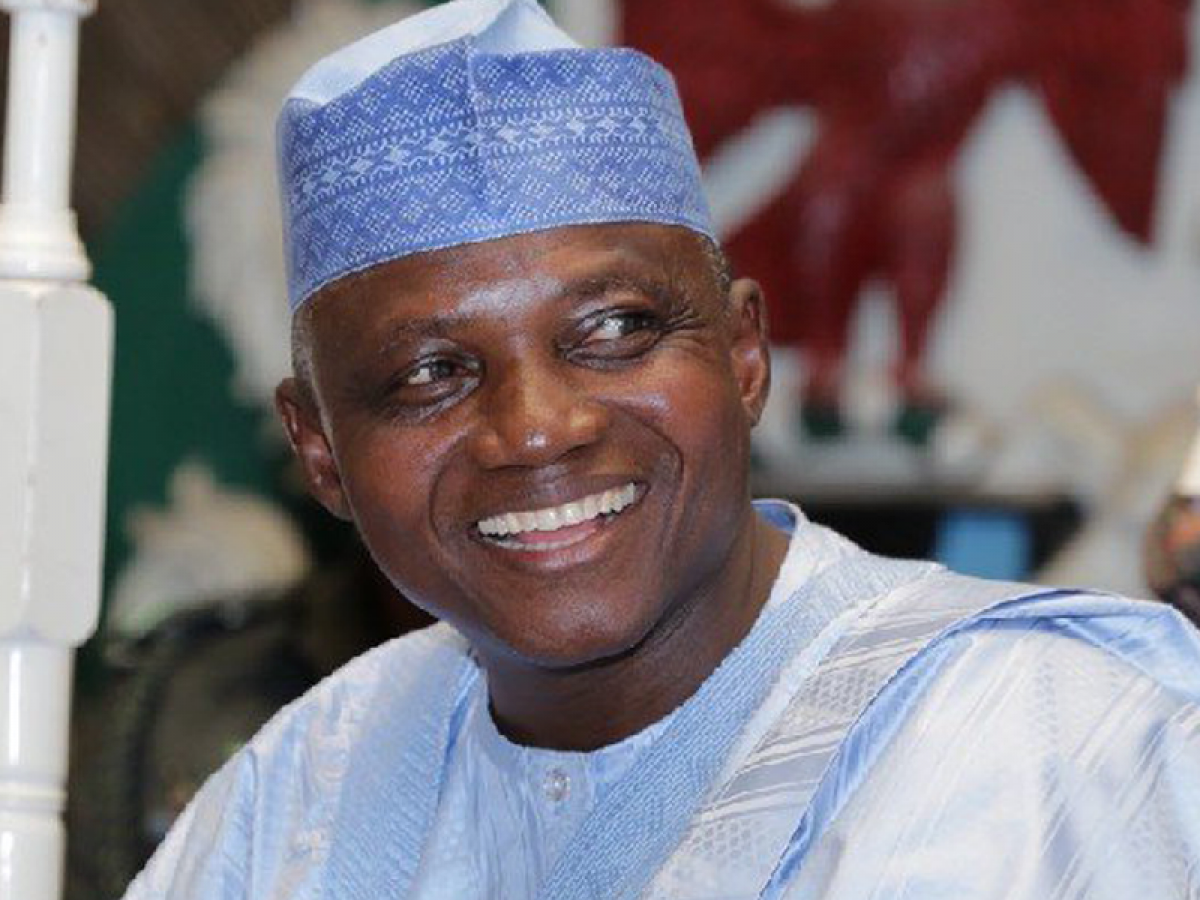
Garba Shehu on August 18, 2026, praised the era of Attahiru Jega as the best election period in Nigerian democracy.
Shehu, the Senior Special Assistant on Media and Publicity to the late former President Muhammadu Buhari, publicly commended the current Chairman of the Independent National Electoral Commission (INEC), Professor Joash Amupitan, for the transparent process seen during the recent Osun State governorship election.
Why Shehu considers Attahiru Jega best election supervisor
More significantly, Shehu claimed that Professor Attahiru Jega, the former INEC Chairman who oversaw the 2015 transfer of power, conducted Nigeria’s Attahiru Jega best election since the widely admired, yet ultimately annulled, June 12, 1993, poll that should have brought Chief MKO Abiola to power.
This comparison instantly framed the work of three separate electoral regimes against the gold standard of Nigerian political memory: the hope and subsequent trauma of 1993.
By measuring Jega’s pivotal 2015 performance against the legacy of the disputed June 12, 1993 poll, Shehu offered a powerful, if provocative, commentary on the uneven progress of Nigeria’s electoral maturity over three decades.
The statement, titled “Where is Professor Amupitan,” used the current chairman’s restraint following the Osun success as a starting point to assess the democratic trajectory since the early 1990s.
Garba Shehu’s intervention followed the successful conduct of the governorship election in Osun State on August 15, 2026. The former presidential spokesman acknowledged that the Osun vote, conducted under Professor Amupitan’s leadership, had been commended by civil society groups, the European Union, and both local and foreign observers for its transparency.
He specifically praised INEC’s seamless uploading of the governorship election results to its IReV portal, marking a crucial step forward in addressing long-standing issues of result manipulation.
What immediately drew attention, however, was his sweeping historical assessment of the men who preceded Amupitan. Shehu’s claim elevated Professor Jega’s tenure to a level matched only by the 1993 election, effectively placing the commission’s work in 2015 above the subsequent elections overseen by Professor Mahmood Yakubu, who succeeded Jega.
He stated explicitly: “Professor Jega gave the nation its best election since the disputed June 12, 1993, poll that produced Chief MKO Abiola, now recognised as a duly elected president who did not, however, take office.”
Shehu had previously been critical of Amupitan’s appointment, citing a legal brief from 2020 where the professor had characterized violence in the country in a way Shehu felt was skewed. Yet, the spokesman admitted that his earlier apprehension had been misplaced, given Amupitan’s performance in Osun.
This public admission of a change of heart, combined with the historical comparison, transformed a simple compliment into a major talking point about institutional memory and electoral credibility.
The unexpected praise for Professor Joash Amupitan
The immediate catalyst for Shehu’s piece was not the Osun election result itself, but Professor Amupitan’s reaction to its success. Shehu pointed out the Chairman’s humility and restraint, noting that Amupitan had not engaged in the “chest-beating” public behavior often associated with officials proclaiming success. He questioned, “Where is he? We are not used to seeing this kind of humility.”
For a political landscape often defined by aggressive claims and counterclaims, the quiet efficiency of Amupitan’s INEC in Osun stood out to Shehu as a marker of genuine progress. He implicitly suggested that Amupitan was allowing the outcome and the process to speak for themselves, an approach that contrasted sharply with the self-congratulatory style common among Nigerian public officials.
Professor Attahiru Jega and the 2015 benchmark
The core of Shehu’s argument rests on his high estimation of Professor Attahiru Jega’s administration at INEC between 2010 and 2015. Jega, an academic and former president of the Academic Staff Union of Universities (ASUU), took office with a mandate to overhaul an electoral system widely viewed as fundamentally compromised.
He presided over the preparation and conduct of the 2011 and 2015 general elections, introducing key reforms designed to restore public faith in the ballot.
The 2015 election, in particular, remains significant as it marked the first time an opposition candidate, Muhammadu Buhari, defeated an incumbent president, Goodluck Jonathan, achieving a peaceful transfer of power in Nigeria. That peaceful transition cemented Jega’s reputation both nationally and internationally.
Jega’s achievement was not just the result, but the establishment of systemic integrity measures, especially through the introduction of biometric technology. He pioneered the use of the Permanent Voter Card (PVC) and the Smart Card Reader (SCR) to authenticate voters, dramatically reducing the opportunities for electoral fraud that had plagued previous polls.
These technological innovations were crucial in moving Nigeria closer to establishing a trustworthy electoral process.
Technology and integrity: Jega’s lasting legacy
The reforms implemented by Jega in phases—leading up to the 2011 elections and then substantially before 2015—focused on reducing human discretion and enhancing verification. Prior to his tenure, the voters register was often inflated and easily manipulated. Jega replaced it with a new, publicly accepted biometric voter registry, which was critical in increasing public confidence in the institution.
His background as a prominent civil rights academic and his tenure as the former Vice-Chancellor of Bayero University lent him the necessary credibility to withstand political pressure. This independence was widely seen as instrumental in allowing the technology-driven reforms to take hold and ensure the integrity of the 2015 outcome, saving Nigeria’s democracy from potential collapse, a view Shehu himself endorsed previously in 2019/2020.
The shadow of the June 12, 1993, poll
For many Nigerians, any debate about electoral quality eventually circles back to the June 12, 1993, presidential election. Shehu’s decision to use this specific date as the high-water mark of Nigerian democracy underscores its unparalleled symbolic power. The 1993 election, held under the military regime of General Ibrahim Babangida, was widely hailed as the freest and fairest in Nigeria’s history at the time.
The results, although officially annulled on June 21, 1993, clearly showed a massive, non-ethnic mandate for Chief MKO Abiola of the Social Democratic Party (SDP). Abiola had defeated Bashir Tofa of the National Republican Convention (NRC), securing 58.36% of the popular vote and winning 19 out of 30 states, including Tofa’s home state of Kano and all states in the southeast.
The annulment by General Babangida, citing vague electoral irregularities, plunged Nigeria into years of political instability and military entrenchment. This act is frequently cited as the single most damaging blow to Nigeria’s democratic aspirations, transforming a moment of national unity into a lasting source of division and political grievance.
By invoking it, Shehu provided a yardstick of democratic purity that few subsequent elections have come close to measuring up to.
The enduring cost of the 1993 annulment
The trauma of the 1993 annulment goes far beyond the loss of a presidential mandate; it represents a historical rupture in the belief that Nigerian elections could ever be truly transparent and unifying. It led directly to the brutal regime of General Sani Abacha, widespread unrest, and the eventual imprisonment and death of Abiola in 1998.
The event demonstrated the fragility of civilian political processes when confronted by entrenched military power. The subsequent struggle to rebuild democratic institutions, including the press which faced immense pressure, has been an attempt to recover the faith that was lost that day.
For this reason, calling any post-1993 election the “best” is a high form of praise, acknowledging the immense structural and political difficulties that must be overcome to achieve electoral integrity in Nigeria.
Measuring Nigeria’s democratic progress
Shehu’s comparison inadvertently creates a chronological grading system for Nigeria’s electoral commission, using the June 12, 1993 poll as an initial baseline of quality. This system recognizes Jega’s 2015 work as the successful high point of post-transition democracy, while subtly positioning Professor Mahmood Yakubu’s tenure between 2015 and 2023 as a period that maintained standards without necessarily surpassing Jega’s peak.
Shehu stated that Yakubu “did the impossible by rallying civil society, CSOs, and local and foreign observers to approve all his elections.” This suggests consistency and broad approval, which is a different kind of achievement than the watershed success that Jega achieved in 2015 with the first peaceful defeat of an incumbent.
The key difference cited in Shehu’s statement points to a perceived leap in confidence and performance under Jega that subsequent chairmen have strived to replicate.
Now, Professor Amupitan’s successful oversight of the Osun State governorship election offers a new data point on this continuum. The consensus praise surrounding the seamless use of the IReV portal in Osun suggests that the incremental reforms started by Jega and continued by Yakubu are beginning to bear fruit, especially at the state level.
This success in a high-stakes governorship race, particularly the instantaneous uploading of results, is viewed as a necessary refinement of the process. In 2022, INEC also achieved a similar victory in Osun, and the success of the current commission reinforces that positive trend.
The outcome of the Osun governorship race is a crucial sign that the system can deliver transparency.
The challenge leading up to the 2027 elections
The debate surrounding Shehu’s statement is not merely academic; it has immediate, forward-looking implications as the nation prepares for the 2027 general elections. The current INEC Chairman, Professor Joash Amupitan, gave assurances regarding the upcoming national polls on Tuesday, August 18, 2026, promising a continuation of the standards seen in Osun State.
The scale of the 2027 challenge is immense. INEC projects over 100 million registered voters will participate, requiring the deployment of approximately 1.4 million ad hoc personnel across more than 176,000 polling units nationwide.
Ensuring that the technological gains celebrated in Osun can be replicated consistently across all states in a presidential election—where stakes are highest and political pressure is most intense—is the ultimate test for Amupitan and his team.
The history of Nigerian elections suggests that progress is often slow and nonlinear, punctuated by moments of both great promise and profound disappointment. Shehu’s commentary serves as a reminder that every successful election is measured not just against the one before it, but against the foundational ideal established by the 1993 poll.
The pressure is now on Amupitan to synthesize the integrity of June 12 with the technological proficiency of Jega’s era to secure a mandate that is beyond dispute.
Sam Amadi, Director of the Abuja School of Social and Political Thoughts, highlighted the ongoing nature of this democratic journey, noting that electoral integrity is a continuous process. While the successes in isolated state elections are encouraging, they must translate into systemic reliability nationwide.
This relentless focus on improving the process is what separates the current efforts from the military era when tools like the infamous Decree No. 4 of 1984 were used to stifle dissent and limit transparency.
The ultimate goal remains to normalize transparency to the point where comparisons to a 30-year-old annulled poll are no longer necessary, but are simply assumed.
