



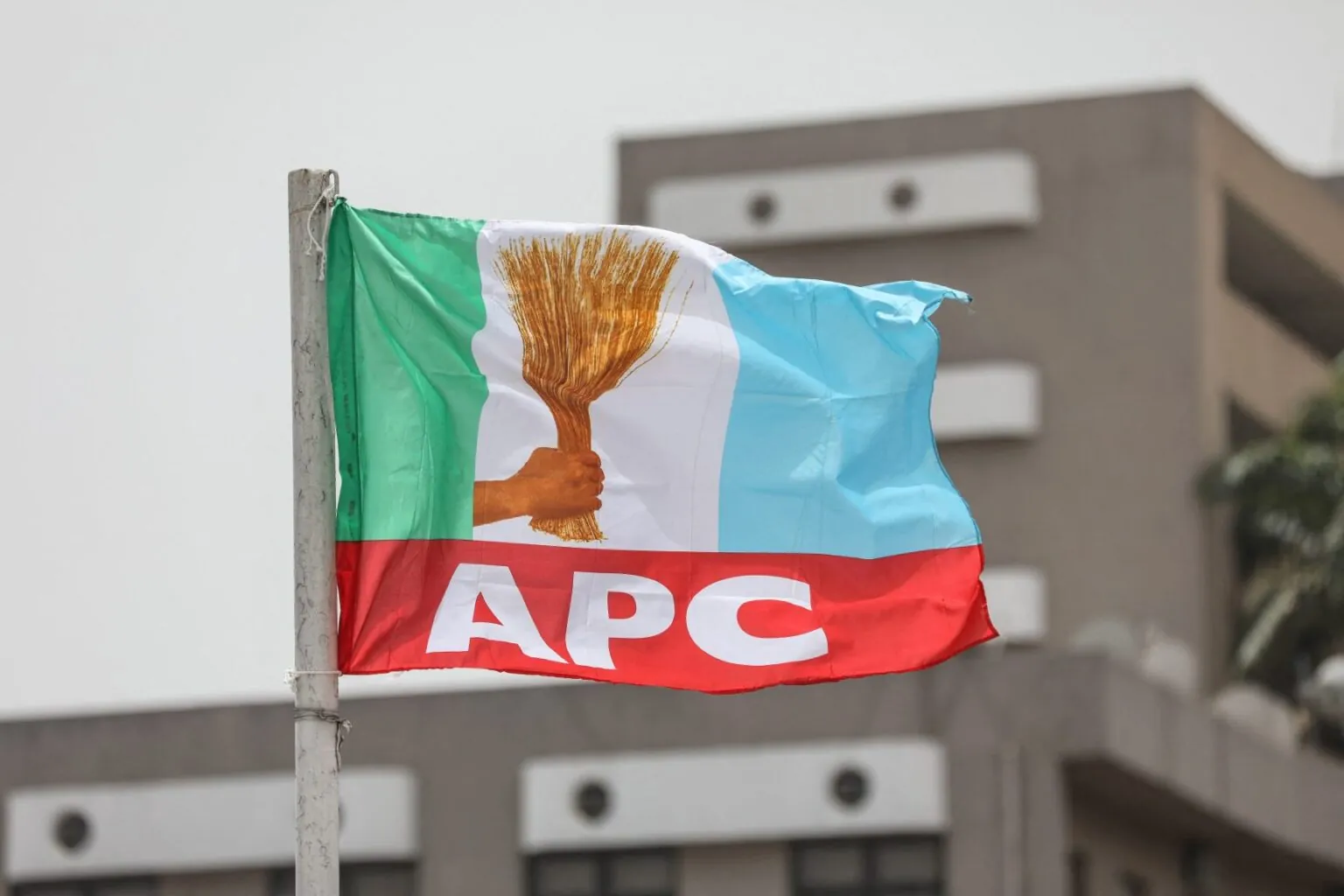
The Oyo APC’s 2027 unity is crucial for the party’s electoral success, as political ambition often thickens the air in Oyo State before an election.
It’s a tension that plays out in hushed conversations and public pronouncements, a high-stakes gamble on the party’s future. Chief Moses Alake Adeyemo, the recently elected Chairman of the Oyo State APC, stands at the center of this delicate balancing act, tasked with knitting together a party often torn by its own making.
The battle for unity in Oyo State APC
The imperative for the Oyo State APC is clear: unite or face another electoral setback. The party’s leadership, under Chief Moses Alake Adeyemo, is now actively working to resolve grievances and integrate various factions ahead of the 2027 elections.
This push for cohesion comes directly after the party’s inability to secure the governorship in both the 2019 and 2023 polls, defeats widely attributed to internal strife and fragmented leadership.
Adeyemo, a former Deputy Governor of Oyo State, ascended to the chairmanship in March 2026 with a pledge of inclusive administration. He understands the weight of history on his shoulders, acknowledging the pain of past congresses and primary elections that fractured the party. His mission is to ensure all tendencies within the APC feel accommodated, a tall order given the party’s turbulent past.
Echoes of past fractures and present dissent
Despite the official drive for unity, the cracks remain visible. In May 2026, some prominent APC leaders endorsed Sharafadeen Alli as the preferred governorship candidate. But this move was swiftly rejected by supporters of Adebayo Adelabu, who called the endorsement unauthorized and detrimental to party cohesion.
Adelabu, a former Minister of Power and the APC’s 2019 gubernatorial candidate, had resigned his ministerial post to contest the ticket, and his camp clearly felt sidelined.
This rejection mirrors broader concerns within the party. An “Ireakari Group,” a coalition of leading Oyo APC members, even penned an open letter to President Bola Ahmed Tinubu in March 2026.
They voiced deep concerns over alleged manipulation and exclusion within party structures, appealing directly to the President to intervene and prioritize institutional integrity over individual ambitions. This internal dissent poses a significant hurdle to the desired All Progressives Congress reconciliation.
A history of fractured ambitions
The current struggle for unity isn’t new territory for the Oyo State APC; it’s a narrative deeply woven into its very fabric. Since its formation, the state chapter has been characterized by sharp internal divisions, a consequence of power struggles between influential figures.
These historical cleavages often played out between factions loyal to the late Governor Abiola Ajimobi, known as SENACO, and those aligned with the late Alhaji Lamidi Adesina, dubbed LAMISTS.
These factional lines ran so deep they sometimes led to parallel local government and state congresses, effectively creating two parties within one. It wasn’t just a minor disagreement; it was a fundamental split over leadership and direction. The “Unity Group,” an evolution of the LAMISTS faction, eventually broke away from the Oyo APC entirely, leaving scars that continue to ache years later.
The shadow of past elections
The cost of these internal battles has been steep and easily quantifiable: lost elections. The disunity and persistent issue of candidate imposition are frequently cited as the primary reasons why the APC lost the Oyo State governorship to the Peoples Democratic Party (PDP) in both the 2019 and 2023 elections.
Governor Seyi Makinde and the PDP capitalized on the APC’s internal rifts, securing victories that many believe were handed to them by the opposition’s own hand.
In 2019, Adebayo Adelabu, then the APC candidate, fell short. Four years later, Teslim Folarin, a former Senate Leader, carried the party’s banner but also couldn’t overcome the incumbency and the lingering effects of party infighting. The defeats serve as stark reminders of how personal ambitions, when unchecked, can derail collective goals and leave a trail of missed opportunities.
The 2027 prize: Oyo governorship and local councils
The stakes for the 2027 elections couldn’t be higher. The Oyo State gubernatorial election is set for March 11, 2027, and notably, the incumbent Governor Seyi Makinde is not eligible to seek re-election, opening up the field significantly. This makes the governorship a prime target for the APC, offering a chance to reclaim lost ground and demonstrate its renewed strength.
Beyond the governorship, local government council elections are scheduled for January 16, 2027, across all 33 councils in the state. These grassroots contests are crucial for building party structure and influence.
Key APC aspirants for the top job include Sharafadeen Alli, who emerged as the party’s candidate in a May 2026 primary against Adebayo Adelabu, and Adelabu himself, whose supporters rejected that outcome. Other hopefuls like Teslim Folarin, Rauf Olaniyan, and Joseph Olasunkanmi Tegbe are also part of the mix, complicating the unity equation.
Reconciliation efforts and the enduring challenge
Recognizing the urgency, the Oyo APC leadership is pushing hard for reconciliation. In July 2026, the party inaugurated a high-powered reconciliation committee specifically aimed at resolving internal grievances. Chief Moses Adeyemo stressed that this initiative was critical, directly addressing the fallout from party congresses and recent primary elections that left many members feeling aggrieved.
Another committee, jointly led by Senator Femi Lanlehin and Prof Taoreed Adedoja, has also been established to address similar complaints. There have been promising signs, too. Reports from December 2025 indicated that key stakeholders, including Adebayo Adelabu and Teslim Folarin, had agreed to set aside their differences and work towards the party’s success.
But these efforts often run headlong into a deeper, systemic issue that plagues Nigerian political parties: a pervasive lack of internal democracy.
This enduring challenge often manifests as factionalization, member defections, and candidate imposition. It fuels “godfatherism” and constant leadership tussles, ultimately undermining the credibility of the political process. The Oyo APC’s fight for unity, then, isn’t just about winning an election; it’s about confronting a deeply entrenched pattern of political behavior that has historically stifled genuine representation and progress.
The party’s bid to unite ahead of 2027 mirrors a broader struggle within Nigerian politics itself. It’s a continuous, often bruising, contest between individual ambition and the collective good, a test of whether the lessons of history can finally shape a more cohesive and effective political future.
The fate of the Nigerian Presidency’s broader political strategy and the success of local government elections hinge on the resolution of these internal party dynamics, setting a precedent for states across the federation.
Lessons from the past: forging a path forward
The All Progressives Congress in Oyo State finds itself wrestling with ghosts of its past, a recurring theme in Nigerian politics. The deep-seated divisions that hobbled its campaigns in 2019 and 2023, costing it the governorship to the Peoples Democratic Party, weren’t isolated incidents. They were the latest chapters in a long story of internal party feuds, where personal ambition often overshadowed collective strategy.
The echoes of the SENACO and LAMISTS factions, which once carved the party into rival camps and even led to parallel congresses, still resonate today. This history isn’t just academic; it’s a living blueprint of how a party can self-destruct from within.
The “Unity Group’s” eventual departure from the party, born from those earlier rifts, stands as a stark reminder of the irreversible damage such schisms can inflict.
Chief Moses Alake Adeyemo, as the current Chairman, now carries the heavy burden of correcting these historical missteps. His commitment to an inclusive administration and his efforts to inaugurate reconciliation committees are direct responses to a legacy of discontent. Yet, the pushback from camps like Adebayo Adelabu’s, following the endorsement of Sharafadeen Alli, shows just how deeply entrenched these rivalries are.
The forthcoming 2027 gubernatorial election, where Governor Seyi Makinde is ineligible to run, presents a golden opportunity for the APC. But it’s an opportunity that will be squandered if the party doesn’t genuinely address its internal demons.
The challenge isn’t merely about winning an election; it’s about demonstrating a fundamental shift in political culture, moving from a landscape of fragmented self-interest to one of genuine collaborative purpose.
Ultimately, the Oyo APC’s struggle for unity in the lead-up to 2027 is more than just a local political story. It’s a microcosm of the larger, enduring battle for internal democracy and institutional strength within Nigeria’s political parties.
Whether the current leaders can transcend the historical patterns of ambition and division will not only determine their electoral fate but also offer a critical lesson for the nation on the true cost of disunity.
