



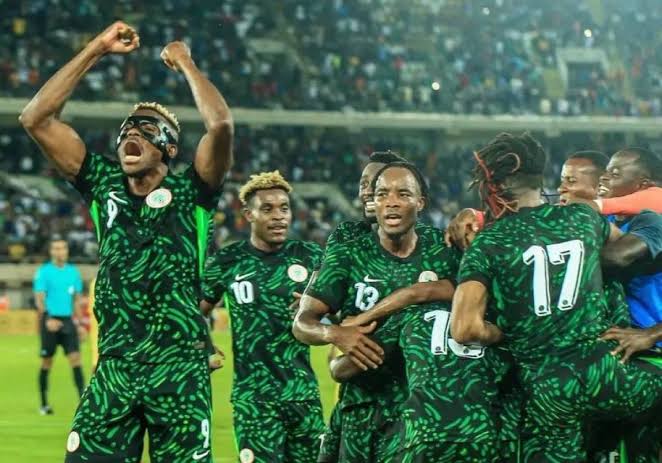
The 2026 FIFA World Cup came and went without Nigeria, leaving a familiar ache of disappointment across a nation that lives and breathes football. Calls for radical change, particularly within the Nigeria Football Federation (NFF), have reached a fever pitch regarding the state of Nigerian football.
But Ahmed Shuaibu Gara Gombe, a veteran sports administrator, has stepped into the fray with a stark message: simply replacing the NFF leadership won’t save Nigerian football.
A familiar cycle of NFF elections and discontent
Gara Gombe, former Chairman of the Gombe State Football Association and current Special Adviser on Information Management and Strategy to the Gombe State Governor, Alhaji Inuwa Yahaya, made his assertions in mid-July 2026. He believes the problems run far deeper than any individual or board, touching the very structure and integrity of the game.
For more than 40 years, NFF elections have been synonymous with chaos. Gara Gombe describes a recurring pattern of “confusion, fighting, threats of sanctions and all kinds of controversies” that erupt before elections, only to fade once the positions are filled.
This cyclical drama, he argues, has done little to advance Nigerian football. “Even if Gusau leaves today as some people are advocating, I swear to God nothing will change in Nigerian football,” Gara Gombe declared, cutting through the prevailing sentiment.
Defending current NFF president ibrahim gusau
Current NFF President Ibrahim Gusau, elected on September 30, 2022, in Benin City, often finds himself in the firing line after national team failures. But Gara Gombe sees Gusau as a scapegoat who inherited a deeply flawed system.
He noted differences between Gusau’s leadership and that of his predecessor, Amaju Pinnick, describing Gusau as “a gentleman.” Gara Gombe suggested Gusau might even be “too soft for public office,” given the intense pressures that define the NFF presidency.
The structural rot undermining nigerian football
Nigeria’s struggles aren’t about a lack of talent or passion, Gara Gombe contends. Instead, he points to fundamental structural issues: pervasive hypocrisy among football stakeholders, rampant match-fixing, poor governance, and woefully inadequate infrastructure.
These systemic problems have persisted for generations. Nigeria, currently ranked 26th in FIFA’s global standings, has now missed two consecutive FIFA World Cups, in 2022 and 2026, extending its absence from the tournament back to 2018.
Match-fixing allegations and financial scandal
Among the most corrosive elements Gara Gombe identifies is match-fixing, particularly within the Nigeria Premier Football League (NPFL). He recounted a troubling incident where one club reportedly paid match officials ₦3 million before a game.
The opposing side then allegedly increased the payment to ₦5 million to secure victory. “There are people in Nigerian football whose only profession is match-fixing,” Gara Gombe asserted, highlighting how deeply this corruption has become embedded.
Beyond individual matches, financial impropriety has shadowed the NFF. Gara Gombe has demanded a comprehensive probe into the alleged mismanagement of $25 million received by the NFF from FIFA and CAF between 2015 and 2025.
He also recalled a past FIFA audit that found over $800,000 unaccounted for by the NFF. Shortly after this, Gara Gombe alleged, the NFF donated ₦25 million to the burial committee of a serving minister’s wife, a move that raised serious questions about priorities and transparency.
The need for accountability in public institutions, whether in sports or finance, often drives difficult conversations about trust. These discussions sometimes mirror those seen when public figures are compelled to address serious allegations.
The steep cost of world cup absence
Nigeria’s failure to qualify for the 2026 FIFA World Cup came with a significant financial blow. The nation forfeited a guaranteed FIFA payout exceeding $10 million, a sum representing close to 90% of the NFF’s projected annual budget.
This lost revenue could have funded crucial grassroots development and infrastructure. Gara Gombe warned that without genuine structural change, Nigeria could well miss the 2030 FIFA World Cup in Saudi Arabia, regardless of who leads the NFF.
Hypocrisy and calls for criminal sanctions
Gara Gombe saved some of his sharpest criticism for the pervasive hypocrisy among football stakeholders. “People remain silent when their interests are protected,” he observed. “They only find their voices when those interests are no longer served.”
This selective outrage ensures that despite public criticism, systemic issues continue unchecked. It prioritizes personal gain over the collective good of the game.
For match-fixing, Gara Gombe believes Nigeria needs tougher legal deterrents. He pointed to European examples where such offenses can lead to jail time. “Nigeria also needs criminal laws against match-fixing if we are serious about cleaning up the game,” he urged.
A call for historical accountability in NFF funds
The Federal House of Representatives recently expressed an intent to investigate NFF finances from 2015 to 2025. While welcoming the move, Gara Gombe argues this period doesn’t go back far enough.
“It is not far enough. They should go back from 1986 to date,” he stated, insisting on a deeper historical audit of FIFA funds. His demand reflects a conviction that current problems have roots decades deep, requiring a full understanding to truly resolve.
The question of how to reclaim global confidence in Nigeria’s capital market also relies on rigorous financial oversight and a clear understanding of past practices.
Beyond leadership: repairing the foundations of nigerian football
Gara Gombe’s assessment forces a difficult but necessary conversation. It’s not enough to simply change the faces at the top of the NFF. The nation needs to confront a culture of corruption, implement robust accountability mechanisms, and foster a genuine commitment to sports development from its deepest roots.
The challenges are immense, from rebuilding trust in the league to ensuring every naira and dollar designated for football truly reaches its intended purpose. Without this fundamental shift, Nigerian football risks repeating the same mistakes, watching promising generations of talent wither, and enduring more World Cup heartbreaks.
The history of Nigerian football, marked by cycles of hope and despair, shows us that changing leadership without addressing the deep-seated structural issues is like painting over a crumbling wall. Until those foundations are repaired, no amount of fresh paint will prevent its inevitable collapse.
