



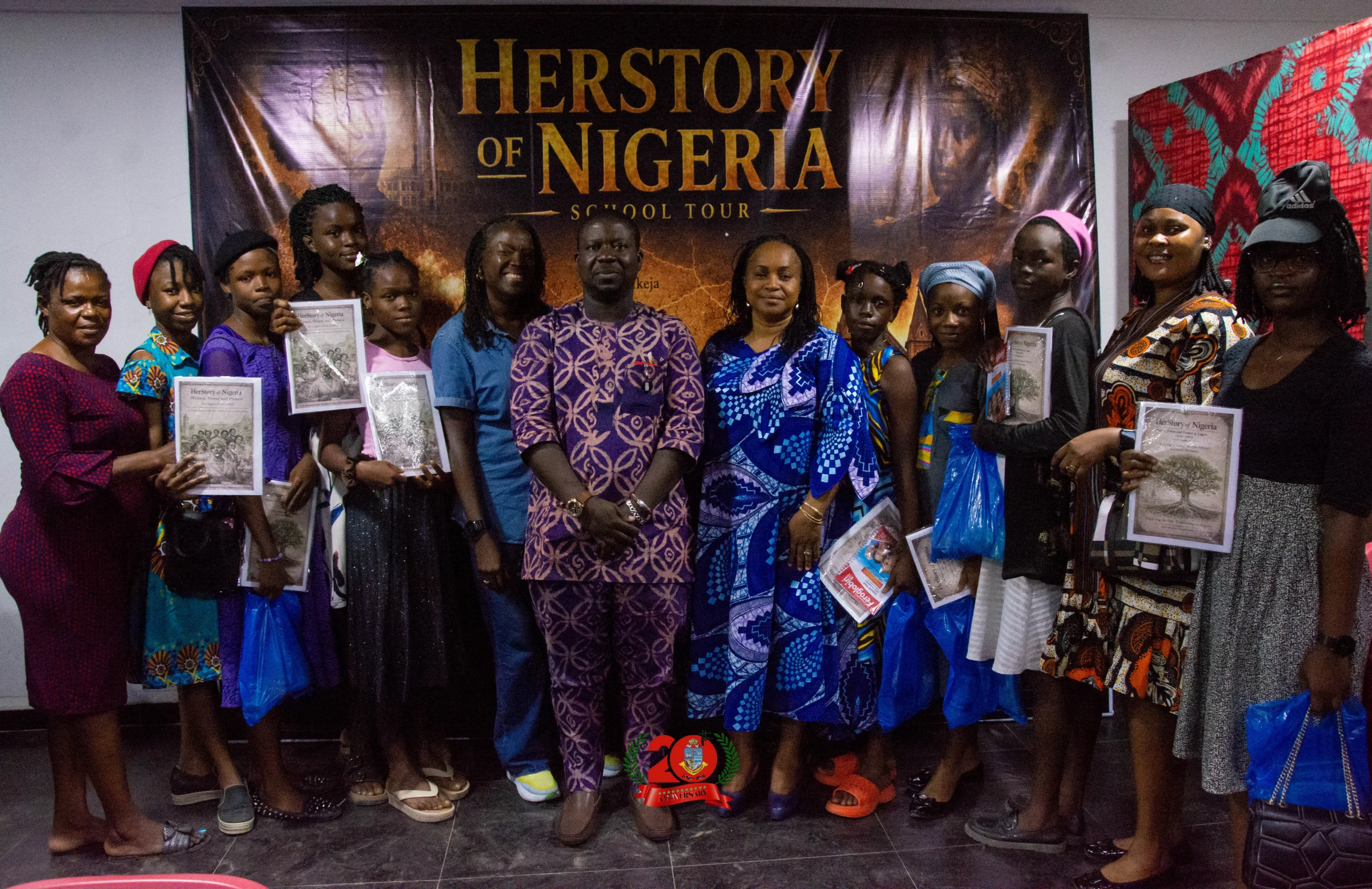
Over a hundred schoolgirls gathered at St Jude Cathedral Church in Ebute Metta, Lagos, on Friday, July 31, 2026, participating in a history-focused educational program. This event marked the third edition of the “HerStory of Nigeria” project, an ambitious initiative by ASIRI Magazine aimed at documenting and promoting the significant historical contributions of Nigerian women.
Led by Project Team Lead and Archivist Dr. Oludamola Adebowale, the program seeks to equip young girls with a strong sense of identity, confidence, and values by connecting them with the often-overlooked narratives of trailblazing women.
Unearthing hidden histories for the HerStory of Nigeria project
The project believes that understanding these foundational stories isn’t just about appreciating the past; it’s about providing crucial role models and equipping younger generations to contribute meaningfully to Nigeria’s future. By taking history beyond dusty textbooks and into engaging, interactive sessions, the “HerStory of Nigeria” project is making a compelling case for the power of historical literacy in national development.
ASIRI Magazine, since its founding in 2013, has grown into a leading digital archive of rare Nigerian historical images and narratives. But for Dr. Oludamola Adebowale, its evolution into the “HerStory of Nigeria” project was a natural, necessary step.
He recognized a profound gap in the national consciousness: the stories of Nigerian women, who shaped so much of the nation’s social and political landscape, remained largely untold and underexplored.
Dr. Adebowale sees this omission as more than just an academic oversight. “The very core of Nigerian history is because of these women who did amazing exploits in the 1800s and in the 1900s. So the history is not really out there as it should be,” he explained.
This project is, for him, a “wake-up call to preserve, archive and document this history” before it fades entirely.
The 1910–1950 Lagos Focus
The “HerStory of Nigeria” project formally launched its concentrated effort with “HerStory of Nigeria: Women, Power and Protest in Lagos (1910–1950).” This specific era, from the early colonial period to the mid-20th century, was a crucible for change, particularly in Lagos, a burgeoning urban center and a hub of anti-colonial resistance and social reform.
The unveiling took place on March 9, 2026, in Lagos, coinciding with activities marking International Women’s Day 2026. This initial focus allows the project to delve deeply into the lives of women who navigated immense societal shifts, from early nationalist movements to the fight for economic rights and political inclusion, providing rich, tangible examples for the schoolgirls.
Beyond Textbooks: Engaging the Next Generation
The project’s power lies in its innovative approach to historical education, moving far beyond rote memorization. It emphasizes exposing young girls to stories of trailblazing women through a diverse methodology designed for maximum impact. They don’t just present facts; they craft experiences.
Structured in-school engagements form the backbone of the program, bringing history to life within the classroom. This is complemented by an illustration-based magazine, specifically designed for accessibility and engagement among young learners. Through guided storytelling, illustrated learning materials, and historical portrait sketches, the project ensures the narratives resonate deeply.
A Tour Across Lagos Schools
The “HerStory of Nigeria” project has been steadily building momentum across Lagos. The flagship event, introducing secondary school students to women’s history, was held on March 13, 2026, at Queen’s College, Lagos. This initial engagement set the tone for the interactive and inspiring sessions to follow.
The second leg of the school tour saw the project visit Vivian Fowler Memorial College for Girls in Lagos, continuing its mission to connect young learners with their heritage. The recent event at St Jude Cathedral Church underscored the project’s commitment to reaching a broad spectrum of students.
Impressively, many schools visited have since established their own history clubs and invited mentors, showing the project’s ripple effect.
Forging Alliances and Archiving for Generations
Such an ambitious undertaking requires significant collaboration. The British Deputy High Commission in Lagos, Nigeria, recognized the project’s importance, partnering for the launch of “HerStory of Nigeria: Women, Power and Protest in Lagos (1910–1950).”
Simon Field, Deputy Head of Mission, described the collaboration as a reflection of shared priorities between the UK and Nigeria, particularly in advancing gender inclusion and social progress. This alignment extends to broader Commonwealth goals, keeping women and girls at the forefront of developmental initiatives.
Achieving Greatness Limited, under the leadership of CEO Dr. Emmanuel Ojibo, has also joined as a partner, further strengthening the project’s operational capacity. But despite these crucial alliances, the program currently relies on self-funding through personal resources and a limited network of supporters. There’s a clear call for broader institutional backing to sustain and expand this vital work.
At its heart, the project is building a monumental digital archival platform. This repository will house photographs, documents, oral histories, and biographies of Nigerian women, ensuring their stories are preserved for posterity. Dr. Adebowale envisions this as a “legacy project building a unified digital repository that will serve generations to come.”
This commitment to rewriting African history through thorough documentation forms a critical part of the project’s long-term impact.
The Echo of the Past in Nigeria’s Present
The impact of this project, according to Dr. Adebowale, is “enormous.” He argues that a fundamental understanding of one’s origins is essential for progress. “If you do not know where you are coming from, you cannot figure your way out,” he asserts.
This perspective suggests that many of the challenges Nigeria faces today are, in part, due to a collective amnesia regarding its own historical trajectory, especially the roles played by women.
By bringing these histories to light, the “HerStory of Nigeria” project isn’t just celebrating individual achievements. It’s offering a framework for understanding complex national issues and preventing the repetition of past mistakes. This deeper historical consciousness is invaluable for fostering genuine national unity and addressing contemporary problems, from governance to economic disparities.
Learning from the past exploits of women who organized protests, led communities, and pioneered industries can inspire new solutions for today’s leaders and citizens alike. These narratives offer practical lessons in resilience, strategy, and collective action, providing a historical playbook for tackling modern-day challenges.
A Future Shaped by Remembered Pasts
The current cycle of the “HerStory of Nigeria” project targets 10 schools across Lagos, a focused effort with a clear ambition for national scaling in subsequent editions. This measured approach allows for refinement and maximum impact before broader expansion. But the project doesn’t operate in a vacuum.
Separately, a youth-led movement named Her Story Nigeria, founded by Oreoluwa Ojo, has already reached over 30,000 people and engaged thousands of volunteers across several African countries. This broader ecosystem of initiatives underscores a growing recognition across Nigeria and beyond that women’s historical contributions are not just a niche academic interest, but a crucial component of national identity and future prosperity.
The ultimate question the “HerStory of Nigeria” project poses to young Nigerians isn’t just “who were these women?” but “what kind of Nigeria can we build when we fully acknowledge and draw strength from their legacies?” It’s a potent query, one that could profoundly reshape how the nation views its past, understands its present, and imagines its future.
