




On the morning of May 9, 1979, an unsettling stillness hung over 13 Dawaki Road in Nasarawa, Kano. The gate remained locked, a silent sign that something was amiss at the home of businessman Nafiu Rabiu.
By the afternoon, his wife, Hajiya Fati Mohammadu Nafiu, lay dead, her passing triggering a chain of events that would see a bundle of soiled blankets and clothes vanish and ignite a legal battle reaching Nigeria’s Supreme Court.
The Blankets’ Murder Case context
This disappearance was no minor detail. It swiftly elevated a personal tragedy into a public spectacle, forcing Nigeria’s nascent legal system to grapple with the implications of wealth, influence, and the pursuit of justice. The unfolding drama would ultimately set a landmark precedent for the country’s Supreme Court.
Nafiu Rabiu was no ordinary citizen. As the eldest son of the influential Islamic scholar and business tycoon Alhaji Isyaku Rabiu, and elder brother to Abdul Samad Rabiu, founder of the BUA Group, his family held significant sway in Kano. This powerful lineage would inevitably cast a long shadow over the legal proceedings that followed his wife’s death.
The evening of May 8, 1979, had begun normally enough. Nafiu, Fati, and three friends, including the District Head of Jahun, shared dinner at their home. Witnesses like the household driver and cook confirmed Fati was “quite alright” and even joking as guests departed, leaving her and Nafiu alone.
The Morning’s Unraveling Events
On the morning of May 9, the domestic facade crumbled. The cook found the main gate still locked. Around 10 a.m., Nafiu Rabiu appeared at a window, throwing down the gate key. He then instructed the cook to open the kitchen door, claiming he had misplaced his own key.
Crucially, Nafiu emerged shortly after, carrying a briefcase and the now-infamous bundle of soiled blankets and clothes. He asked his driver to place these items into the boot of his Peugeot 504. The driver complied, but their journey with the vehicle would be short-lived.
Nafiu then dispatched the driver with a Mercedes-Benz to Kano Airport, ostensibly to pick up his mother-in-law. Before departing in the Peugeot himself, he gave the cook a key to the lounge and main house—an unprecedented level of access, suggesting an unusual shift in household dynamics.
Upon the driver’s return from the airport, Nafiu instructed him to take the Peugeot to a mechanic. But when the driver checked the boot to retrieve the soiled items, they were gone. The Supreme Court judgment itself would record this unexplained disappearance, without establishing their contents or ultimate fate.
High Court Acquittal and Public Outcry
Later that afternoon, Nafiu’s children discovered Fati unresponsive in her room. Dr. Bansi Badan Tribedi, a senior consultant pathologist, would later identify the cause of death as asphyxia from strangulation, with multiple external injuries noted. Despite this medical evidence, Nafiu Rabiu maintained his wife died peacefully in her sleep.
Nafiu Rabiu faced trial before Chief Justice Jones in the High Court of Kano State. The prosecution, confident in its medical findings, alleged he caused his wife’s death. However, Chief Justice Jones concluded that the medical evidence was “conflicting and unsatisfactory.”
Consequently, the High Court acquitted Nafiu Rabiu. This public outrage rippled across Nigeria, especially in Kano, where many perceived that the influence of Rabiu’s powerful family had swayed the judicial outcome. The decision seemed to underscore the perceived vulnerability of justice when confronted with significant social standing.
The Ascent to the Supreme Court
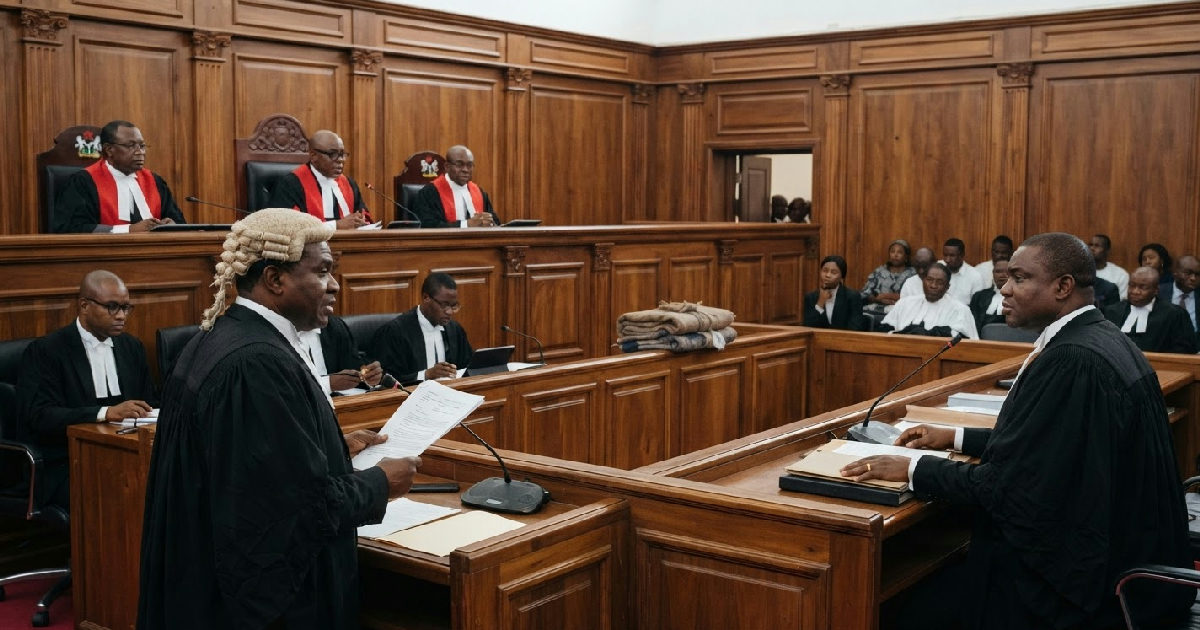
Unsatisfied, the Kano State Government appealed the acquittal. Represented by Kehinde Sofola, SAN, they challenged the High Court’s decision, pushing the case first to the Federal Court of Appeal. On May 5, 1980, the Appeal Court reversed the acquittal, convicting Nafiu of culpable homicide not punishable with death and sentencing him to four years’ imprisonment.
Nafiu Rabiu, represented by Chief F.R.A. Williams, SAN, then took his case to the Supreme Court of Nigeria.
The highest court was not merely re-examining the facts of Fati’s death but delving into profound legal questions, including the prosecution’s right to appeal an acquittal in northern states and the High Court judge’s handling of medical evidence.
The case would become known as Nafiu Rabiu v. The State (1980) 8–11 S.C. 130, frequently cited in Nigerian legal circles.
A Legal Landmark Defined
On November 21, 1980, the Supreme Court delivered its judgment. It ruled that prosecutorial appeals against acquittals were indeed permissible, but confined to points of law. More critically, the Court found “serious problems” with Chief Justice Jones’ interpretation of Dr. Tribedi’s medical evidence, identifying a “serious misdirection.”
This principle became crucial: a factual finding could constitute an error of law if “no reasonable tribunal” could have reached it.
The Supreme Court ultimately upheld the Federal Court of Appeal’s conviction, affirming the four-year sentence for culpable homicide. Nafiu Rabiu served his term, spending four years in prison. His case remains a pivotal reference in Nigerian constitutional and criminal law, particularly regarding the appellate process and judicial review of evidence.
Even with the Supreme Court’s definitive legal pronouncements, some aspects of Fati Mohammadu Nafiu’s death remain shrouded in ambiguity. The fate of the soiled blankets and clothes, seen by the driver and then inexplicably gone, was never fully resolved by the courts. They were a vivid, unsettling detail, but their exact connection to the killing remained unproven.
The Enduring Insight on Justice
The Nafiu Rabiu murder case offers a stark illustration of how Nigeria’s legal system navigates the complex interplay of power, public sentiment, and established judicial process. It revealed that while immense influence might initially deflect justice, the institutional safeguards of appeal courts can eventually correct course, setting critical precedents for legal accountability.
This enduring precedent, a reminder of the judiciary’s ultimate role, continues to shape Nigerian jurisprudence, demonstrating how foundational legal principles are often forged in the crucible of contentious public trials. It teaches that even when questions linger, the apparatus of the state can impose a form of finality.
