




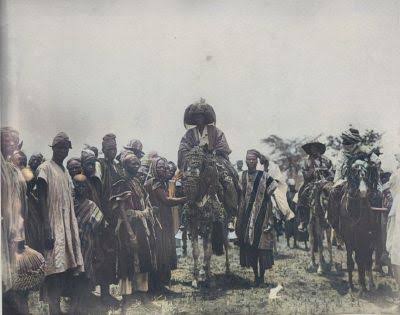
Between 1650 and 1750, the Oyo Empire solidified its dominance in West Africa by mastering a crucial principle: power flowed directly from controlling the movement of goods and people. This sophisticated understanding of economic leverage, rather than sheer military might alone, was the cornerstone of its unprecedented wealth and influence across large swathes of present-day southwestern Nigeria and into modern Benin.
The empire understood that roads and markets were not merely logistical arteries but vital instruments of control. Its strategic position enabled it to dictate commerce, extract tribute, and secure resources essential for sustaining its formidable military. This foundational insight shaped the empire’s governance and expansion for centuries.
Oyo Empire trade dominance and location
The Oyo Empire was uniquely positioned to become a central player in West African commerce. It lay at a critical juncture, bridging distinct economic zones that stretched across the region. To its north, the vast savanna kingdoms and their expansive trading networks offered access to goods from farther afield.
To the south, the Yoruba forest regions led directly towards the Atlantic coast, opening routes to burgeoning coastal trade. This geographical advantage meant that Oyo was an unavoidable hub for merchants moving diverse commodities between these different areas. The kingdom effectively became a tollgate for regional trade.
Traders constantly traversed Oyo territory, transporting items like yams, palm oil, kola nuts, and textiles. They also moved beads, ivory, gold, and pepper across its domains. This continuous flow of goods generated substantial revenue and cemented Oyo’s role as a commercial powerhouse. The empire did not just observe trade; it actively shaped its direction and profited from every transaction.
Horses: the vital commodity
Perhaps no commodity was more critical to Oyo than the horse. The open savanna landscape surrounding the capital was ideal for cavalry, offering a distinct military advantage. However, maintaining horses in the tsetse fly-infested forest regions to the south was nearly impossible due to disease.
This environmental constraint meant Oyo depended heavily on trade with northern regions to acquire these crucial animals. Horses were imported from places like Hausaland, Borgu, and Nupe, transforming them into a strategic asset. The empire understood that a robust trade in horses was non-negotiable for its military ambitions.
Building power: trade fuels military might
Oyo’s leaders made a deliberate policy choice: leverage trade to build military supremacy. The wealth generated from its commercial activities was directly reinvested into its armed forces, particularly its elite cavalry. This was a symbiotic relationship where economic strength directly bolstered military capability.
Alaafin Orompoto, an early ruler, understood this interconnectedness, establishing a formidable cavalry using trade revenue by the end of the 16th century. This decision set the trajectory for Oyo’s imperial period, which ran from 1608 to 1800, with its apogee between 1650 and 1750.
A mounted soldier offered unparalleled advantages on the battlefield. Cavalry could cover ground faster than infantry, launch swift attacks, and then retreat to regroup with efficiency. This tactical superiority gave Oyo a decisive edge over many of its neighbors, allowing it to project power and secure its economic interests.
Maintaining such a powerful force was an enormous expense, however. Soldiers required food, equipment, and regular pay. Horses demanded constant feeding and care, while weapons needed to be acquired and maintained. This continuous demand meant that the empire’s military strength was inextricably linked to a thriving economy.
Behind every warrior on horseback were thousands of farmers, craftsmen, and traders. These individuals produced the food, manufactured the goods, and moved the commodities that kept the military machine running. Their collective effort underpinned Oyo’s ability to wage war and expand its influence, showcasing the deep interdependence of its economic and military structures.
The art of indirect rule and tribute
Oyo’s governance strategy was as shrewd as its economic policies. As it expanded, the empire often chose not to dismantle existing local power structures. Instead, it allowed local rulers to remain in authority, provided they recognized the supremacy of the Alaafin of Oyo and paid regular tribute. This system of indirect influence extended Oyo’s reach far beyond its immediate borders.
This pragmatic approach allowed Oyo to control vast territories without the prohibitive costs and administrative burdens of direct governance. More provinces coming under its influence meant more tribute, more secure trade routes, and a greater flow of wealth and resources into the imperial core. It was an ingenious method of extracting value while maintaining relative stability.
The profound consequences of Oyo’s ascent
The wealth and power accumulated by the Oyo Empire came with a complex and often devastating cost. While controlling trade routes and collecting tribute enriched the imperial center, it also led to deep involvement in the transatlantic slave trade. From the 17th century onwards, European demand for enslaved Africans surged, and Oyo became a significant participant in this abhorrent commerce.
Warfare, a cornerstone of Oyo’s expansion, gained a new economic dimension. Military victories not only brought territory and tribute but also produced captives. These individuals were often sold through regional markets and eventually transported to the Atlantic coast, destined for the horrors of the transatlantic passage.
This grim reality made warfare economically rewarding for the ruling elite and merchants, but it brought unimaginable suffering to countless families and communities.
Battles for economic control: the Dahomey challenge
Oyo’s pursuit of economic dominance naturally led to conflicts with rival states, notably the Fon Kingdom of Dahomey. Located in present-day Benin, Dahomey was also expanding, particularly southward, aiming for control of coastal trading centers. In 1727, Dahomey captured Whydah, a critical port, posing a direct threat to Oyo’s access to Atlantic trade.
This development sparked a series of intense clashes. Oyo’s superior military strength, particularly its cavalry, ultimately allowed it to defeat Dahomey. Following campaigns between 1724–30 and 1738–48, Dahomey was forced to become a tributary state, securing Oyo’s control over vital coastal access points.
This conflict underscored that these wars were not merely about prestige, but about tangible economic assets: markets, territory, and access to lucrative trade routes.
Internal rivalries and imperial fragility
By the 18th century, Oyo had indeed become one of West Africa’s most powerful states. Yet, its strength was always contingent on a delicate balance of power and cooperation among its many institutions. The Alaafin, while supreme, was not an absolute monarch. Powerful officials like the Oyo Mesi, particularly the Basorun, held significant sway and could support, oppose, or influence royal decisions.
As the empire matured, internal competition among its political elites grew, leading to instability. The rivalry between Basorun Gaha, an influential figure, and various Alaafin during the 18th century epitomized this struggle. Alaafin Abiodun eventually defeated Gaha, pursuing a policy focused on commerce and economic prosperity over constant military expansion. While this sounded like a prudent shift, it inadvertently exposed a critical vulnerability.
Oyo’s military strength had been the glue holding its vast territories together. A weakening army, combined with powerful provinces seeking greater independence and opportunistic neighbors, made the empire increasingly fragile. The careful balance that had built the empire began to unravel, exposing the deep structural challenges that wealth and expansion could create within a complex political system.
The unravelling of a system
The 19th century witnessed the gradual decline of the Oyo Empire. Internal problems festered, with provinces asserting independence and political rivalries at the center intensifying. Military commanders, like Afonja, the Are Ona Kakanfo, began to carve out their own spheres of influence.
In 1817, Afonja led a rebellion against the Alaafin, later allying with Muslim forces connected to Alimi and the expanding Sokoto Caliphate. This escalated the conflict around Ilorin.
The once centralized empire fragmented into competing interests. What followed was not a single dramatic collapse but a slow, systemic breakdown. Provinces ceased paying tribute, trade routes became unsafe, and people fled their homes. The old capital, Oyo Ile, was abandoned by the 1830s, effectively marking the end of the Old Oyo Empire.
Its demise, however, paved the way for new Yoruba powers like Ibadan and Abeokuta, demonstrating that the end of one system often signals the beginning of another.
The story of Oyo’s decline is a stark reminder that even the most formidable empires are susceptible to internal strife and changing external dynamics. Its system, once a source of strength, became its undoing when political unity fractured. The wealth and military power that had once been its pillars proved insufficient to prevent its eventual fragmentation.
Insight: the enduring lesson of connected power
The Oyo Empire’s trajectory from a minor state to a West African powerhouse offers a clear lesson: sustained power and wealth are not merely products of military might, but of the strategic control of economic arteries and the careful management of the resources that enable military superiority.
Its rise illustrates how a state can intelligently integrate trade, military, and governance to achieve dominance. The interconnectedness of these elements means that a failure in one, particularly political cohesion, can inevitably undermine the entire system.
The collapse of Oyo, therefore, serves as a powerful reminder for contemporary governance. Neglecting the foundational economic systems that underpin military strength, or allowing internal political rivalries to fester unchecked, inevitably weakens the state. The ability to maintain secure trade routes and a functioning, cohesive administrative structure remains as critical today for national stability as it was for the Oyo Empire in its prime. Nigeria
